
Address: M5, Al Naumi Tower , Al Mina Road, Al Zahya Area, Abu Dhabi City, UAE
Email: support@justfishinggroup.com
Store Hours: 10:00 - 18:00, Mon - Sat
Legal
© 2025 JustFishing. All Rights Reserved.



Address: M5, Al Naumi Tower , Al Mina Road, Al Zahya Area, Abu Dhabi City, UAE
Email: support@justfishinggroup.com
Legal
© 2025 JustFishing. All Rights Reserved.
Differences Between Saltwater and Freshwater Hooks
November 25, 2025, 1318
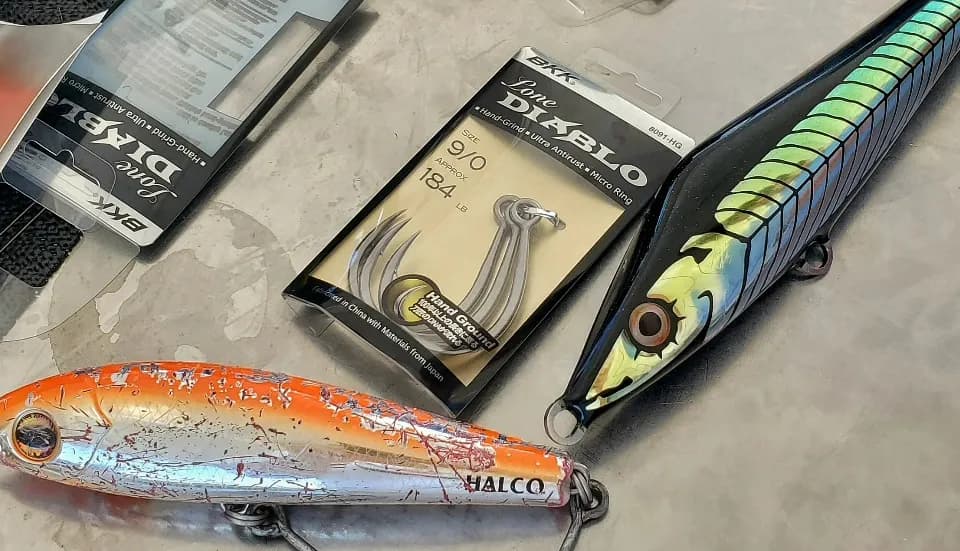
A hook is solely what every sound fishing system relies on. Anglers visiting a fishing store Dubai must understand the differences between saltwater and freshwater hooks, because ocean conditions are far harsher than freshwater.
The electrolytic nature of saltwater accelerates the process of corrosion, hence marine hooks need more durable materials and better finishes. Ignoring such differences usually leads to gears breaking down and lost fish.
The differences between saltwater and freshwater hooks come from corrosion levels and species strength. Saltwater quickly oxidizes, and basic carbon-steel hooks quickly wear out, whereas freshwater hooks can last years. The hooks are thicker and stronger and coated to ensure they do not bend and rust due to heavy loads on the gear by powerful saltwater fish.
Material Composition
Hooks made for freshwater are frequently made of high-carbon steel with sharper and finer points, and hooks used in saltwater are made of either stainless steel or steel coated with black nickel (or tin) to withstand the corroding saltwater.
Corrosion Resistance
Saltwater hooks are designed with sophisticated anti-corrosion finishes like the Ultra-antirust or Bright-Tin of BKK to avoid quick rusting and retain the structural strength even after several exposures to salt.
Wire Gauge (Strength)
Saltwater hooks are much thicker wire (2X-4X intense) so as not to bend under the strength of big fish. To be presented and to penetrate easily, freshwater hooks remain light in weight and thin.
Design Focus (Type)
Saltwater fishing prefers heavy-duty J-hooks and, more often, circle hooks, hooked in the jaw corner so as to minimize gut-hooking and allow more success with catch-and-release.
Sizing Convention and Range
Saltwater hooks have an aught system (1/0 to 20/0) but come in much larger sizes to target large species of big game such as marlin and swordfish.
Read More: Saltwater fishing hook size chart

To select the right hook, one has to combine the information about the target species, the nature of the bait, and its size. Understanding the types of fishing hooks and their uses is essential to building an effective rig, which forms the basis of all productive fishing tackle.
Saltwater conditions expose the clear differences between saltwater and freshwater hooks, making most freshwater lures unsuitable for marine use. Their hook is made of high-carbon steel, which will easily corrode, forming structural failure points, and the split rings are weak.
The hardware will not last even with a lure body that is functional. Stock freshwater trebles also are not strong enough to fight large saltwater fish and frequently bend or straighten when subjected to pressure.
In order to be able to convert a freshwater lure to the ocean, an angler needs to:
At Just Fishing we offer high-grade components, such as the BKK Lentus assist hook, essential for reinforcing terminal fishing tackle.
Stainless steel is perfect in the salty water that is harsh, as it retains its needle and structure much longer compared to unguarded metals. It provides good performance in the tough marine environments with corrosiveness, with the added anti-rusting coatings as in the DUO Drag Metal Cast Single assist hook.
High-carbon steel is very sharp but relies heavily on protective coatings like tin or black nickel to retard corrosion. Choosing between sharpness and long-term durability is a key consideration when assessing the differences between saltwater and freshwater hooks.
The hook's life in a marine environment is virtually solely determined by the metallurgy.
High-quality terminal equipment is mandatory, irrespective of setting. We stock only trusted brands known for their consistency and metallurgical integrity, ensuring they address the specific differences between saltwater and freshwater hooks.
In our opinion, the VMC Fishfighter Single assist hook would be a high-performance hook that would be recommended as an option among anglers.
Anglers looking for quality and dependability, especially in the challenging conditions of the UAE, pick Just Fishing since we recognize and supply the right gear for local success based on the major differences between saltwater and freshwater hooks.
Just Fishing Group operates a top-notch fishing store Dubai along with a fully functional online platform, and it is aware of the special conditions of the Arabian Gulf, which call for the use of the strongest and best gear that can withstand high salinity and the mightiest local species.
We design our inventory to provide high-performance, reliable saltwater fishing tackle from global manufacturers (BKK, CB ONE, and VMC) that are popular for their terminal integrity and durability, thus securing our clients from the typical failures linked to under-specified equipment.
The core differences between saltwater and freshwater hooks come from prioritizing corrosion resistance and strength over pure sharpness. Good saltwater fishing demands good metallurgy, increased gauge of wire, and good marine grade hardware. Learning the saltwater fishing hook size chart and the proper types of hooks to use will have your terminal gear remain reliable and never be the point of failure.
Read More: Types of fishing hooks and their uses
Rate this blog
Categories
Popular Tags


