Fishing Hook Size Chart
November 09, 2025, 10458
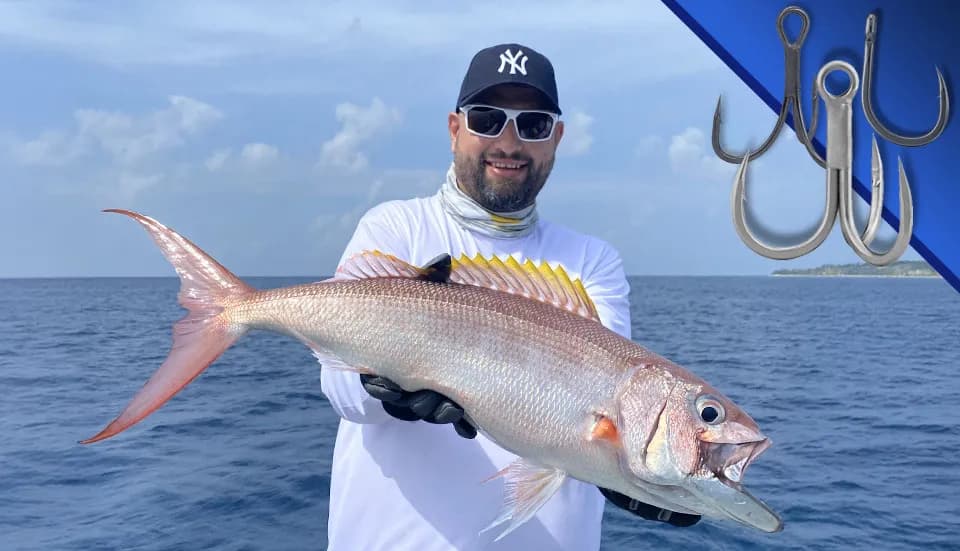
Use our fishing hook size chart It’ll save you a bunch of wasted casts and missed fish. Our friendly guide explains how to read sizes, when to use micro hooks, when to step up to 3/0 or 4/0, and why wire gauge and bait choice matter.
Read the rules, check our store’s picks, and you’ll always pick the right hook on every February fishing trip.
Fishing Hook Size Chart Explained
The fishing hook size chart should assist you in choosing the most appropriate hook for the type of fish you are targeting. It’s quite simple to understand; the smaller the hook, the lower the number or “aught” you will see. Conversely, the greater the number, the larger the hook size.
To be brief, small hooks go with small bait and fish, and large hooks go with large bait and bigger fish that have more hook-ups.
Coarse Fishing Hook Sizes Chart
Fishing hook sizes vary from #32 bait hooks for tying striking fly fishing floats to monstrous 27/0 hooks used to hook monster catfish. In general, your size choice will depend on bait, length of shank, and species targeted.
How to Read Fishing Hook Sizes Correctly
Mastery of reading takes only a moment because of the numbers drive; the higher the number assigned, the smaller the hook. Therefore, a #12 is small, best suited for small speckled trout or panfish. You will notice that a #4 is larger than a #12, then #1 is the next number, which has shot up.
The next will be 1/0 meaning “one-aught,” and the next on the list is the higher number bought; a 3/0 is larger than a 2/0 because a 3/0 is bigger. One fishing guide says that a #10 hook is larger than one numbered #20 in the number house. Similarly, a 2/0 is bigger than 1/0.

Examples of Size 12 Fishing Hooks
A size 12 fishing hooks is a relatively small fishhook size. In comparison, a #12 angling hook is commonly employed for peculiar baits like maggots, worms, or small lures. The hooks normally have slender wire and a small hole.
Notably, at Just Fishing, we have Bushido Fishing Hooks that come with different fishing hook sizes, including #12.
Examples of Size 4 Fishing Hooks
A size 4 fishing hook would have a gap of around 4–5 mm, which is approximately double that of a #12. Although it is still small compared to the saltwater hooks, in the coarse fishing it would be considered a "big" hook.
When you look at a fishing hook size chart, #4 would be categorized in the freshwater mid-range and would be good for fish like bass or large perch. Our size 4 hooks commonly come as bait-holders or worm hooks, which are beneficial for live baits or boilie rigs on large carp.
Fishing Hook Size 17 with Eye
A fishing hook size 17 with eye is a very small hook for light fishing tackle and subtle bait presentation. Its position on the fishing hook size chart between #16 and #18 makes it perfect for very small baits, like one corn kernel or maggots, when aiming at small fish, for instance, trout, roach, or bluegill.
This delicate eyed hook with a gap of about 1–2 mm is excellent for micro rigs and accuracy in fishing.
Size 3/0 Fishing Hooks
A fishing hook size 3 0 is a special kind of hook that reads “three-aught” and is used for bigger freshwater targets. On the chart, 1/0 - 3/0 are good for large live-bait rigs like walleyes, pike, and catfish. That means the 3/0 hook is suitable for medium crankbaits or a shiner under a bobber. Check JIG-PLAYER STEEL WIRE ASSIST HOOKS.
Size 25 Fishing Hooks
The hooks that are categorized as fishing hooks size 25 are unbelievably little, even smaller than the usual #20 or #16. These kinds of hooks are generally used only in very light freshwater or fly fishing. In general, the very high numbers (such as 25) come with #20–#32: the same minimal hooks for the minimal fish.
How to Choose the Right Fishing Hook Size
- Match hook to bait: When you are using a small worm or a piece of corn, it is better to get a fine hook. For large bait, increase the hook size.
- Fish species: Know the fish. For trout/bream, use very small hooks (#10 - #16). For bass/large carp, use mid-range (#4 - #1 or 1/0 - 3/0). For pike/catfish, use even bigger (4/0+).
- Hook type and strength: Fish with heavier weight require thicker-gauge hooks (even if they are the same size number).
- Try a size chart: Rely on a fishing hook size chart or the one provided by the manufacturer. A lot of brands will furnish tables that suggest sizes for specific fishes.
Fishing Hook Types and Sizes in JustFishingGroup Store
Our hooks in Just Fishing, the store, cover the whole spectrum of fishing hook size chart. We have it all, from delicate fly hooks to the thickest saltwater hooks.
- Sabiki and Multi-Hook Rigs: These rigs consist of 4-6 tiny hooks (mostly #8-#14) on droppers, which are perfect for baitfish. Take for instance Maruto Sabiki.
- Circle and Octopus Hooks: They can be picked from size 4 (great for fluke or trout) and reach up to 12/0 (for bluefin baiting).
- Worm and Weedless Hooks: Ranging from #6 to 5/0 or 6/0, they can be used with soft baits.
- Treble and Lure Hooks: Commonly, the range is #4 - #10; these are for crankbaits and spoons.
- Carp and Pole Hooks: Sizes #4 to #12 or #14 are common for feeder or pole fishing targeting carp, roach, and bream.
- Heavy Game Hooks: The largest J-hooks of 1/0 to 10/0 for big tuna, snapper, sharks, etc.
How to Fishing Hook Size Conversion
There are two systems in the fishing hook size chart: numbered hooks range from 32 to #1, with a higher number denoting a smaller hook, and aught hooks range from 1/0 to 20/0, with higher numbers denoting larger hooks.
In the case of the conversion, you should remember that the largest in the numbered system is #1, while it corresponds to the smallest in the aught system (1/0), which is still larger than a #1 hook.
How Hook Size Affects Catch Rate and Fish Safety
A perfectly fishing hook size chart ensures more hookups. A hook that is too small may be pulled out or flattened when a strong fish resists, whereas a hook that is too large may never let the fish swallow it completely.
At the same time, the damage may not be limited to the hook; the fish’s well-being also depends on the hook’s dimensions. An oversized hook used to catch a small fish usually leads to deep throat hooking and injury.
On the other hand, when using a small hook with a thick line, catching a large fish may be accompanied by straightening the hook and losing it.
Common Mistakes When Choosing Hook Sizes
In addition to beginners, experienced fishing enthusiasts often make simple mistakes while reviewing a fishing hook size chart. These are some of the most common:
- Picking a hook that is too big for their bait. In most cases, the hook should be covered with fishing bait, if it is openly sticking out, use the following number from the fishing hook sizes list.
- The individual fails to consider troubleshooting according to the species. Remember to pick a hook according to the target fish’s size, for instance, trout from 10 to 16 and salmon from 1 to 4.
- The angler forgets to check the wire gauge. Even the best number in the fishing hook sizes chart might not account for the heavy and thick hook’s weight, especially when trying to catch a small fish.
- Ignoring the hook’s sharpness. The best fishing hook sizes don’t work with a dull model. Always keep it sharp and clean from rust.

Tips for Beginners to Understand Fishing Hook Sizes
- Use a sample pack of hooks: If you’re not sure, just buy mixed-size packs. Try them in a single session, you’ll know in an hour which size fish are biting.
- Locals should rhyme: Ask local bait shops or the Internet, or consult friends.
- Ranges of thought: Instead of one size, toss a range a little bit in your estimate.
- No guesses: Look at what size you need for your catches and your water quality over the fishing hook size chart.
Read More: best saltwater fishing hooks
FAQs
How to calculate hook size?
Hook size is not calculated in numbers, it is determined by its standard. The table on the fishing hook size chart shown above has the detailed answer to these standards.
What size fish for a 3/0 hook?
The fishing hook size 3/0 is perfect for medium to large fish, such as bass, pike, and catfish, for instance. It is perfect for a size of 5 - 15 pounds, and it is too large for a panfish.
What are 4 0 hooks used for?
These hooks are for big fish and big baits: striped bass, tarpon, and large freshwater eaters. Target sizes are obviously more than 10 - 15 lbs with big live or artificial bait.
What size hook for 20lb carp?
The best hook size for a 20 lb carp is a size 6 - 8. They offer the best balance between strength and subtle bait presentation for regular carp rigs.
What happens if my hook size is wrong?
Wrong hook size will reduce the number of hook sets that will hurt the fish you haul. If your hook is too small, you will lose the big fish. If your hook is too big, the tiddlers won’t bite. So make sure to check out the fishing hook size chart always.
Customer Reviews
Rate this blog
Rating Breakdown
Categories
Popular Tags