What Is Responsible Fishing? A 2026 Sustainability Guide
June 08, 2026, 206

What Is Responsible Fishing? A 2026 Sustainability Guide
TL;DR:
- Responsible fishing balances conservation, social equity, and economic benefits while adhering to international standards like the FAO Code. It relies on science-based management, ecosystem considerations, bycatch reduction, and social accountability to sustain fish stocks and marine habitats. Individual anglers can contribute by following regulations, practicing sustainable techniques, and supporting responsible fisheries initiatives.
Responsible fishing is defined as an ecosystem- and stakeholder-aware approach to harvesting aquatic resources that maintains biodiversity, supports long-term stock health, and delivers social and economic benefits to fishing communities. The industry standard term for this practice is sustainable fisheries management, and the FAO Code of Conduct for Responsible Fisheries sets the international benchmark. Understanding what is responsible fishing means recognizing that it integrates biological science, social equity, and economic viability into every decision made on and off the water.
What is responsible fishing and why does it matter?
Responsible fishing is not simply catching less. It is a structured, science-informed system that balances conservation with development of aquatic resources while respecting the nutritional, cultural, and economic needs of stakeholders. The FAO Code of Conduct for Responsible Fisheries, adopted in 1995, remains the foundational international framework guiding governments, fishing industries, and individual anglers alike.
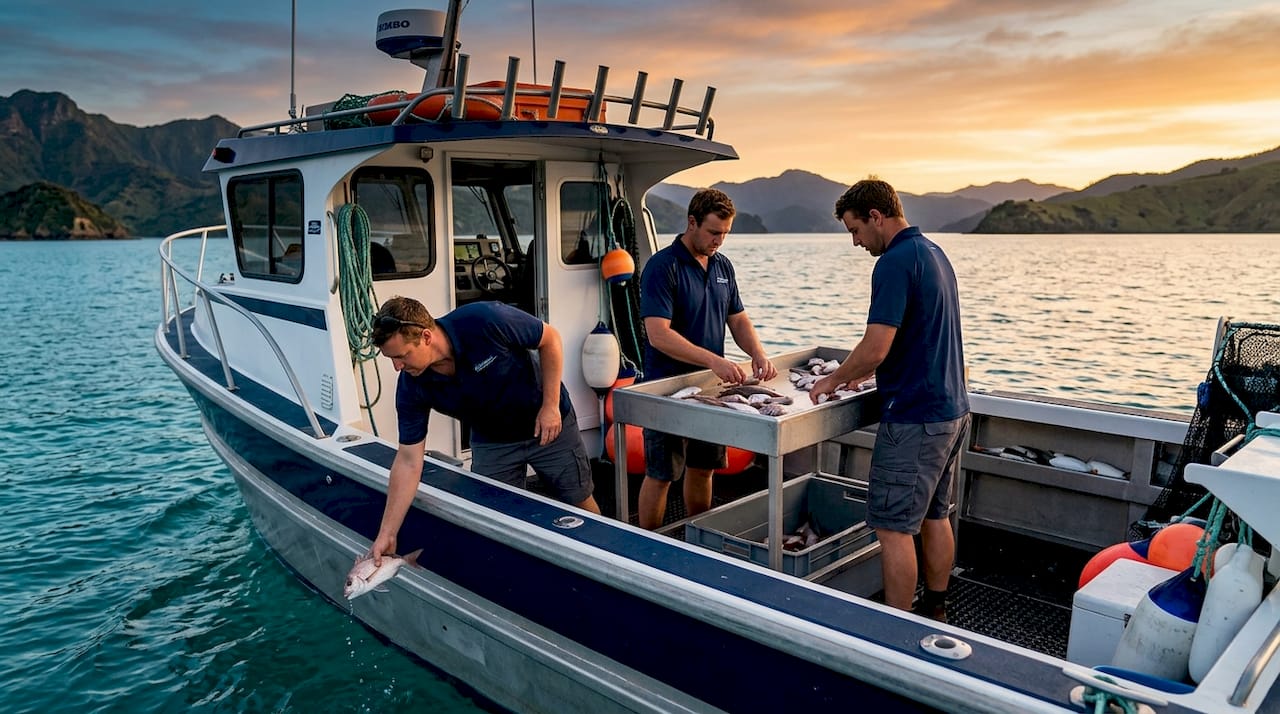
The stakes are real. Overfishing, habitat destruction, and climate change have pushed many fish populations to critical thresholds. Responsible fishing addresses these pressures by treating fisheries as interconnected systems rather than isolated harvests. When management fails, entire coastal economies collapse alongside the ecosystems they depend on.
For recreational anglers and fishing tourists, the concept translates directly into practice: knowing your catch limits, choosing gear that minimizes habitat damage, and respecting seasonal closures. These behaviors are not bureaucratic inconveniences. They are the difference between a fishery that thrives for decades and one that collapses within a generation.
How science-based management supports sustainable fisheries
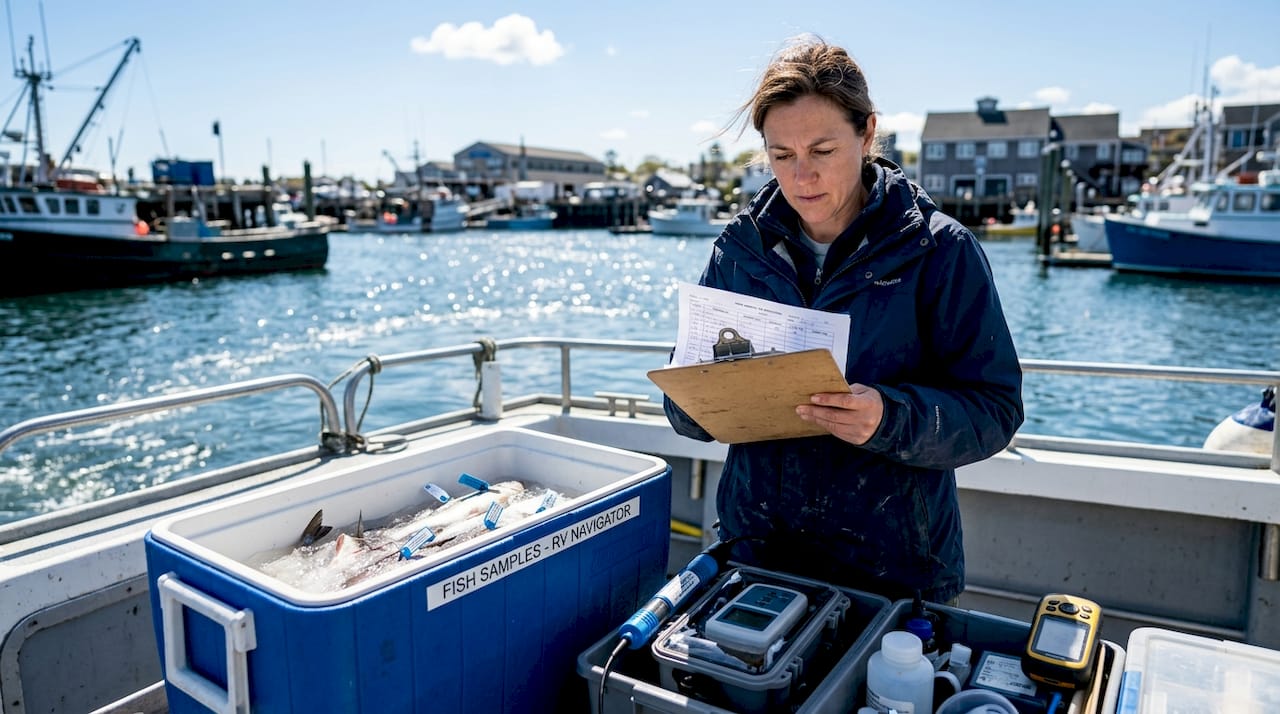
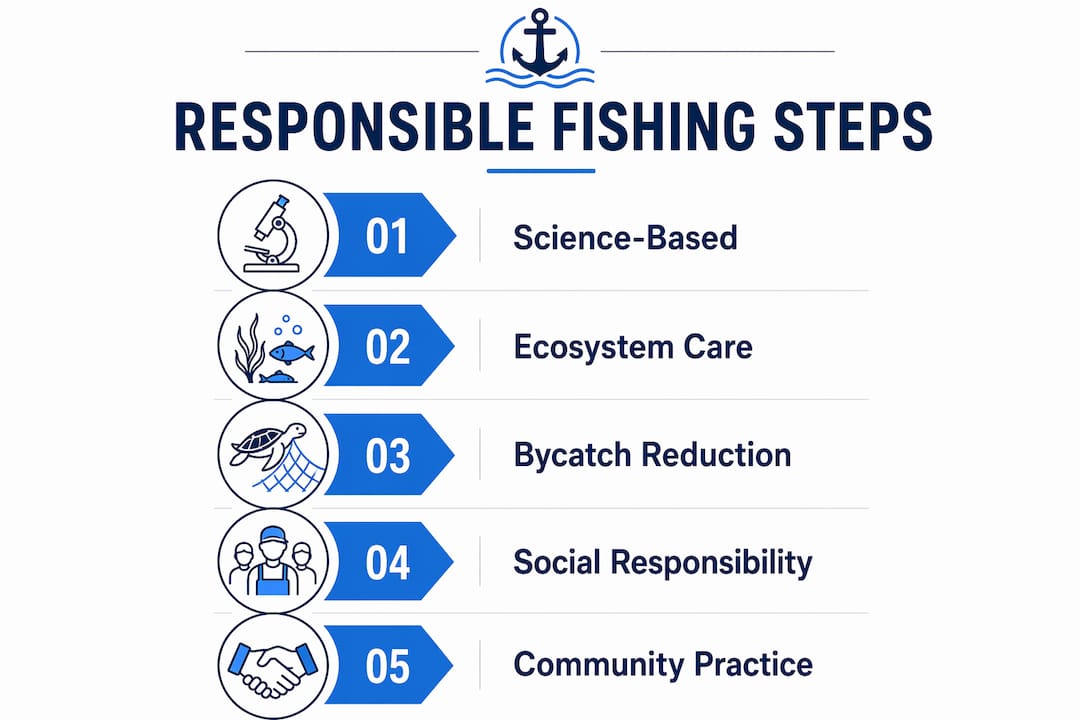
Science-based management is the operational core of responsible fishing. It relies on data collection, stock assessments, catch limits, and adaptive enforcement to keep fish populations within biologically sustainable levels.
The results of effective management are measurable. As of 2025, 64.5% of assessed marine fish stocks globally are exploited within biologically sustainable levels, based on FAO’s most detailed assessment to date covering 2,570 stocks. That figure rises above 90% in regions like the Northeast Pacific, where rigorous governance has been in place for decades. The gap between well-managed and poorly managed regions is not geography. It is governance.
In the United States, the Magnuson-Stevens Act provides the legal backbone for science-based fisheries management, requiring stock assessments, annual catch limits, and mandatory rebuilding plans for overfished stocks. After 50 years, it remains one of the most cited models for effective national fisheries law.
Key elements of science-based responsible fishing include:
- Stock assessments: Regular surveys that estimate population size, age structure, and reproductive rates
- Quota setting: Annual catch limits derived from stock data, not political pressure or market demand
- Catch reporting: Mandatory documentation of what is caught, retained, and discarded
- Adaptive management: Adjusting limits and rules as new data arrives, rather than waiting for crisis
Pro Tip: When booking a fishing trip, ask your operator whether catch limits are set by local regulation or by independent scientific assessment. The answer tells you everything about how seriously that fishery takes long-term sustainability.
What is the ecosystem approach in responsible fishing?
The Ecosystem Approach to Fisheries, known as EAF, is the framework that moves responsible fishing beyond single-species management into whole-system thinking. It was introduced in 2001 with the Reykjavik Declaration and subsequently adopted by the FAO and the International Council for the Exploration of the Sea (ICES). EAF requires managers to consider habitats, food webs, predator-prey relationships, and climate impacts alongside harvest targets.
The practical difference is significant. A single-species approach might set a sustainable quota for Atlantic cod without accounting for the collapse of the capelin population that cod depend on for food. EAF forces that connection into the calculation. It also requires managers to weigh trade-offs: protecting spawning habitat may reduce short-term yield but dramatically increases long-term stock resilience.
Healthy connected habitats are central to this approach. Wetlands filter nutrients, trap sediments, and reduce algal blooms, creating the spawning and nursery conditions that sustain fish populations across their entire life cycle. Destroying a wetland to build a marina does not just affect one species. It degrades the productivity of an entire fishery.
The table below summarizes the key dimensions EAF adds to traditional fisheries management:
| Management dimension | Traditional approach | EAF approach |
|---|---|---|
| Focus species | Single target species | Multiple species and food webs |
| Habitat consideration | Minimal | Core requirement |
| Climate integration | Rarely included | Explicitly incorporated |
| Stakeholder input | Limited | Structured and required |
| Trade-off analysis | Yield-focused | Yield and ecosystem balance |
Pro Tip: When evaluating whether a fishery is truly responsible, look for EAF language in its management plan. If the plan only references a single target species, it is operating below the current international standard.
How does responsible fishing reduce bycatch and unwanted catch?
Bycatch is the unintended capture of non-target species, including juvenile fish, seabirds, sea turtles, and marine mammals. It is one of the most persistent challenges in responsible fishing, and it occurs even when fishers are actively trying to avoid it. Gear design, ocean conditions, and species distribution all contribute to the problem.
The Marine Stewardship Council (MSC) has made bycatch reduction a formal certification requirement. MSC-certified fisheries must quantify bycatch by species and volume, demonstrate that no serious or irreversible harm is occurring, and show continuous improvement over time. This is not a pass-fail test. It is an ongoing performance standard with defined harm thresholds and data quality requirements.
The distinction between bycatch types matters for management:
| Term | Definition | Management implication |
|---|---|---|
| Bycatch | All non-target species caught | Requires characterization and monitoring |
| Unwanted catch | Species retained but not desired | Discard reporting required |
| Incidental catch | Protected species caught unintentionally | Triggers immediate review and mitigation |
Practical bycatch reduction strategies used by responsible fisheries include:
- Gear modifications: Turtle excluder devices (TEDs), circle hooks instead of J-hooks, and modified net mesh sizes that allow juvenile fish to escape
- Seasonal closures: Restricting fishing during spawning or migration periods when non-target species are most concentrated
- Area closures: Designating no-take zones around critical habitats where bycatch risk is highest
- Real-time monitoring: Using electronic observers and cameras to track what is actually being caught and adjust operations immediately
The success stories are real. The U.S. Atlantic swordfish fishery reduced sea turtle bycatch by over 90% after switching to circle hooks and restricting certain gear types in high-risk areas. That result came from combining gear innovation with science-based area management, not from choosing one approach over the other.
What role do social and labor responsibilities play in responsible fishing?
Responsible fishing extends beyond the water. The social dimension covers labor rights, supply chain transparency, and the economic well-being of fishing communities. Without these protections, a fishery can appear environmentally sustainable while operating on exploited labor.
The MSC has progressively strengthened its social accountability standards. Since 2014, the MSC excludes fisheries with documented forced or child labor violations. Since 2018, certified fisheries must report on social audits and labor practices. The MSC is now exploring alignment with UN Guiding Principles on Business and Human Rights and OECD due diligence guidelines. These are not minor administrative updates. They represent a fundamental shift in what certification means.
Supply chain transparency is equally critical. The International Seafood Sustainability Foundation’s ProActive Vessel Register allows buyers and retailers to verify vessel-level sustainability commitments independently, distinguishing between fisheries that have written policies and those that can demonstrate verified practice. For commercially important species like tuna, this distinction is the difference between responsible sourcing and greenwashing.
Key social responsibilities in responsible fishing include:
- Paying fair wages and providing safe working conditions for crew members
- Prohibiting the use of forced, bonded, or child labor at any point in the supply chain
- Maintaining transparent catch documentation from vessel to market
- Supporting local fishing communities through equitable access to fishery resources
- Conducting independent social audits and making results publicly available
How can individuals and communities practice responsible fishing?
Individual anglers have more influence over fisheries health than most realize. Recreational fishing accounts for a significant share of total catch in many coastal regions, and the cumulative effect of millions of individual decisions shapes stock health over time.
Here are the most impactful steps any angler can take:
- Know your local regulations. Check species-specific size limits, bag limits, and seasonal closures before every trip. Regulations exist because scientists determined those parameters protect spawning populations.
- Practice proper catch and release. Use barbless hooks or crimp your barbs. Minimize air exposure. Wet your hands before handling fish. Return the fish headfirst into the current to help it recover.
- Avoid sensitive habitats. Do not anchor or wade through seagrass beds, coral reefs, or wetland edges. These areas are nursery habitat for the species you want to catch.
- Choose gear that reduces impact. Lighter tackle, precision-engineered rods, and quality reels that allow accurate casting reduce the chance of snagging non-target species or damaging habitat.
- Engage with local management programs. Many fisheries have angler reporting programs, citizen science surveys, or local advisory councils. Participating puts real data into the hands of managers.
Pro Tip: Check whether your fishing destination is managed under a recognized certification or assessment program. Destinations that participate in independent stock assessments give you the most reliable assurance that your fishing activity is genuinely sustainable.
Boating safety is also part of responsible angling. Understanding boating safety certification requirements in your region protects both you and the marine environment you are fishing in.
Key takeaways
Responsible fishing requires science-based management, ecosystem integration, bycatch reduction, and social accountability to sustain fisheries for future generations.
| Point | Details |
|---|---|
| Core definition | Responsible fishing balances conservation, economic benefit, and social equity under frameworks like the FAO Code of Conduct. |
| Science drives sustainability | As of 2025, 64.5% of assessed global fish stocks are sustainably managed, with the best results in heavily governed regions. |
| Ecosystem approach matters | EAF integrates habitats, food webs, and climate into management decisions, going well beyond single-species quotas. |
| Bycatch requires active reduction | MSC certification requires fisheries to measure, report, and continuously reduce bycatch using gear modifications and area closures. |
| Social responsibility is non-negotiable | Responsible fishing now includes labor rights, supply chain transparency, and independent social audits as formal standards. |
Why I think responsible fishing is more urgent than most anglers realize
I have spent years watching fishing destinations shift from thriving to struggling, and the pattern is always the same. The science was there. The regulations existed. What was missing was the connection between individual behavior and systemic outcome. Most anglers genuinely want to fish responsibly. They just do not see how their single decision on a single day connects to a stock assessment three years later.
The 2025 FAO data showing 64.5% of stocks sustainably managed is genuinely encouraging. But that number also means more than a third of assessed stocks are not within sustainable limits. The regions performing best are not the ones with the most fish. They are the ones with the most consistent governance and the most engaged fishing communities.
What gives me optimism is the evolution of standards like the MSC’s social accountability framework. Responsible fishing used to mean not catching too many fish. Now it means verifying labor conditions, tracing supply chains, and measuring ecosystem impacts. That is a more honest and more complete definition. It is also harder to fake.
The anglers I respect most are the ones who treat regulations as a floor, not a ceiling. They release fish they could legally keep. They avoid areas they know are stressed, even when no rule prohibits fishing there. That instinct, scaled across millions of anglers worldwide, is what actually moves the needle on fisheries health.
— Alaa
Fish responsibly with Justfishinggroup
Justfishinggroup supports responsible angling through gear designed for precision and minimal environmental impact. Whether you are targeting pelagic species in the Maldives or reef fish in the Seychelles, the right equipment makes ethical fishing easier and more effective. Explore sustainable fishing gear including quality lures like the Fish Art Torpedo Jig, engineered for targeted presentation that reduces unintended catch. Justfishinggroup also offers guided fishing trips across destinations where responsible fishing practices are built into every experience. Read more on the Justfishinggroup blog for tips on fishing sustainably wherever your next trip takes you.
FAQ
What is responsible fishing in simple terms?
Responsible fishing is the practice of catching fish in ways that protect ecosystem health, respect biodiversity, and support the long-term viability of fish stocks. The FAO Code of Conduct for Responsible Fisheries defines it as an approach that integrates conservation, management, and the social and economic needs of fishing communities.
What is the difference between responsible and sustainable fishing?
Sustainable fishing refers specifically to maintaining fish populations at harvestable levels over time. Responsible fishing is broader, covering ecosystem health, bycatch reduction, labor rights, and supply chain transparency in addition to stock sustainability.
How does bycatch reduction relate to responsible fishing?
Bycatch reduction is a core requirement of responsible fishing. MSC-certified fisheries must quantify bycatch by species and volume, demonstrate no serious harm to non-target populations, and show continuous improvement through gear modifications and area management.
Can recreational anglers practice responsible fishing?
Recreational anglers practice responsible fishing by following local size and bag limits, using proper catch-and-release techniques, avoiding sensitive spawning habitats, and selecting gear that minimizes unintended catch and habitat damage.
Why does the ecosystem approach matter for fisheries management?
The Ecosystem Approach to Fisheries, introduced with the 2001 Reykjavik Declaration, requires managers to account for habitats, food webs, and climate impacts rather than managing a single species in isolation. This approach produces more resilient fisheries and better long-term yields.
Recommended
Customer Reviews
Rate this blog
Rating Breakdown
Categories
Popular Tags