What Is Live Bait Fishing: A Beginner's Guide
June 08, 2026, 2173

What Is Live Bait Fishing: A Beginner’s Guide
TL;DR:
- Live bait fishing involves using living organisms like worms, minnows, or shrimp to attract and catch fish through natural cues. Proper bait choice, rigging, and storage significantly increase success rates, especially in passive or murky conditions. Effective handling and equipment ensure bait remains lively, maximizing feeding responses and overall catch success.
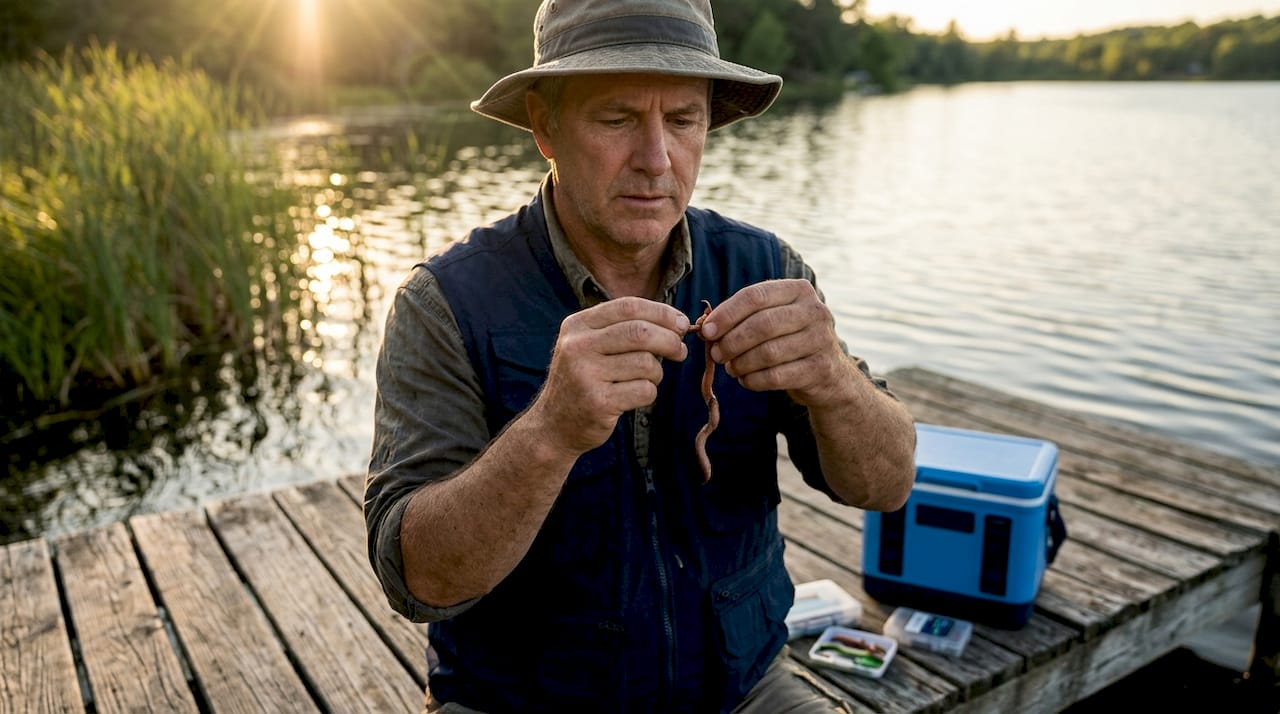
Live bait fishing is defined as the practice of using living organisms, such as worms, minnows, shrimp, or crabs, as bait on a hook to attract and catch fish. Unlike artificial lures, live bait delivers natural movement, scent, and bioelectric signals that trigger genuine feeding responses in fish. For recreational anglers and beginners, understanding live bait fishing is one of the fastest ways to improve catch rates across both freshwater and saltwater environments.
What is live bait fishing and why does it work?
Live bait activates multiple sensory cues simultaneously, including natural movement, oils, and bioelectric fields, making it more effective than artificial lures in most real-world fishing conditions. Fish evolved to detect these exact signals. When a nightcrawler wriggles on a hook or a minnow darts near a bass, the predator’s instinct fires before it has time to be cautious.
The industry term for this method is “natural bait fishing,” though “live bait fishing” is the phrase most anglers and bait shops use in everyday conversation. Both terms refer to the same practice. The core advantage is simple: you are presenting fish with something that looks, smells, and moves exactly like their natural prey.
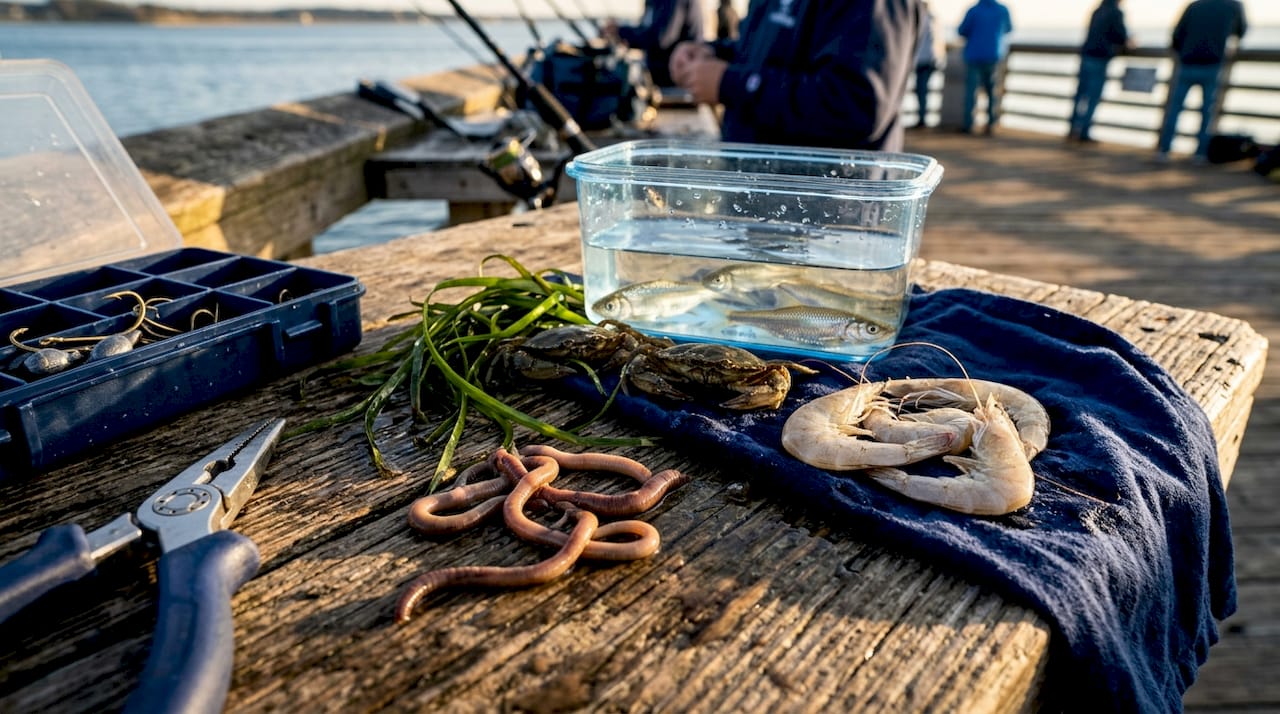
Common live bait types include earthworms such as nightcrawlers and redworms, leeches, minnows, shrimp, crabs, and small baitfish like mullet or pilchards. Each one targets a different set of species and works best in specific conditions. Knowing which bait to choose, and how to rig it correctly, separates anglers who catch fish consistently from those who go home empty-handed.
What types of live bait work best for freshwater and saltwater fishing?
Choosing the right bait starts with knowing your target species and the water you are fishing. Matching bait type and size to the fish you are targeting increases catch success more reliably than any other single variable.
Freshwater live baits:
- Nightcrawlers and redworms: The most widely sold live bait at tackle shops. Nightcrawlers work for bass, catfish, trout, and walleye. Smaller redworms are better suited for panfish like bluegill and crappie.
- Leeches: Highly effective for smallmouth bass, especially during spawning season when bass are holding tight to structure. Hook them through the sucker end for the most natural swimming action.
- Minnows: A go-to for walleye, pike, and largemouth bass. Use fathead minnows for panfish and larger shiners for trophy bass or pike.
- Waxworms: Soft, grub-like larvae that excel in ice fishing for perch and bluegill. Their slow, subtle movement triggers strikes from fish that ignore everything else in cold water.
Saltwater live baits:
- Shrimp: The most versatile saltwater bait. Live shrimp attract redfish, snook, flounder, and sea trout. Hook them just behind the horn on the head to keep them lively.
- Crabs: Blue crabs and fiddler crabs are top choices for tarpon, permit, and sheepshead. Remove the claws before hooking to reduce resistance.
- Pilchards and mullet: Small baitfish like pilchards work exceptionally well for offshore species including kingfish, cobia, and snapper. Mullet are a preferred bait for tarpon along coastal flats.
Pro Tip: Always match bait size to the mouth of your target fish. A large bass will ignore a tiny redworm, and a small panfish cannot take a full-sized nightcrawler. When in doubt, go smaller.
How to rig live bait for natural presentation
Rigging is where most beginners lose fish before they even get a strike. Hook placement controls swimming action under load, determining whether your bait moves naturally or spins unnaturally and dies quickly. The goal is always to keep the bait alive and moving as long as possible.
Follow these steps to rig live bait correctly:
- Choose the right hook size. A hook too large will kill small bait instantly. A hook too small will fail to hold larger bait securely. Match hook size to bait size, not fish size.
- Hook worms through the collar. Thread a nightcrawler onto the hook at the thick band near its head. Leave a tail dangling freely. This keeps the worm alive longer and creates movement that attracts fish.
- Hook minnows through the lips or back. Lip-hooking keeps minnows swimming near the surface. Back-hooking, just forward of the dorsal fin, lets them dive deeper and works better under a bobber or float rig.
- Hook leeches through the sucker. The sucker is the flat, disc-shaped end. Hooking here allows the leech to swim freely and naturally, which is exactly what triggers smallmouth bass.
- Hook shrimp behind the horn. Insert the hook just behind the hard point on the shrimp’s head, avoiding the dark spot (the brain). This keeps the shrimp alive and swimming for far longer than tail-hooking.
- Avoid spinning. If your bait spins when retrieved or drifts in current, reposition the hook. Spinning kills bait fast and signals something unnatural to wary fish.
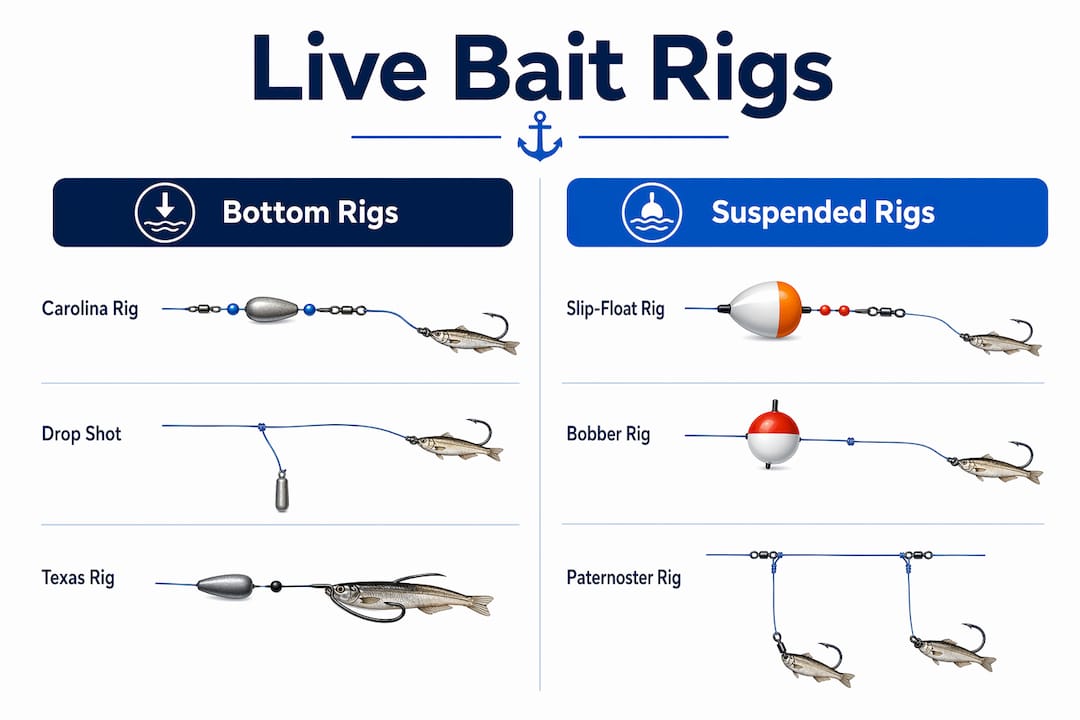
Common rigs for live bait fishing include the Carolina rig for bottom-feeding species, the slip-float rig for suspending bait at a specific depth, and the free-line rig for letting bait drift naturally in current. The YASI Dual Jigging Assist Hook is a strong option when you need a specialized hook that holds bait securely without restricting movement.
Pro Tip: Wet your hands before handling live bait. Dry hands strip the protective slime coat from fish and amphibians, causing stress and shortening the bait’s effective life on the hook.
Benefits of live bait fishing vs. artificial lures
Live bait outperforms artificial lures especially in low-clarity water and when fish are feeding passively. This is not a matter of opinion. It is a function of biology. Fish rely on multiple senses to locate prey, and live bait engages all of them at once.
| Factor | Live bait | Artificial lures |
|---|---|---|
| Scent | Strong, natural, continuous | Minimal or chemically added |
| Movement | Organic, unpredictable | Mechanical, repetitive |
| Effectiveness in murky water | High, scent compensates for low visibility | Lower, relies heavily on visual triggers |
| Cost per session | Low to moderate | Higher upfront, reusable |
| Convenience | Requires sourcing and storage | Ready to use, no maintenance |
| Best conditions | Passive fish, cold water, low light | Active fish, clear water, warm seasons |
The bioelectric field produced by a living organism is something no artificial lure can replicate. Fish like sharks, catfish, and bass have sensory organs specifically designed to detect these fields. In ice fishing, where fish are lethargic and reluctant to chase, a waxworm’s subtle movement and scent often produce strikes when hard plastics fail completely.
Artificial lures have real advantages in speed, convenience, and covering large areas of water. But when fish are finicky, the water is stained, or you need to hold bait in one spot, live bait is the more reliable choice.
How to store and handle live bait to keep it alive longer
Maintaining water temperatures between 50 and 75°F with aeration and removing dead bait promptly extends bait life significantly. Dead or dying bait produces far fewer strikes and can contaminate the rest of your supply.
Here is how to keep your bait in top condition from purchase to presentation:
- Use an aerated bait bucket. Battery-powered aerators or air stones keep oxygen levels high. Without aeration, minnows and shrimp die within an hour in a sealed container.
- Control water temperature. Keep freshwater bait between 50 and 65°F. Saltwater shrimp and baitfish prefer 65 to 75°F. Use ice packs wrapped in cloth to cool the water gradually without shocking the bait.
- Change the water regularly. Replace 25 to 30 percent of the water every hour when fishing in warm conditions. Waste buildup depletes oxygen and stresses bait quickly.
- Avoid overcrowding. Too many organisms in one container compete for oxygen and injure each other. A standard 5-gallon bucket holds roughly 24 to 36 minnows comfortably.
- Remove dead bait immediately. Dead bait releases ammonia, which poisons the remaining live bait within minutes. Check your bucket every 20 to 30 minutes.
- Handle bait gently and quickly. Quick, careful transfers and gentle handling prevent damage, keeping bait lively and attractive longer.
Pro Tip: If you catch your own bait using a cast net or minnow trap, transport it in a cooler with an aerator rather than a standard bucket. The insulation maintains temperature far better during long drives to the water.
Key takeaways
Live bait fishing outperforms artificial lures in passive-fish conditions because it delivers natural movement, scent, and bioelectric signals that fish are hardwired to respond to.
| Point | Details |
|---|---|
| Definition of live bait fishing | Using living organisms like worms, minnows, or shrimp on a hook to attract fish through natural cues. |
| Bait selection matters | Match bait size and species to your target fish; leeches for smallmouth bass, shrimp for redfish and snook. |
| Hook placement is critical | Correct hooking location keeps bait alive longer and produces natural movement that triggers strikes. |
| Storage determines bait quality | Aerated, temperature-controlled water between 50 and 75°F keeps bait lively and effective throughout the session. |
| Live bait vs. lures | Live bait excels in murky water, cold conditions, and when fish are feeding passively. |
What I have learned after years on the water
After fishing across destinations from the UAE to the Seychelles, the single biggest mistake I see novice anglers make is treating live bait like a set-and-forget solution. They hook a minnow carelessly, toss it out, and wait. Then they wonder why the angler next to them is pulling fish after fish.
The truth is that success with live bait depends as much on how you hook and present the bait as on which bait you choose. A perfectly rigged nightcrawler on a size 6 hook will outfish a carelessly hooked one every single time, even if both are the same worm from the same container.
I have also found that most beginners underestimate bait care. They buy fresh shrimp or minnows, toss them in a bucket without aeration, and wonder why half the bait is dead before they reach the water. Maintaining live bait vitality is more about effective handling and storage routines than hooking technique. Weak bait before fishing leads to fewer strikes, full stop.
My advice: spend the first 10 minutes of any fishing session checking your bait bucket, rigging carefully, and observing how your bait moves in the water near the boat. If it spins or sinks unnaturally, fix it before you cast. That habit alone will put more fish in your hands than any gear upgrade.
— Alaa
Gear up for live bait fishing with Justfishinggroup
Justfishinggroup carries everything you need to get started with live bait fishing, from purpose-built hooks and rigs to full terminal tackle setups designed for both freshwater and saltwater conditions. Whether you are targeting bass on a local lake or chasing snook along a coastal flat, having the right gear makes every technique in this guide more effective. Browse the full range of fishing gear and rigs at Justfishinggroup, or take your skills onto the water with one of the guided fishing trips available across the Maldives, UAE, Kenya, and beyond. The right setup is one click away.
FAQ
What is live bait fishing in simple terms?
Live bait fishing is the practice of using a living organism, such as a worm, minnow, or shrimp, on a hook to attract fish. It works because live bait produces natural movement, scent, and bioelectric signals that trigger fish feeding instincts.
What is the best live bait for beginners?
Nightcrawlers are the best starting point for freshwater fishing because they are widely available, inexpensive, and attract a broad range of species including bass, catfish, and trout. For saltwater beginners, live shrimp are the most versatile and forgiving option.
Are there legal restrictions on using live bait?
Yes. Live bait regulations vary by state and can restrict which species you use, how you transport them, and which waters you fish with them. Always check local regulations before purchasing or collecting live bait.
How long does live bait stay alive on a hook?
A correctly hooked, healthy minnow or worm can stay alive on a hook for 15 to 45 minutes depending on water temperature and hook placement. Proper hooking technique and cool, oxygenated water in your bait bucket extend that window significantly.
Can you use live bait with any fishing rod and reel?
Live bait fishing works with most standard spinning or baitcasting setups. A medium-action rod with 8 to 12 lb monofilament line is a reliable starting configuration for most freshwater live bait applications.
Recommended
Customer Reviews
Rate this blog
Rating Breakdown
Categories
Popular Tags