Address: M5, Al Naumi Tower , Al Mina Road, Al Zahya Area, Abu Dhabi City, UAE
Email: support@justfishinggroup.com
Store Hours: 10:00 - 18:00, Mon - Sat
Legal
© 2025 JustFishing. All Rights Reserved.



Address: M5, Al Naumi Tower , Al Mina Road, Al Zahya Area, Abu Dhabi City, UAE
Email: support@justfishinggroup.com
Legal
© 2025 JustFishing. All Rights Reserved.
What Is Inshore Fishing: A Beginner's Complete Guide
June 22, 2026, 336
TL;DR:
- Inshore fishing occurs in shallow waters less than 30 feet deep, close to shore in bays and estuaries. It offers accessible, visual, and intense angling with species like redfish, trout, and flounder, suitable for beginners. Effective techniques involve matching gear to habitats and tide-driven structures for consistent success.
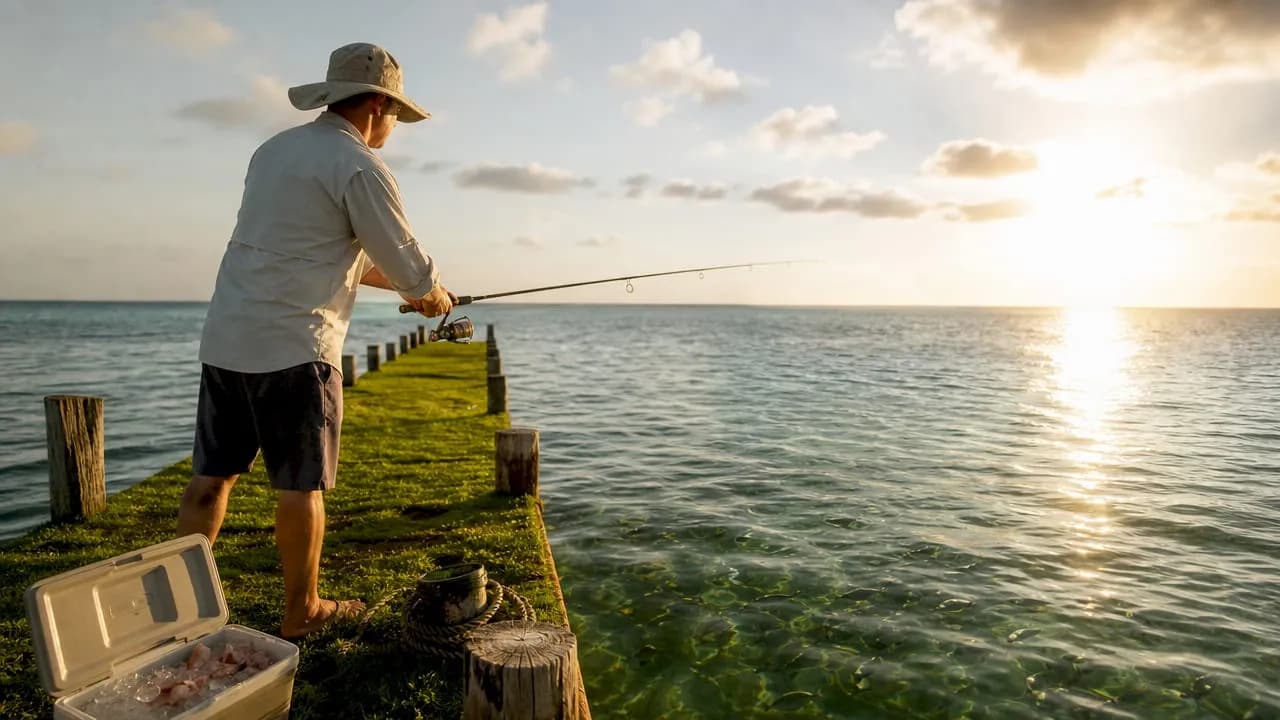
Inshore fishing is defined as saltwater angling in shallow, protected waters less than 30 feet deep, typically within a few miles of the shoreline. Unlike offshore trips that require large vessels and open-ocean navigation, inshore fishing takes place in bays, estuaries, grass flats, and mangrove shorelines where a kayak, skiff, or even wading boots will get you where you need to go. Species like redfish, spotted seatrout, flounder, snook, and tarpon dominate these waters. The gear is lighter, the access is easier, and the action can be just as intense as anything you’d find miles offshore.
Inshore fishing, also called nearshore or shallow-water saltwater fishing, occurs in waters under 30 feet deep, usually within 3 to 15 miles of the coast. That depth boundary is not arbitrary. It defines the zone where tidal influence is strongest, where baitfish concentrate in predictable corridors, and where structure like oyster bars and seagrass beds creates reliable feeding grounds for predatory fish.
The practical benefit for beginners is significant. You do not need a 30-foot center console or a captain’s license to access these fish. A 16-foot flats skiff, a kayak, or a pair of wading boots puts you in the same water as some of the most exciting gamefish on the coast. Florida’s Gulf Coast, the Carolinas, and the Texas bays are among the most productive inshore systems in the world, and all of them are accessible to anglers at every skill level.
The appeal goes beyond accessibility. Inshore fishing is visual and immediate. You often see the fish before you cast, watch the strike happen, and feel the fight in real time. That combination of sight fishing and physical action is what keeps anglers coming back.
Standard inshore fishing gear centers on a 7-foot medium to medium-heavy spinning rod paired with a 3000 to 4500 size reel loaded with 10 to 15 pound braided line. That setup handles the full range of common inshore species without being overbuilt or too light for a serious fight. The Shimano Stradic SW series, for example, offers the corrosion resistance and drag performance that saltwater environments demand. You can browse the Shimano Stradic SW lineup to match reel size to your target species.
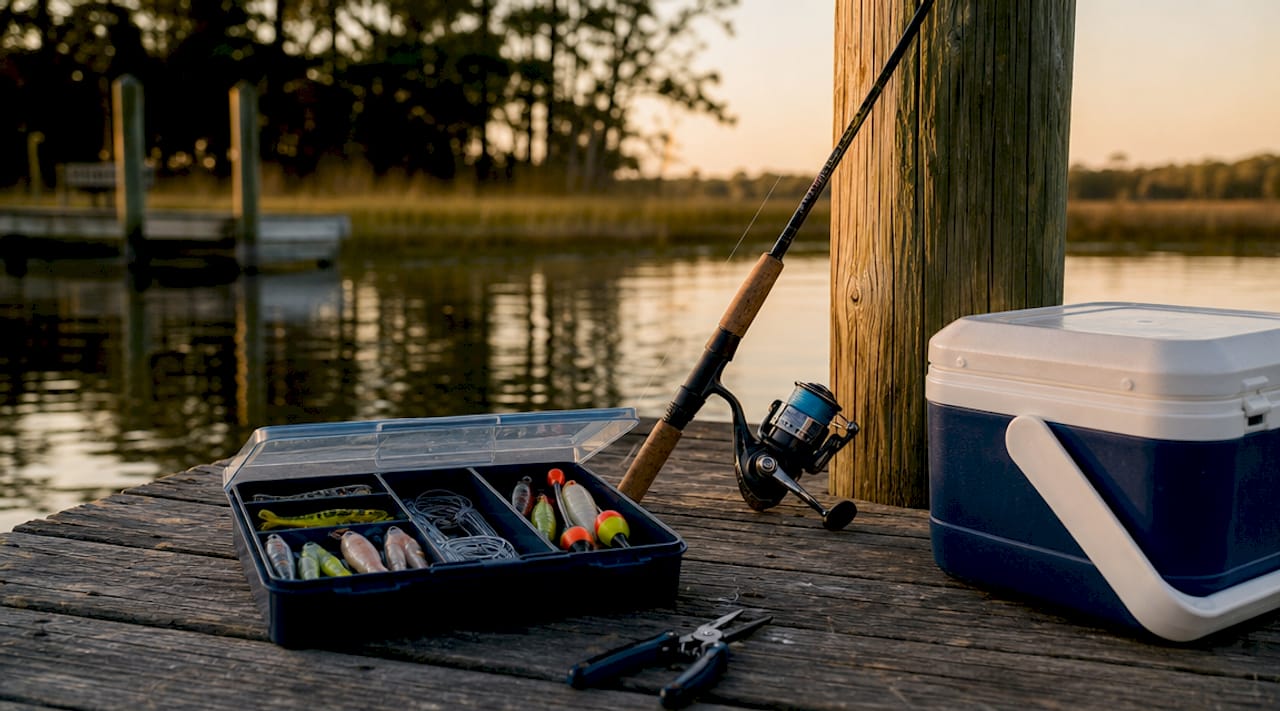
Leader selection matters as much as the main line. A fluorocarbon leader of 18 to 24 inches protects against oyster shell abrasion and reduces visibility in clear water. Fluorocarbon sinks slightly, which keeps your presentation natural, and it resists fraying when a redfish or snook drags your line across a barnacle-covered piling.
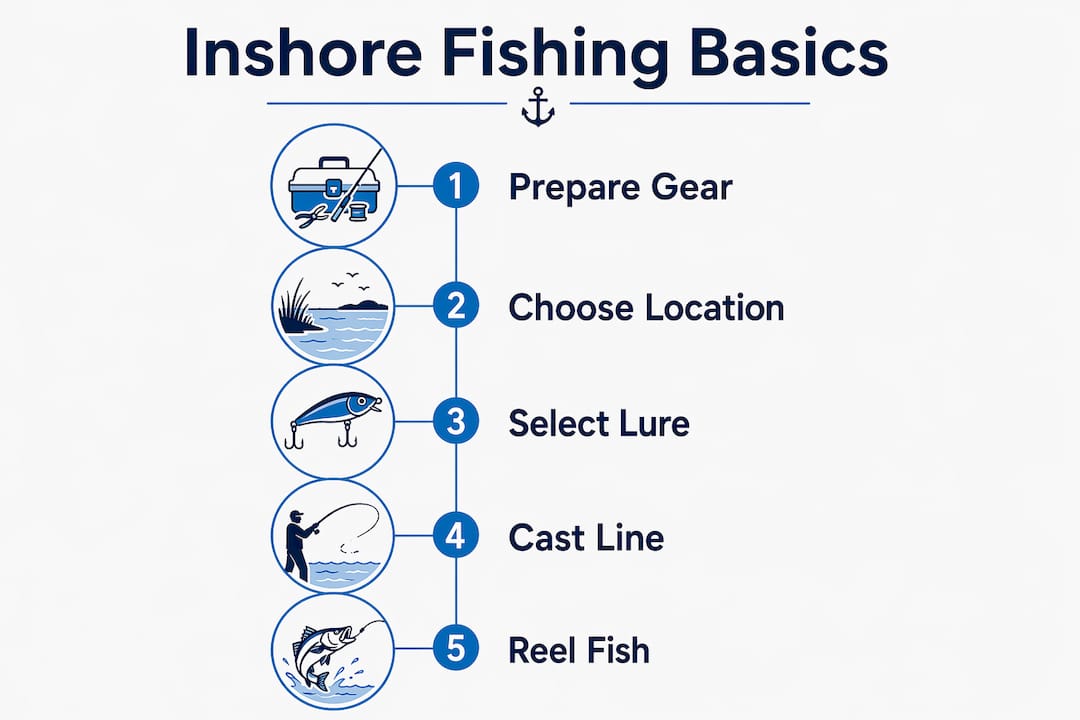
The most versatile inshore lures fall into four categories: soft plastics on jig heads, topwater plugs, popping corks with live or cut bait, and suspending stick baits. Soft plastics rigged on a quarter-ounce jig head cover the most ground and work on nearly every inshore species. The Savage Gear Slim Minnow 3D Jig replicates the profile and movement of a wounded baitfish, which triggers strikes from trout and redfish in both clear and stained water.
Topwater plugs produce the most dramatic strikes and work best in low-light conditions at dawn and dusk. Popping corks are a beginner-friendly setup that suspends a live shrimp or soft plastic at a fixed depth while creating surface noise that attracts fish from a distance.
Pro Tip: Carry at least three lure types on every outing. Conditions change with tide and light, and versatile lure selection reduces frustration when one presentation stops producing.
| Gear component | Standard choice | Alternative for tough conditions |
|---|---|---|
| Rod | 7-foot medium-heavy spinning | 6.6-foot medium for lighter lures |
| Reel | 3000-4500 size spinning | 2500 size for finesse presentations |
| Main line | 10-15 lb braided | 20 lb braid for heavy cover |
| Leader | 20 lb fluorocarbon, 18-24 inches | 30 lb for snook near structure |
| Primary lure | Soft plastic on jig head | Live shrimp under popping cork |
Redfish, speckled trout, and flounder are the three most consistently targeted inshore species along the Gulf and Atlantic coasts. Each one occupies a slightly different niche in the same ecosystem, which means you can target all three in a single outing if you understand their behavior.
Redfish, also called red drum, are bottom-oriented feeders that root through grass flats and oyster bars for crabs and shrimp. They are aggressive strikers and tolerate a wide range of water temperatures, making them a year-round target in most inshore systems. Spotted seatrout prefer slightly deeper grass flats and are most active during cooler months when they school in predictable areas. Flounder are ambush predators that lie flat on sandy bottoms near drop-offs and channel edges, waiting for baitfish to pass overhead.
Snook and tarpon represent the upper tier of inshore gamefish. Snook are structure-oriented and love mangrove shorelines, dock pilings, and bridge shadows. Tarpon, which can exceed 100 pounds, migrate through inshore passes and channels seasonally and are considered one of the most demanding light-tackle targets in saltwater fishing.
Pro Tip: Flounder mouth bait before committing to a full swallow. Wait 3 to 5 seconds after feeling the bite before setting the hook. Anglers who set immediately miss the majority of flounder strikes.
| Species | Preferred habitat | Best technique | Peak season |
|---|---|---|---|
| Redfish | Grass flats, oyster bars | Soft plastic on jig head | Fall and winter |
| Spotted seatrout | Deep grass flats | Popping cork with shrimp | Late fall |
| Flounder | Sandy bottoms, drop-offs | Slow-dragged soft plastic | Fall migration |
| Snook | Mangroves, dock pilings | Topwater at dawn | Summer |
| Tarpon | Passes, channels | Live bait, large plugs | Spring and summer |
The best inshore fishing locations share one characteristic: structure that concentrates baitfish. Grass flats, oyster bars, creek mouths, and mangrove shorelines are the four habitat types that consistently hold fish because they offer both food and cover. Fish do not roam randomly. They position themselves where the current delivers a meal with minimal effort.
Tidal movement is the engine that drives inshore fishing. Moving water pushes baitfish through feeding corridors, and predators stack at the exits. A creek mouth on a falling tide is one of the most reliable setups in inshore fishing because every baitfish draining out of the marsh has to pass through a narrow opening where redfish and trout are waiting.
Regional examples make this concrete. Florida’s Tampa Bay system holds some of the densest redfish and trout populations in the country, with miles of accessible grass flats and oyster bars. The Chesapeake Bay estuary system along the mid-Atlantic coast produces striped bass and flounder through the warmer months. Texas bays like Laguna Madre and Galveston Bay are legendary for shallow-water redfish on the flats.
The most effective inshore fishing techniques share a common principle: match your presentation to where the fish are positioned in the water column. A soft plastic dragged slowly along the bottom catches flounder. The same lure retrieved at mid-depth with a twitching action catches trout. Understanding depth and retrieve speed is more important than lure color or brand.
Successful anglers adapt lure selections seasonally based on water temperature and clarity. In cold, clear water, downsize your lure and slow your retrieve. In warm, stained water, use larger profiles and louder presentations like rattling topwater plugs or popping corks that create surface disturbance.
Identifying choke points is the skill that separates consistent anglers from occasional ones. Experienced anglers prioritize creek mouths, points, and oyster bars where tidal currents concentrate baitfish. Cast upcurrent and retrieve through the choke point so your lure moves naturally with the flow. Fish facing into the current will see your presentation before they see your boat.
Pro Tip: Read a tide chart before every trip. Ignoring tide timing is the single most common reason beginners return empty-handed. Fish the first two hours of an incoming or outgoing tide for the most consistent action.
Inshore fishing success depends on three things: understanding tidal movement, matching your gear to the species, and fishing structure where baitfish concentrate.
| Point | Details |
|---|---|
| Depth defines inshore | Inshore fishing occurs in waters under 30 feet, close to shore in bays and estuaries. |
| Gear setup matters | A 7-foot medium-heavy spinning rod with a 3000-4500 reel and braided line covers most species. |
| Tides drive fish location | Fish choke points like creek mouths and oyster bars during moving tides for consistent results. |
| Species behavior shapes technique | Flounder require a delayed hookset; redfish respond to bottom presentations; snook hit topwater at dawn. |
| Lure variety beats single-lure loyalty | Carrying soft plastics, topwater plugs, and popping corks prepares you for changing conditions. |
I have fished offshore, I have fished bluewater, and I have stood on the deck of a boat watching a marlin clear the surface 40 feet away. None of it compares to the moment you spot a redfish tailing in six inches of water and make a perfect cast two feet ahead of it. That is what inshore fishing does to you.
What surprises most people is how much skill the shallow water demands. There is nowhere to hide a bad cast, a heavy footstep on the hull, or a shadow crossing the flat. The fish are right there, and they know you are too. That pressure sharpens every aspect of your technique faster than any other type of fishing I know.
My honest advice for anyone starting out: spend your first ten trips learning one system well rather than chasing new locations. Understand one set of grass flats, one creek mouth, one oyster bar. Learn how the tide moves through it, where the fish stack on the incoming versus the outgoing, and which lures produce in different light conditions. That knowledge compounds. After a season on one system, you will read any inshore environment faster than someone who has fished fifty different spots once each.
The other thing I would tell beginners is to trust the sport advice that points you toward patience. Inshore fishing rewards anglers who wait for the right moment, the right tide, the right cast. The fish are there. Your job is to be ready when conditions align.
— Alaa
Justfishinggroup carries the rods, reels, lures, and terminal tackle you need to fish inshore with confidence. Whether you are rigging up for redfish on a Gulf Coast flat or targeting trout in a tidal estuary, the Justfishinggroup store stocks gear matched to real inshore conditions, including the Shimano Stradic SW reels and the Fish Inc Tight Head Prop sinking stick bait that produces on trout and snook. If you want a guided experience on the water, Justfishinggroup also offers guided fishing trips to inshore destinations across the UAE, Oman, Kenya, and beyond. Expert local guides put you on fish in proven locations so you spend less time searching and more time fighting.
Inshore fishing takes place in waters less than 30 feet deep, typically within 3 to 15 miles of the shoreline in protected areas like bays, estuaries, and coastal flats.
Redfish, spotted seatrout, and flounder are the most targeted inshore species along the Gulf and Atlantic coasts, with snook and tarpon as premium targets in warmer regions.
A 7-foot medium to medium-heavy spinning rod, a 3000 to 4500 size reel, 10 to 15 pound braided line, and a 20-pound fluorocarbon leader cover the majority of inshore fishing situations.
The most productive inshore fishing occurs during the first two hours of an incoming or outgoing tide, when moving water concentrates baitfish at choke points like creek mouths and oyster bars.
Inshore fishing is one of the most beginner-friendly forms of saltwater angling because it requires smaller, less expensive boats, lighter gear, and accessible locations that do not demand offshore navigation experience.
Rate this blog
Categories
Popular Tags