Trolling Fishing Explained: Techniques, Gear, and Tips
June 08, 2026, 5490
Trolling Fishing Explained: Techniques, Gear, and Tips
TL;DR:
- Trolling fishing involves dragging baited lines behind a moving boat to cover large water areas and target species like tuna and salmon. It differs from trawling, which uses nets for commercial harvesting, and requires specialized gear, speed control, and strategic lure placement. Proper systematization, logging, and technology use significantly increase success rates, making trolling a skillful technique suitable for beginners and experts alike.
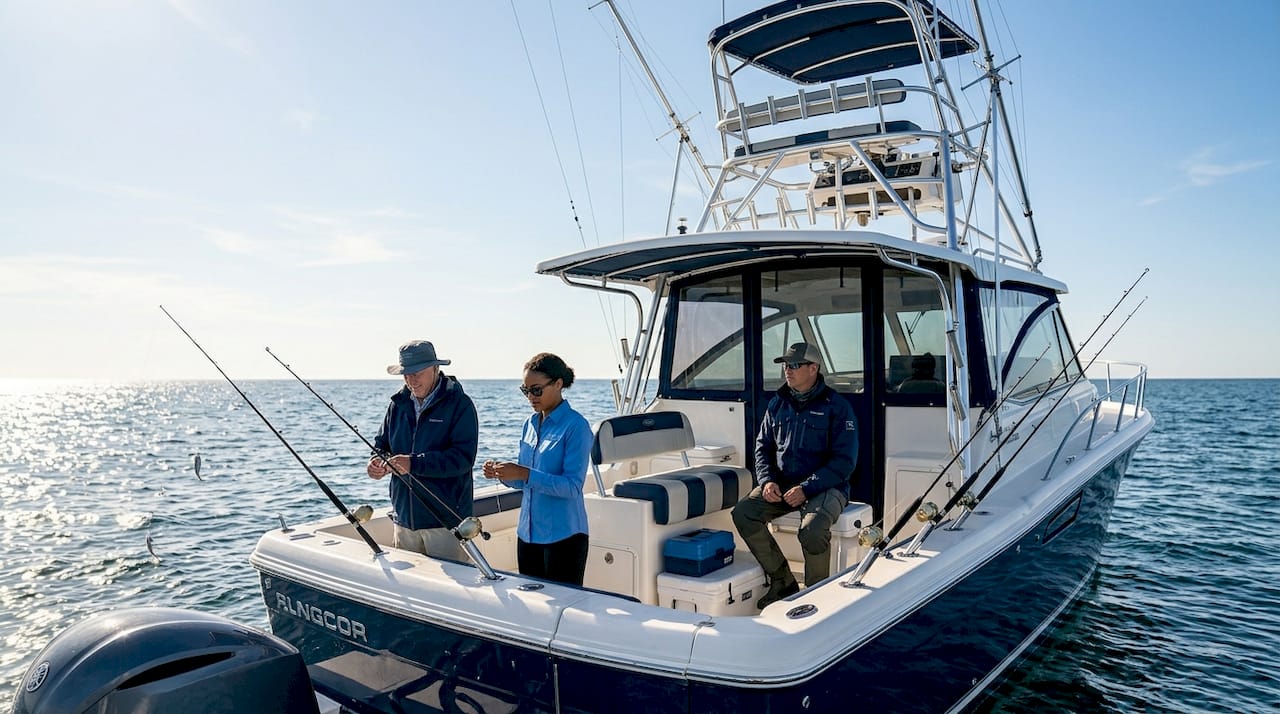
Trolling fishing is defined as a method of dragging baited lines or lures behind a moving boat to attract and catch fish across large areas of water. Known formally as “trolling” in recreational angling regulations, this technique differs fundamentally from casting or jigging because the boat’s movement creates the lure’s action rather than the angler’s arm. Species like tuna, marlin, wahoo, salmon, and striped bass are all prime trolling targets. Washington state fishing regulations legally define trolling as fishing from a vessel underway and under power, which underscores how seriously the method is taken beyond casual conversation.
What is trolling fishing and how does it differ from other techniques?
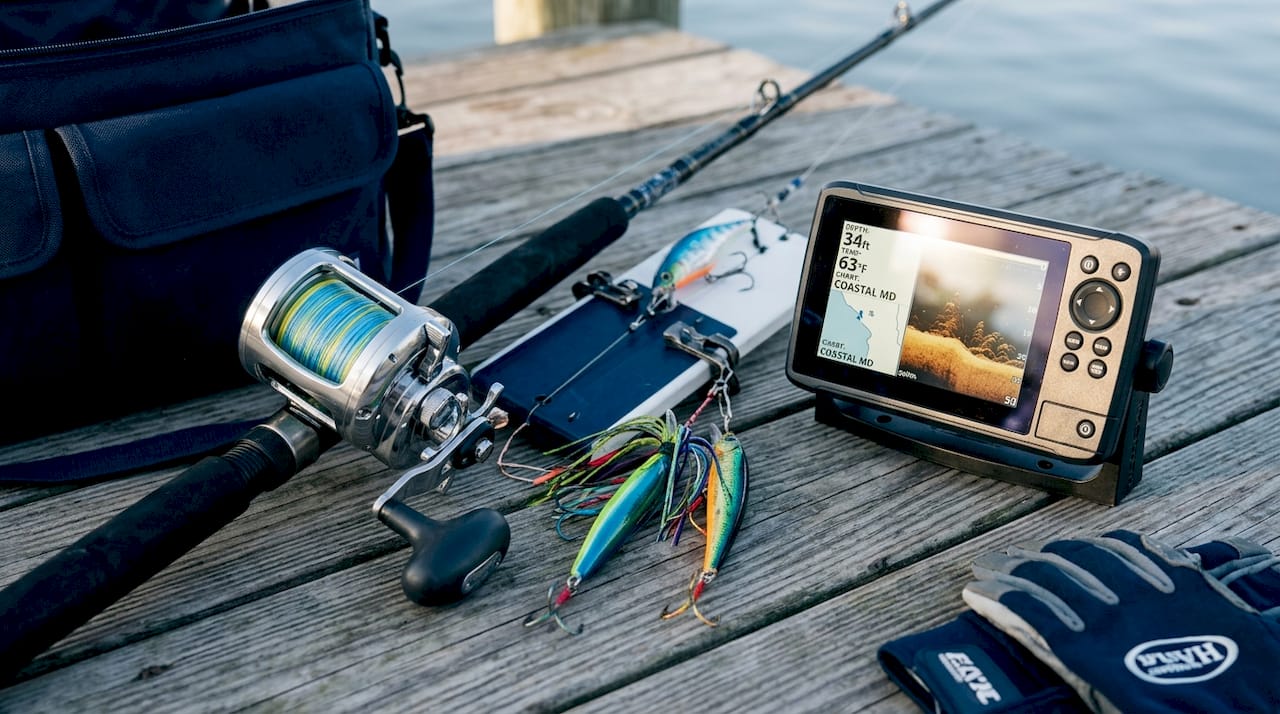
Trolling fishing covers water that no stationary angler can reach. While casting requires you to place a lure at a specific point and retrieve it, trolling lets you drag that lure across miles of productive water in a single outing. Jigging demands constant rod action from the angler; trolling delegates that job to the boat’s forward motion. Fly fishing targets visible fish in defined zones; trolling hunts fish across open flats, offshore canyons, and deep thermoclines.
The most persistent confusion surrounds the difference between trolling and trawling. Trolling uses hooks to catch fish one at a time on a baited line, while trawling is a commercial operation that drags large nets indiscriminately through the water column. One is a sport; the other is an industrial harvest. Mixing them up is like confusing a rifle with a net.
Online “trolling” shares zero connection to the fishing technique beyond the word itself. The internet slang borrows loosely from the image of dragging bait, but the fishing method is a precise, regulated practice. Knowing the distinction matters when you search for gear, regulations, or guides, because the wrong search term sends you down a very different rabbit hole.
| Method | Mechanics | Water coverage | Primary use |
|---|---|---|---|
| Trolling | Lures dragged behind moving boat | High, covers miles | Pelagic and open-water species |
| Casting | Lure thrown and retrieved | Low, targets specific spots | Inshore and structure fishing |
| Jigging | Vertical rod action, stationary boat | Medium, targets depth | Bottom and mid-water species |
| Trawling | Commercial nets dragged by vessel | Very high | Commercial fish harvest |
| Fly fishing | Weighted line cast to visible fish | Low, precision targeting | Trout, salmon, bonefish |
What equipment and gear are essential for trolling fishing?
Trolling gear is purpose-built for sustained pressure and long runs. A standard trolling rod setup uses a heavy-action rod rated for 20 to 80-pound line, paired with a level-wind or conventional reel that holds at least 300 yards of line. The reel’s drag system matters more than almost any other spec because a tuna or wahoo will strip line fast and hard the moment it strikes.
Line choice shapes your depth control. Monofilament floats and stretches, which softens strikes but limits depth precision. Braided line sinks faster and transmits every vibration directly to your hand. Lead-core line and copper wire sink at predictable rates per color or per foot, giving you repeatable depth targeting. Depth control is as critical as speed when trolling, and changing your line type alone can move your lure from the surface to 30 feet down without adding any weight.
Lures for trolling fall into three broad categories:
- Crankbaits and diving plugs: Hard-bodied lures like the Megabass X80 or the Duo Realis Rozante dive to a preset depth based on their bill angle and your trolling speed.
- Soft and artificial squid lures: Options like the Fish Inc Centre 12 Squid trolling lure mimic natural prey and work well offshore for pelagic species.
- Live and cut bait: Rigged ballyhoo, mullet, or mackerel remain the gold standard for offshore trolling, especially for billfish and tuna.
Planer boards spread multiple lines laterally away from the boat’s wake, letting you run four, six, or even eight lines simultaneously without tangles. This dramatically increases the water you cover on each pass. Electronics complete the setup. A quality fish finder with GPS, like those from Garmin or Lowrance, lets you mark productive depths, track your exact speed over ground, and return to productive waypoints with precision.
Pro Tip: Always rig at least one rod with a different lure style or depth than the others. When one line gets a strike, the variation that triggered it tells you exactly what to switch the other rods to.
How to optimize trolling speed and depth for better catches?
Speed is the single most misunderstood variable in trolling fishing. Saltwater offshore trolling generally runs at 6 to 8 knots, while tuna trolling often ranges from 4.5 to 8 mph depending on lure behavior and current conditions. Freshwater trolling for walleye or salmon typically runs slower, between 1.5 and 3 mph. Running too fast makes lures spin unnaturally; running too slow kills their action entirely.
GPS speed and actual lure speed are not the same number. Current and wind affect lure speed in the water independently of what your GPS reads. Trolling into a 2-knot current at 6 knots GPS means your lure is only moving at 4 knots through the water. Trolling with that same current at 6 knots GPS pushes your lure to 8 knots through the water. Both scenarios require different speed adjustments to keep lures performing correctly.
| Target species | Recommended trolling speed | Depth range | Preferred line type |
|---|---|---|---|
| Tuna | 4.5 to 8 mph | Surface to 50 ft | Mono or braid with leader |
| Wahoo | 8 to 14 mph | Surface to 30 ft | Wire or heavy mono |
| Walleye | 1.5 to 2.5 mph | 10 to 30 ft | Lead-core or braid |
| Salmon | 2 to 3.5 mph | 20 to 80 ft | Lead-core or downrigger |
| Striped bass | 3 to 5 mph | 5 to 25 ft | Mono or braid |
Experienced crews position lures in clean lanes between the boat’s wake bubbles rather than inside the white water. Bubble trails scatter light and create turbulence that disrupts a lure’s natural swimming action. Placing lures just outside the wake edges keeps the presentation clean and the action consistent.
Pro Tip: Log your RPMs, GPS speed, wind direction, and water temperature every time you get a strike. After a few trips, patterns emerge that let you replicate productive conditions instead of guessing.
What are effective trolling fishing techniques and strategies?
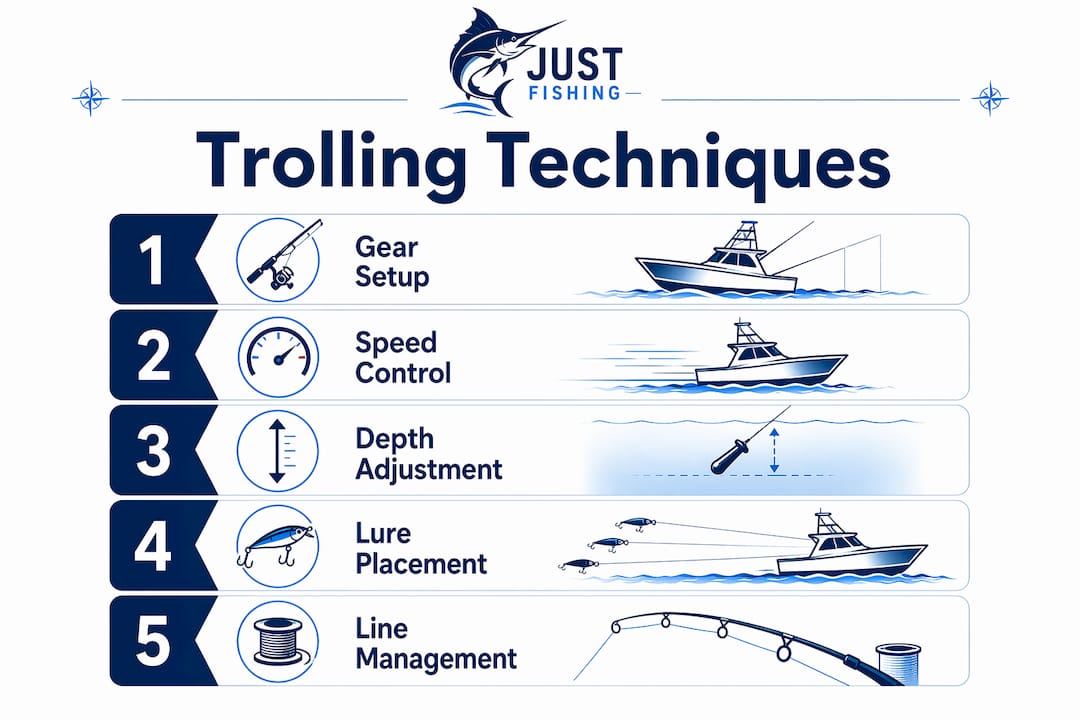
Mastering trolling technique means thinking in systems, not single lines. Here is a proven sequence for setting up a productive trolling spread:
- Set your deepest lines first. Downrigger balls or lead-core rigs go out before surface lines so you can manage depth without tangling shallower setups.
- Deploy planer boards on both sides. Run your outside lines on boards to spread coverage 30 to 50 feet off each side of the boat, then set inside lines closer to the wake.
- Vary lure distances behind the boat. Short lines at 30 to 50 feet target fish pushed up by the prop wash; long lines at 100 to 200 feet reach fish that spook from boat noise.
- Work structure and edges. Troll along weedlines, temperature breaks, current edges, and depth contours rather than open, featureless water. Fish stack on edges because bait does.
- Make S-curves instead of straight passes. Turning the boat slightly speeds up the outside lures and slows the inside ones, triggering reaction strikes from following fish.
- Mark and return to productive spots. Drop a GPS waypoint the moment a fish strikes. Schools hold in the same water column, and returning to the exact coordinates often produces more fish.
Professional anglers use side-imaging sonar and maintain precise speed and angle adjustments to catch significantly more fish than anglers who troll haphazardly. The difference between a productive trolling spread and a wasted morning is almost always systematic thinking rather than luck. Trolling for bass from a kayak, as covered by Bass Angler Magazine, shows that the same principles scale down to smaller craft and freshwater species with equal effectiveness.
Trolling suits beginners because it produces fish consistently even without advanced casting skills, but it scales into a sophisticated discipline when you add electronics, multi-line spreads, and systematic speed logging. That range is exactly what makes it worth learning properly.
Key takeaways
Trolling fishing works because it combines controlled speed, precise depth, and systematic lure placement to cover productive water that no stationary method can reach.
| Point | Details |
|---|---|
| Core definition | Trolling drags baited lines behind a moving boat to cover large water areas efficiently. |
| Speed matters | Match trolling speed to your target species; tuna needs 4.5 to 8 mph, walleye needs 1.5 to 2.5 mph. |
| Depth control | Use lead-core line, downriggers, or diving plugs to place lures precisely in the fish’s water column. |
| Planer boards multiply coverage | Spreading lines laterally with planer boards lets you fish a much wider path on every pass. |
| Log your conditions | Recording RPMs, speed, and temperature at each strike builds a repeatable advantage over time. |
Why trolling deserves more respect than it gets
I have heard the argument that trolling is lazy fishing more times than I can count. My experience says the opposite. The first time I ran a six-line spread offshore in the Maldives, I spent 45 minutes just setting up the rods before the boat moved an inch. Getting the depths staggered, the planer boards set, and the lure distances calibrated is not lazy. It is engineering.
What changed my perspective permanently was the day I started logging conditions. I kept a simple notebook: RPMs, GPS speed, wind direction, water temp, and which lure was on which rod when a fish struck. Within three trips, I had patterns I could reproduce. That is not luck. That is method. Anglers who log RPMs and conditions gain a reproducible advantage that casual trollers never develop.
The technology side has also shifted what trolling can do. Side-imaging sonar from Humminbird or Garmin now shows you fish schools in real time, and you can steer your spread directly into them. Trolling is evolving from a casual method into a high-skill, strategic discipline, and the anglers who treat it that way catch more fish. If you have written trolling off as a beginner’s shortcut, I would encourage you to run a proper spread once and reconsider.
— Alaa
Gear up for your next trolling session with Justfishinggroup
Justfishinggroup carries the trolling-specific gear that makes a real difference on the water. From proven lures like the Fish Art Torpedo Jig and the Savage Gear Hacker to a full range of rods, reels, lines, and terminal tackle, the shop is stocked for both beginners building their first spread and experienced anglers upgrading their setup. Justfishinggroup also offers fishing trips across the Maldives, UAE, Seychelles, Kenya, and beyond, where you can put these techniques to work on world-class pelagic species. Browse the full trolling gear selection and find everything you need in one place.
FAQ
What is trolling fishing in simple terms?
Trolling fishing is dragging baited lines or lures behind a moving boat to attract and catch fish. The boat’s forward motion creates the lure’s action, covering large areas of water that stationary methods cannot reach.
What fish can be caught by trolling?
Tuna, wahoo, marlin, salmon, walleye, striped bass, and mahi-mahi are among the most common trolling targets. The technique works for both saltwater pelagic species and freshwater open-water fish.
How fast should you troll for fish?
Speed depends on the species. Tuna trolling runs at 4.5 to 8 mph, wahoo at 8 to 14 mph, and walleye at 1.5 to 2.5 mph. Always adjust for current, since GPS speed and actual lure speed through the water differ.
Is trolling fishing good for beginners?
Trolling is one of the most beginner-friendly methods because the boat does the work of creating lure action. It produces fish consistently for novices while offering enough technical depth to challenge experienced anglers.
What is the difference between trolling and trawling?
Trolling is a recreational hook-and-line method that catches fish individually behind a moving boat. Trawling is a commercial operation using large nets dragged through the water to harvest fish in bulk.
Recommended
Customer Reviews
Rate this blog
Rating Breakdown
Categories
Popular Tags