The Role of Community in Fishing: Why It Matters
June 08, 2026, 64

The Role of Community in Fishing: Why It Matters
TL;DR:
- Community involvement through local governance, cultural traditions, and shared management practices is essential for sustainable fisheries and ecosystem health. Recognizing and empowering local knowledge, ensuring inclusive participation, and designing conservation strategies that account for full community benefits lead to higher compliance and long-term success. Effective co-management depends on shared authority, genuine participation, and integrating social trust with ecological stewardship.
The role of community in fishing is defined by the collective governance, cultural traditions, and shared management practices that determine whether fish populations thrive or collapse. Fisheries science calls this framework “community-based fisheries management” or co-management, and the evidence is clear: ecosystems and human needs are so deeply interconnected that inclusive governance is not optional. From Indigenous stewardship in the Philippines to formal council systems in the United States, communities are the operational backbone of sustainable fishing worldwide.
What is the role of community in fishing?
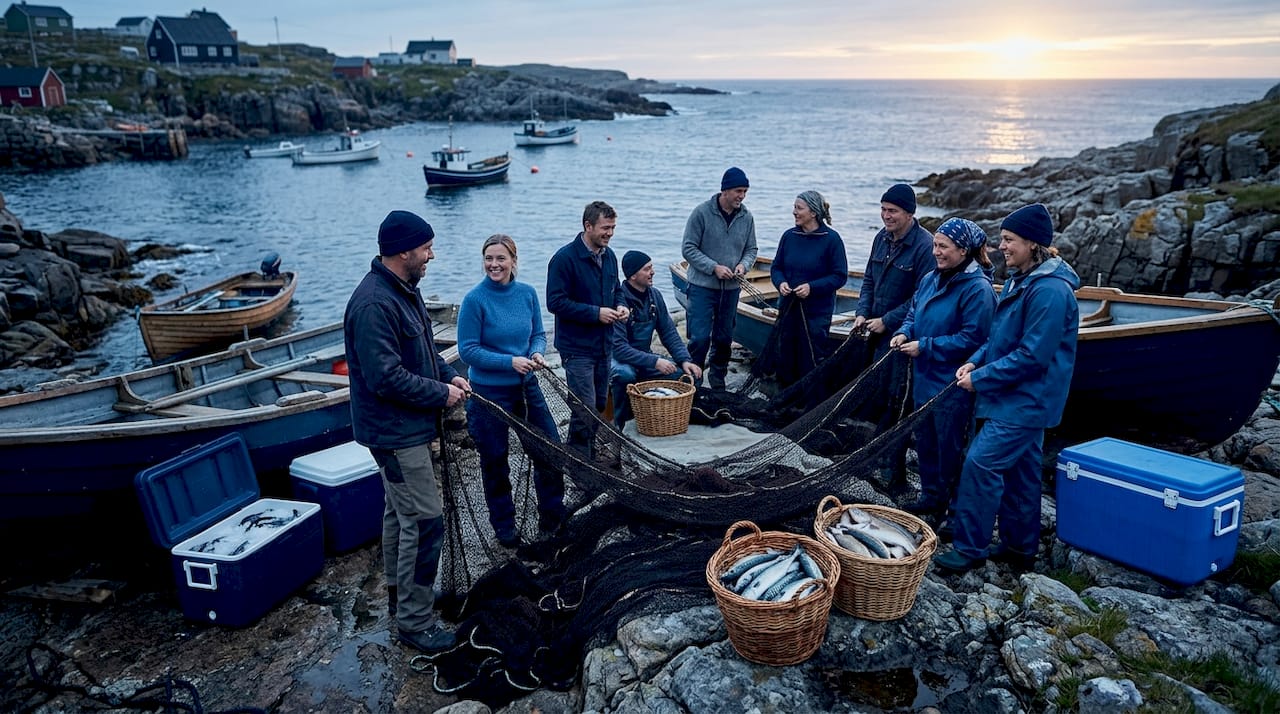
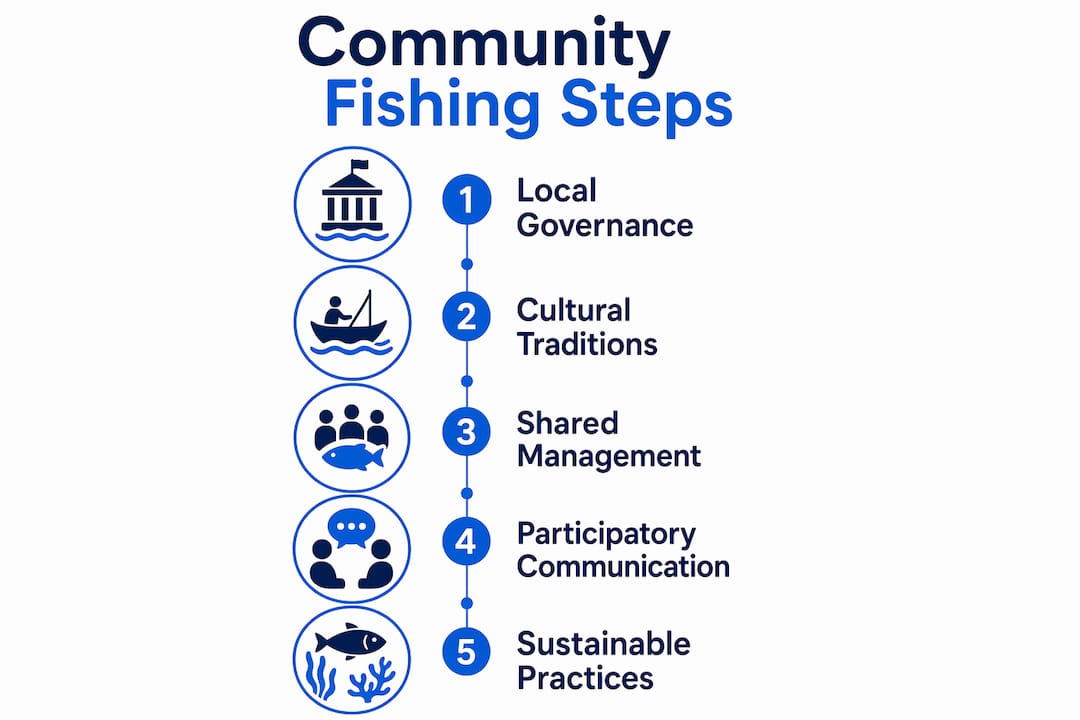
Community involvement in fishing operates on three levels: local governance, cultural tradition, and collective resource management. Together, these shape who fishes, how much they take, and what rules they follow. When these systems function well, they produce outcomes that neither government regulation alone nor market forces can replicate.

Local governance systems are often the most adaptive. In Lamidan, Davao Occidental, Philippines, Manobo communities use spiritual rituals and taboos to regulate fishing technology and marine resource use across seasonal cycles. These practices link livelihood directly to conservation, creating accountability that no external agency could enforce at the same granular level. The community owns the rule, so the community follows it.
Formal co-management structures extend this logic into national policy. The U.S. Magnuson-Stevens Act of 1976 created Regional Fishery Management Councils that incorporate fishers, scientists, tribal representatives, and public comment into binding fisheries decisions. After 50 years of operation, these councils demonstrate that open, inclusive governance can sustain both fish populations and fishing communities simultaneously. The model works because it gives communities real authority, not just a seat at the table.
Cultural traditions also carry ecological knowledge that formal science often misses. Seasonal fishing calendars, species-specific harvest limits, and sacred no-take zones all function as adaptive management tools refined over generations. Recognizing these systems as legitimate governance, rather than folklore, is the first step toward effective co-management.
- Local governance integrates spiritual, cultural, and ecological knowledge into daily fishing decisions
- Formal co-management links community input to regulatory agencies with binding authority
- Cultural traditions encode adaptive management practices developed over generations
- Community-based monitoring increases compliance because rules carry social legitimacy
Pro Tip: When working with or within a fishing community, identify existing governance structures before proposing new ones. Replacing functional local systems with external frameworks often destroys the social trust that makes compliance possible.
How does local knowledge shape fisheries management?
Local ecological knowledge is the accumulated understanding of fish behavior, habitat conditions, and seasonal patterns that communities develop through direct, repeated observation. It guides adaptive resource use in ways that scientific surveys conducted every few years simply cannot match. A fisher who has worked the same reef for 30 years carries real-time data in their head.
Research in Karimunjawa small-scale fisheries shows that participatory communication and social capital drive stronger community control, perceived benefits, and organizational culture for sustainable marine governance. Social capital here means trust, reciprocity, and dense social networks. When community members trust each other and share a sense of mutual obligation, collective action becomes possible. Without it, even well-designed conservation programs fail because no one enforces the rules on their neighbor.
Gender inclusion is a specific dimension of social capital that most fisheries programs undervalue. In Cox’s Bazar, Bangladesh, women represent 45 to 55 percent of training participants in community-based fisheries management programs. That level of inclusion improves governance outcomes because women in coastal communities often manage post-harvest processing, household food security, and local market relationships. Excluding them from decision-making creates blind spots in resource management.
Four conditions make local knowledge most effective in fisheries management:
- Formal recognition: Local knowledge must be acknowledged as legitimate by regulatory agencies, not treated as anecdotal
- Participatory channels: Communities need structured ways to contribute knowledge to management decisions
- Capacity building with authority: Training programs must come with real decision-making power, not just skills
- Gender-inclusive participation: Women’s knowledge and interests must be represented in governance bodies
Pro Tip: Co-management legitimacy depends on shared authority plus tangible benefits. Participatory communication and capacity building alone are insufficient without institutional authority. If communities can advise but not decide, trust erodes quickly.
How do conservation restrictions affect fishing communities?
Conservation restrictions create real trade-offs, and ignoring those trade-offs destroys program legitimacy. Designing marine reserves based only on fishing impacts risks shifting restrictions to areas that are critical for other community ecosystem benefits, including food security, cultural practices, and coastal protection. Research with 52 households in Madang Lagoon, Papua New Guinea, found that fishing-focused conservation planning consistently underestimates the social costs communities bear when access is restricted.
The core problem is that communities derive multiple benefits from the same coastal areas. A reef that a conservation plan identifies as “low fishing value” may be the primary source of shellfish for subsistence households, a site of cultural significance, or a nursery area that local fishers have protected informally for decades. Restricting access to that reef without accounting for those benefits shifts costs onto the most vulnerable community members.
| Approach | Community impact | Conservation outcome |
|---|---|---|
| Fishing-focused reserve design | High social cost, reduced acceptance | Addresses fishing pressure only |
| Full benefit portfolio planning | Lower social cost, higher compliance | Addresses multiple ecosystem services |
| Inclusive participatory design | Shared ownership, sustained compliance | Long-term resilience |
Strategies that reduce these tensions share a common structure. They start with community-defined benefit mapping before drawing any boundaries. They offer alternative livelihoods, as seen in Cox’s Bazar where 2,429 households received support through alternative livelihood programs. They maintain transparent governance so communities can see how decisions are made and challenge outcomes they consider unfair.
- Map the full range of ecosystem benefits communities use before designing restrictions
- Offer alternative livelihoods to reduce the economic burden of access limitations
- Maintain transparent governance with clear appeal mechanisms
- Align national policies with existing local governance rather than overriding them
What do successful community fishing initiatives look like?
Community-based fisheries management in Cox’s Bazar, Bangladesh, provides one of the clearest documented examples of co-management at scale. The program shares management responsibilities between government agencies and local fishing communities, grants exclusive fishing access to participating groups, and integrates alternative livelihood training. The results are mixed in ways that are instructive: success correlates directly with the quality of participation, not just its presence.
Programs where communities had genuine input into rule-setting showed stronger compliance and better resource outcomes. Programs where participation was largely consultative, where communities were informed rather than empowered, showed weaker results. This pattern confirms what co-management research consistently finds: governments must create genuine dialogue spaces and be willing to share decision-making authority for collaborative efforts to succeed.
For recreational anglers and sport fishing communities, the lessons translate directly. Local fishing clubs that establish shared norms around catch-and-release, size limits, and seasonal restrictions create the same social enforcement mechanisms that formal co-management relies on. The Justfishinggroup fishing blog regularly covers how local community organizations shape conservation and management in angling contexts, reflecting how these dynamics play out across different fishing cultures.
Long-term success in community fishing initiatives requires three structural conditions. First, institutions must support sustained participation over years, not just during program launch. Second, benefits must be distributed equitably so that the communities bearing conservation costs also receive conservation gains. Third, local governance must be protected from external policy changes that undermine community authority without consultation.
Pro Tip: Engage community members at the design stage of any fishing initiative, not after the framework is set. Early involvement builds shared ownership. Late involvement builds resentment.
Key takeaways
Community governance, local knowledge, and inclusive participation are the three pillars that make fisheries management work at the local level, and no amount of top-down regulation replaces them.
| Point | Details |
|---|---|
| Community governance is foundational | Local rules grounded in cultural and ecological knowledge produce compliance that external agencies cannot replicate. |
| Local knowledge fills critical gaps | Fishers’ direct observation of seasonal patterns and habitat conditions guides adaptive management in real time. |
| Conservation must account for full benefits | Reserve design that ignores non-fishing ecosystem benefits increases social costs and reduces community acceptance. |
| Shared authority drives legitimacy | Co-management succeeds only when communities hold real decision-making power, not just advisory roles. |
| Inclusive participation improves outcomes | Gender equity and broad representation in governance bodies strengthen both conservation legitimacy and practical results. |
Why community is the variable most fisheries policy gets wrong
I have spent years reading fisheries research and talking with anglers across multiple continents, and the pattern is consistent: the programs that fail almost always underestimate community. They treat local fishers as a problem to be managed rather than as the primary source of knowledge and enforcement capacity. They design conservation frameworks in offices and then wonder why compliance is low.
What the research from Karimunjawa, Cox’s Bazar, and Madang Lagoon makes clear is that social capital is not a soft variable. It is the mechanism through which conservation rules get followed or ignored. A community with strong trust networks and a sense of shared ownership over a fishery will self-enforce rules that no government agency has the budget to monitor. A community that feels excluded from decisions will find ways around restrictions, often rationally, because they bear the costs without sharing the benefits.
The Manobo example from the Philippines is the one I return to most often. Spiritual governance and seasonal rituals are not primitive alternatives to scientific management. They are adaptive management systems that have maintained resource health across generations. The question is not whether to replace them with modern frameworks. The question is how to align national policy with what already works.
Recreational anglers have more influence here than they often realize. Local fishing clubs, shared etiquette norms, and community-driven catch reporting all contribute to the same social infrastructure that formal co-management depends on. Choosing to fish with operators who respect local communities and support sustainable practices is not just an ethical preference. It is a direct contribution to the governance systems that keep fisheries healthy.
— Alaa
Explore community-driven fishing experiences with Justfishinggroup
Justfishinggroup connects anglers with fishing experiences built around local knowledge and community-supported practices. Whether you are booking a guided fishing trip in the UAE, Maldives, or Kenya, or selecting gear that performs in the specific conditions local communities fish, the platform brings together the expertise of regional fishing cultures with the convenience of a single booking and retail destination. The Justfishinggroup catalog includes rods, reels, lures, and jigs selected for real-world performance across the destinations it serves. When you choose operators and gear that reflect genuine community knowledge, you support the fisheries that make those experiences possible.
FAQ
What is community-based fisheries management?
Community-based fisheries management is a governance model where local fishing communities share authority over resource decisions with government agencies. It combines local ecological knowledge, cultural practices, and participatory governance to produce sustainable outcomes.
Why does local knowledge matter in fisheries conservation?
Local ecological knowledge captures real-time observations of fish behavior, habitat conditions, and seasonal patterns that formal scientific surveys miss. Communities with recognized roles in management use this knowledge to adapt rules faster than centralized agencies can.
How do marine reserves affect fishing communities?
Marine reserves can shift community access away from areas that provide multiple ecosystem benefits beyond fish catch, including food security and cultural sites. Conservation planning that accounts for the full range of community-valued benefits produces higher acceptance and better long-term compliance.
What makes co-management succeed or fail?
Co-management succeeds when communities hold genuine decision-making authority and receive tangible benefits from conservation outcomes. Programs that offer training and consultation without real authority consistently produce weaker results and lower compliance.
How can recreational anglers support community fishing initiatives?
Recreational anglers support community fishing by following local fishing etiquette, participating in community-based monitoring programs, and choosing guided trip operators who work with and respect local fishing communities. These choices reinforce the social infrastructure that sustains healthy fisheries.
Recommended
Customer Reviews
Rate this blog
Rating Breakdown
Categories
Popular Tags