The Role of Baitfish in Angling: A Practical Guide
July 22, 2026, 3
The Role of Baitfish in Angling: A Practical Guide
TL;DR:
- Baitfish are small forage fish that serve as the main food source for larger predators, making them essential in angling. Locating and matching the baitfish species, size, and behavior increases fishing success, especially through natural bait or imitations. Understanding baitfish movement patterns and seasonal migrations helps anglers find feeding predators effectively.
Baitfish are defined as small forage fish that serve as the primary food source for larger predatory species, making them the single most important variable in any angling strategy. The role of baitfish in angling extends far beyond simply threading a hook. Understanding where baitfish are, which species are present, and how predators respond to them separates consistent anglers from occasional ones. The Atlantic States Marine Fisheries Commission has documented how forage fish mismanagement can cause up to a 30% decline in predator populations like striped bass. That number tells you everything about how tightly predator abundance is tied to baitfish health. Justfishinggroup builds its fishing content around this foundational truth.
What is the role of baitfish in angling?
Baitfish function as energy bridges in aquatic ecosystems. They convert plankton into protein that apex predators like tuna, bass, and snook can actually use. Without baitfish, the food chain collapses at the middle, and predator fish either relocate or starve.
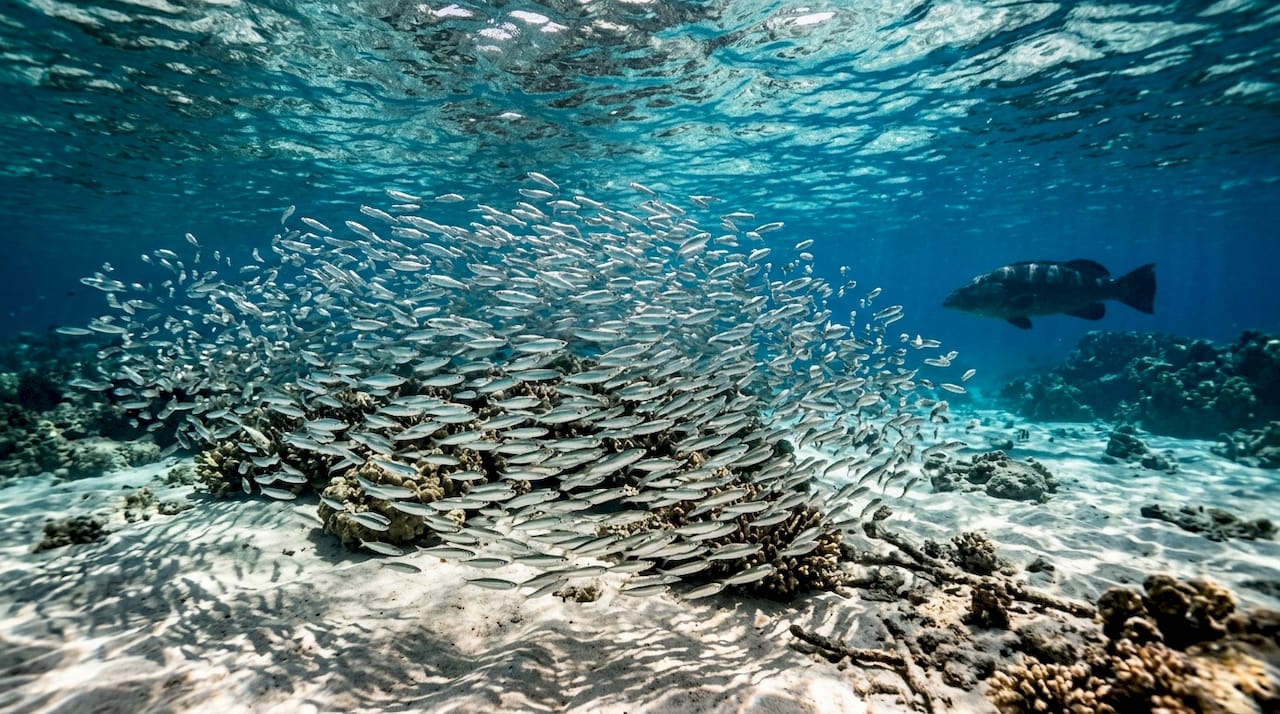
For anglers, this means one thing: find the baitfish, and you find the fish. Predator species do not wander randomly. They follow baitfish schools with precision, adjusting their depth, speed, and feeding windows based on baitfish availability. Baitfish abundance directly shapes where and when predatory fish feed in both freshwater and saltwater environments.
The concept of “matching the hatch” comes from fly fishing but applies universally. It means presenting a bait or lure that replicates the size, profile, and swimming action of whatever baitfish predators are currently eating. Color alone does not trigger strikes. Matching size and profile is what separates a bait that gets ignored from one that gets crushed.
- Baitfish signal feeding zones: surface disturbances, diving birds, and nervous water all indicate baitfish schools below.
- Predators key in on injured or isolated baitfish, not healthy schooling fish at the center of a ball.
- Seasonal baitfish migrations pull predators along predictable routes, giving anglers repeatable patterns year after year.
Pro Tip: Watch for gulls diving aggressively over open water. They are targeting the same baitfish schools that predators are pushing from below. Position your cast on the edges of that activity, not directly into it.
What types of baitfish should anglers know?
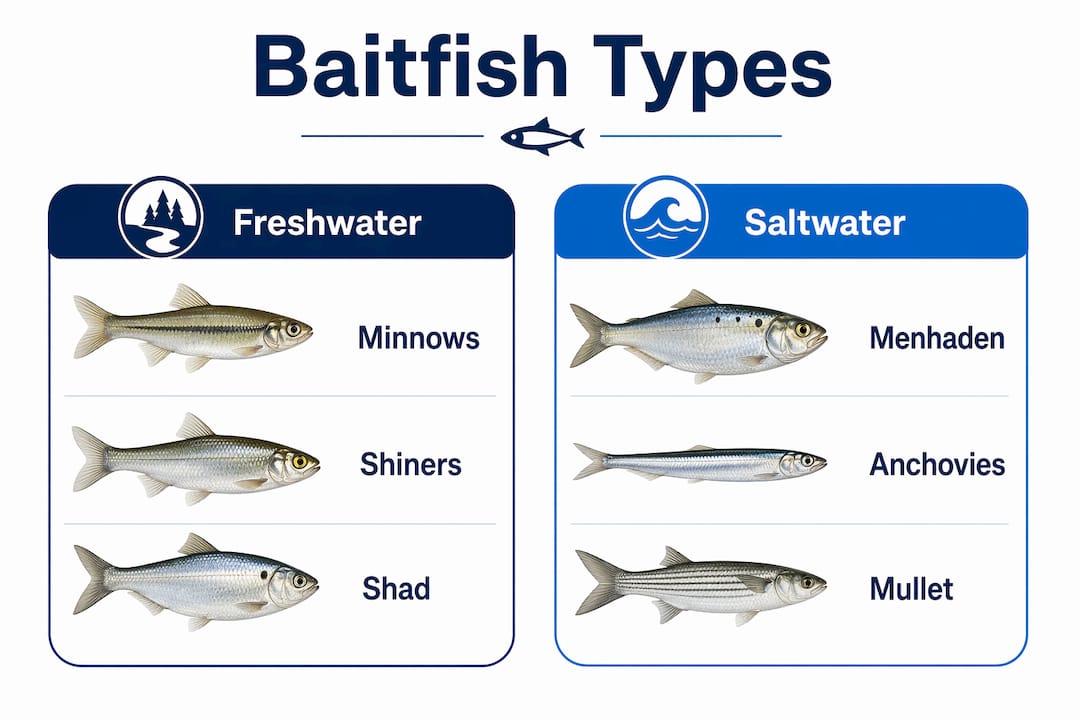
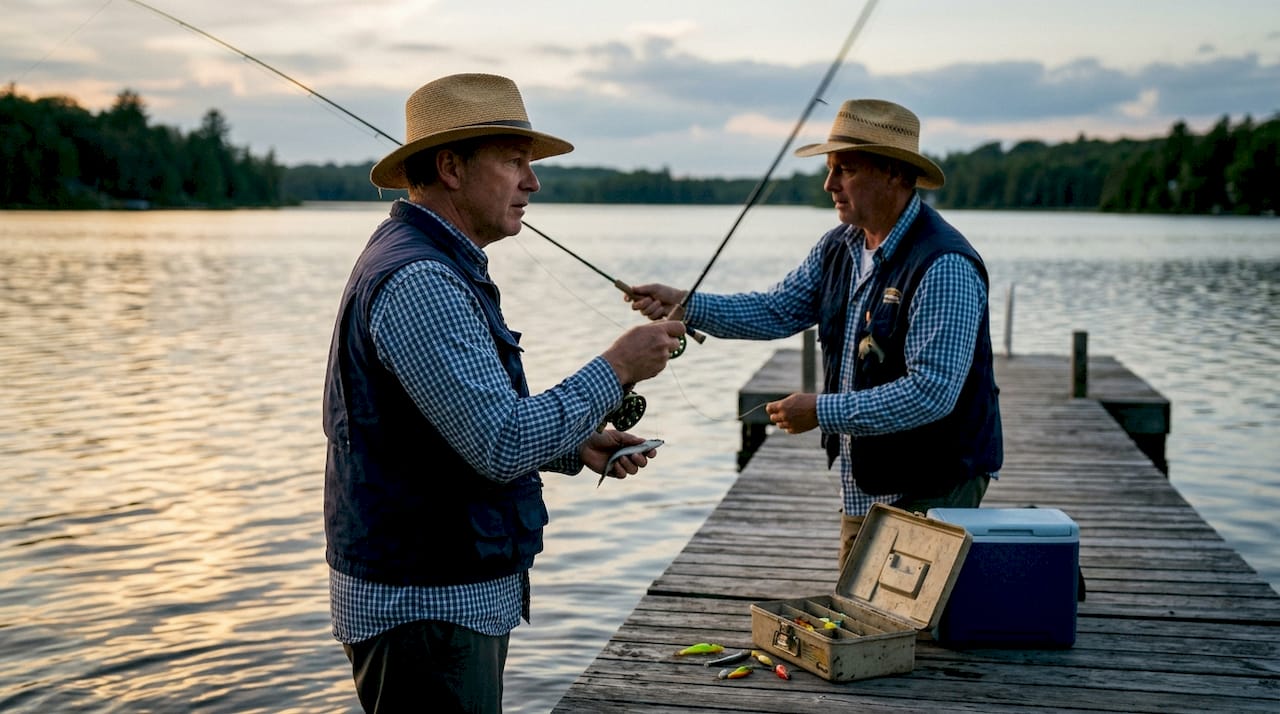
Baitfish species vary significantly between freshwater and saltwater environments, and knowing which species are local to your fishing ground is non-negotiable. Using the wrong baitfish type, even a healthy live one, produces far fewer strikes than matching what predators already expect to find.
Freshwater baitfish
Minnows are the most widely used freshwater baitfish, covering dozens of species including fathead minnows, golden shiners, and creek chubs. Shad, particularly threadfin and gizzard shad, are critical forage for largemouth bass across the American South and Midwest. Gizzard shad can grow to 18 inches, which means they outgrow predation by bass once they exceed roughly 60% of the predator’s body length. That size threshold matters when you are selecting live bait or choosing a lure profile.
Saltwater baitfish
Menhaden, sand eels, anchovies, pilchards, and mullet dominate saltwater food chains along American coastlines. Menhaden in particular are so ecologically significant that the Atlantic States Marine Fisheries Commission implemented Emergency Reference Points specifically to protect their populations. Sand eels are the primary forage for striped bass in the Northeast during spring and early summer. Pilchards and scaled sardines drive inshore action across Florida and the Gulf Coast.
| Baitfish | Water type | Primary predators | Key season |
|---|---|---|---|
| Fathead minnow | Freshwater | Bass, walleye, crappie | Year-round |
| Gizzard shad | Freshwater | Largemouth bass, striped bass | Spring, fall |
| Menhaden | Saltwater | Striped bass, bluefish, tuna | Spring, fall |
| Sand eel | Saltwater | Striped bass, fluke, cod | Spring, summer |
| Pilchard | Saltwater | Snook, tarpon, kingfish | Summer, fall |
| Mullet | Saltwater | Redfish, snook, tarpon | Fall |
Seasonal abundance patterns matter as much as species identity. Shad spawn in spring, drawing bass into shallow water. Mullet migrate south along the Atlantic coast each fall, triggering some of the most reliable inshore fishing of the year. Knowing these windows gives you a calendar, not just a species list.
How do you use baitfish effectively: live bait, cut bait, and imitations?
The three main methods for using baitfish in angling each carry distinct advantages, and the best choice depends on species, conditions, and what predators are actively doing.
Live bait. Live baitfish produce the most realistic sensory package available. They generate natural motion, vibration, and scent simultaneously. Live bait produces higher catch rates than artificial lures for species like bass, walleye, and crappie, particularly when fish are actively feeding in clear water. Rig live baitfish through the lips for a natural swimming presentation, or through the back behind the dorsal fin when you want them to dive and struggle near structure.
Cut bait. Cut baitfish release oils and scent into the water column, which is especially effective for bottom feeders and species that hunt by smell rather than sight. Catfish, striped bass, and sharks respond strongly to fresh cut menhaden or mullet. Cut bait works best in moving water where current carries the scent trail downstream.
Artificial imitations. Lures that replicate baitfish profiles give you control over depth, speed, and presentation that live bait cannot match. Matching size and swimming action is the key to making artificial imitations work. A sinking stick bait that mimics a wounded mullet, or a minnow-profile lure that replicates the flash of a shad, can outperform live bait when fish are suspended at a specific depth or when live bait is unavailable.
The most overlooked detail in bait selection is size. Bass prefer prey no larger than 60% of their body size to maximize caloric return without risking injury. A 4-pound bass will not commit to a 10-inch shad. Matching bait size to the realistic prey window of your target species increases strike conversion dramatically.
Pro Tip: Before you rig anything, check the stomach contents of the first fish you catch or clean. Gut content analysis tells you exactly which baitfish species and size the predators are eating that day. It is more accurate than any surface observation.
For live bait bass tactics in specific seasonal conditions, rigging method and hook placement vary considerably by water temperature and fish activity level.
How does baitfish movement help you locate feeding predators?
Baitfish do not hold still, and neither do the predators chasing them. Understanding baitfish movement patterns gives you a map to productive water at any time of year.
Baitfish school for protection. A tight ball of thousands of fish is harder for a predator to single out than a lone fish. When a predator attacks a bait ball, the school implodes and then reforms, creating the nervous, flickering surface disturbance anglers call “nervous water.” That surface behavior is a real-time feeding alert.
| Movement trigger | Baitfish response | Predator behavior |
|---|---|---|
| Rising water temperature (spring) | Move into shallows to spawn | Predators follow into flats and coves |
| Falling water temperature (fall) | Migrate to deeper, warmer water | Predators stage at depth transitions |
| Tidal movement (saltwater) | Flush through inlets and channels | Predators ambush at current seams |
| Low light (dawn and dusk) | Rise toward surface to feed on plankton | Predators move up and feed aggressively |
| Predator pressure | Compact into tight balls near surface | Feeding frenzy visible from distance |
Sonar is the most reliable tool for locating baitfish in open water. A dense cloud of returns at mid-column almost always indicates a shad or herring school. Predators typically appear as larger, scattered marks just below or around the bait cloud. When you mark bait without predators, move. When you mark predators stacked tight under bait, you have found a productive zone.
Tidal timing in saltwater environments is equally important. Baitfish flush through inlets and over flats on moving tides, and predators position at current seams to intercept them. Fishing a falling tide at an inlet mouth, where baitfish are funneled through a narrow channel, consistently produces more strikes than fishing slack water in open bays.
Fall bass bait selection follows the same logic: as shad move deeper with cooling water, bass stack behind them at the same depth transitions.
Key Takeaways
Baitfish are the single most reliable indicator of where predatory fish feed, and matching their species, size, and behavior is the most direct path to improving catch rates.
| Point | Details |
|---|---|
| Baitfish drive predator location | Find active baitfish schools and predators will be nearby, often feeding aggressively. |
| Size matching is non-negotiable | Bass and most predators target prey no larger than 60% of their body size for energy efficiency. |
| Live bait outperforms in clear water | Natural motion and scent from live baitfish trigger stronger strikes than artificial lures alone. |
| Gut content analysis beats guesswork | Checking stomach contents of caught fish reveals exactly which baitfish species predators are eating. |
| Seasonal movement creates patterns | Baitfish migrations in spring and fall pull predators along predictable routes anglers can repeat. |
Why I stopped ignoring baitfish and started catching more fish
The honest truth is that I spent years focused on lure color and rod action while completely overlooking what was happening beneath the surface with baitfish. My catch rates changed when I started treating baitfish study as preparation, not an afterthought.
The biggest shift came from gut content analysis. The first time I opened a bass and found a stomach full of 3-inch threadfin shad, I realized I had been throwing 6-inch swimbaits all morning. That single observation changed my entire approach to bait selection. Now I check the water for baitfish activity before I even rig a rod.
The misconception I hear most often is that artificial lures are “just as good” as live bait in all conditions. They are not. Live bait provides sensory cues that no lure fully replicates, especially in clear, calm water where fish have time to inspect what they are about to eat. Lures shine when you need depth control, casting distance, or durability across many casts. Knowing when to use each is the real skill.
My advice: spend 10 minutes before every session observing the water. Look for nervous water, diving birds, and surface flickers. Check local reports for which baitfish species are running. That 10 minutes of preparation will consistently outperform an extra hour of blind casting.
— Alaa
Gear and resources for baitfish-based fishing at Justfishinggroup
Anglers who understand baitfish need gear that matches that knowledge.
Justfishinggroup carries a full range of baitfish-profile lures designed to replicate the size, flash, and action of the most common forage species. The Fish Art Torpedo Jig and Savage Gear Minnow Jig both imitate wounded baitfish with the erratic action that triggers reaction strikes. For anglers who want to take their baitfish knowledge into real fishing environments, Justfishinggroup also offers guided fishing trips across destinations in the UAE, Maldives, Seychelles, and beyond. Browse the full selection at Justfishinggroup and match your gear to what the fish are actually eating.
FAQ
What are baitfish and why do they matter for fishing?
Baitfish are small forage fish that predatory species depend on as their primary food source. Their presence and abundance directly determine where predators feed and how aggressively they strike.
What are the most common types of baitfish for freshwater fishing?
Fathead minnows, golden shiners, threadfin shad, and gizzard shad are the most widely used freshwater baitfish. The right choice depends on which species your target predator is actively feeding on in your local water.
Is live bait better than artificial lures for baitfish imitation?
Live bait generally produces higher catch rates than artificial lures for species like bass, walleye, and crappie because it delivers natural motion and scent together. Artificial lures offer advantages in depth control and durability when live bait is impractical.
How do I match the hatch when using baitfish?
Matching the hatch means replicating the size, profile, and swimming action of the baitfish predators are currently eating, not just the color. Gut content analysis of caught fish is the most accurate method for identifying the right match.
How do I find where baitfish are located on the water?
Look for nervous water, diving birds, and surface flickering, which all indicate baitfish schools below. Sonar marks showing dense mid-column clouds with larger scattered marks beneath them confirm baitfish and predators stacked together.
Recommended
Customer Reviews
Rate this blog
Rating Breakdown
Categories
Popular Tags