


The real role of fishing guides: boost catches by 50%
TL;DR:
- Fishing guides provide expertise, local knowledge, and logistics support to increase success rates.
- They teach skills, techniques, and patterns that help anglers become better long-term fishermen.
- Guides handle permits, safety, and cultural insights, making trips more efficient and enriching worldwide.
Most anglers assume a fishing guide is just someone who knows where the fish are. That assumption costs you catches, experiences, and skills you could be building right now. Recreational fishing success hovers around 50 to 60% on solo outings, yet guided trips consistently push those numbers higher through expertise, preparation, and local knowledge. Whether you’re chasing giant trevally in the Maldives or hunting marlin off the Omani coast, a great guide changes everything. This article breaks down what fishing guides truly do, why they work, and how they can transform your next trip from average to unforgettable.
Table of Contents
- What does a fishing guide really do?
- How fishing guides boost your success rate
- Skill development: Learning from the pros
- Guides as gateways: Exploring new water worldwide
- Why guides matter more than you think
- Ready to fish smarter? Plan your next adventure
- Frequently asked questions
Key Takeaways
| Point | Details |
|---|---|
| Guides wear many hats | Fishing guides manage hospitality, safety, logistics, and personalized instruction for clients. |
| Better success rates | Data shows guided trips significantly increase your chances of catching fish compared to solo outings. |
| Skill acceleration | Guides give targeted feedback and insider tips, allowing you to improve faster than on your own. |
| Access to new waters | Guides simplify travel, unlock new fishing destinations, and ensure a safe, legal experience. |
What does a fishing guide really do?
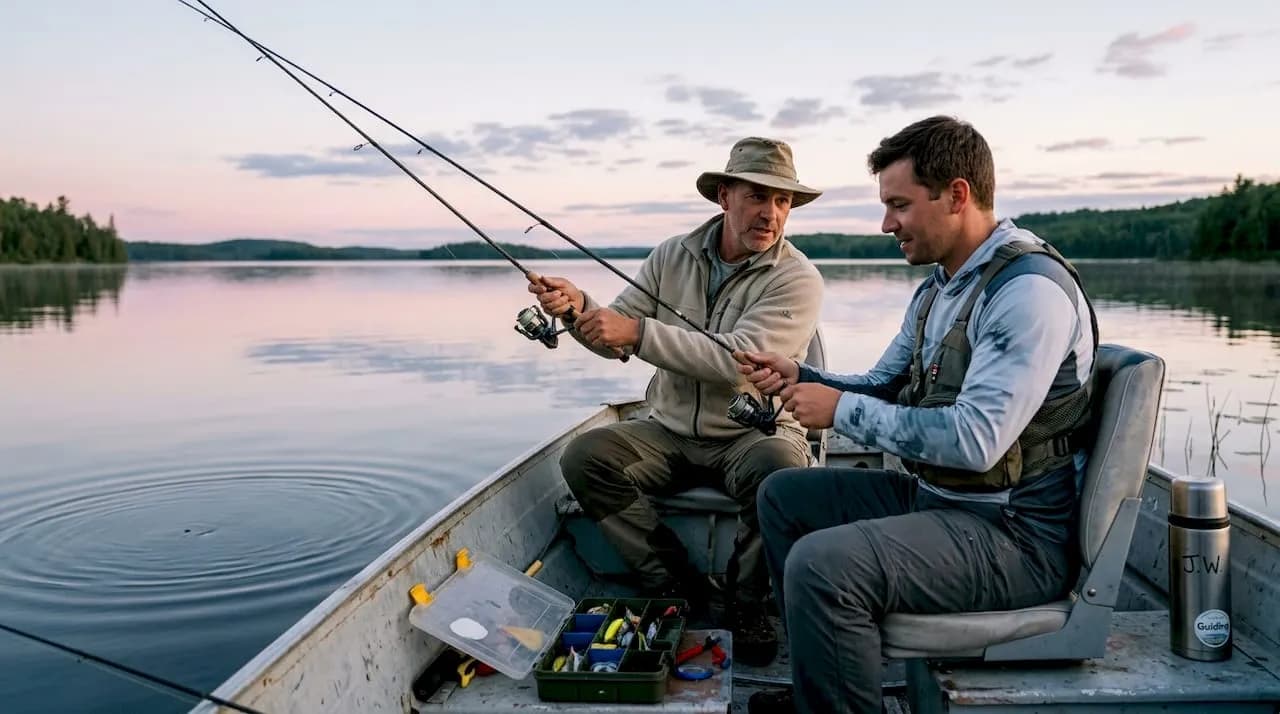
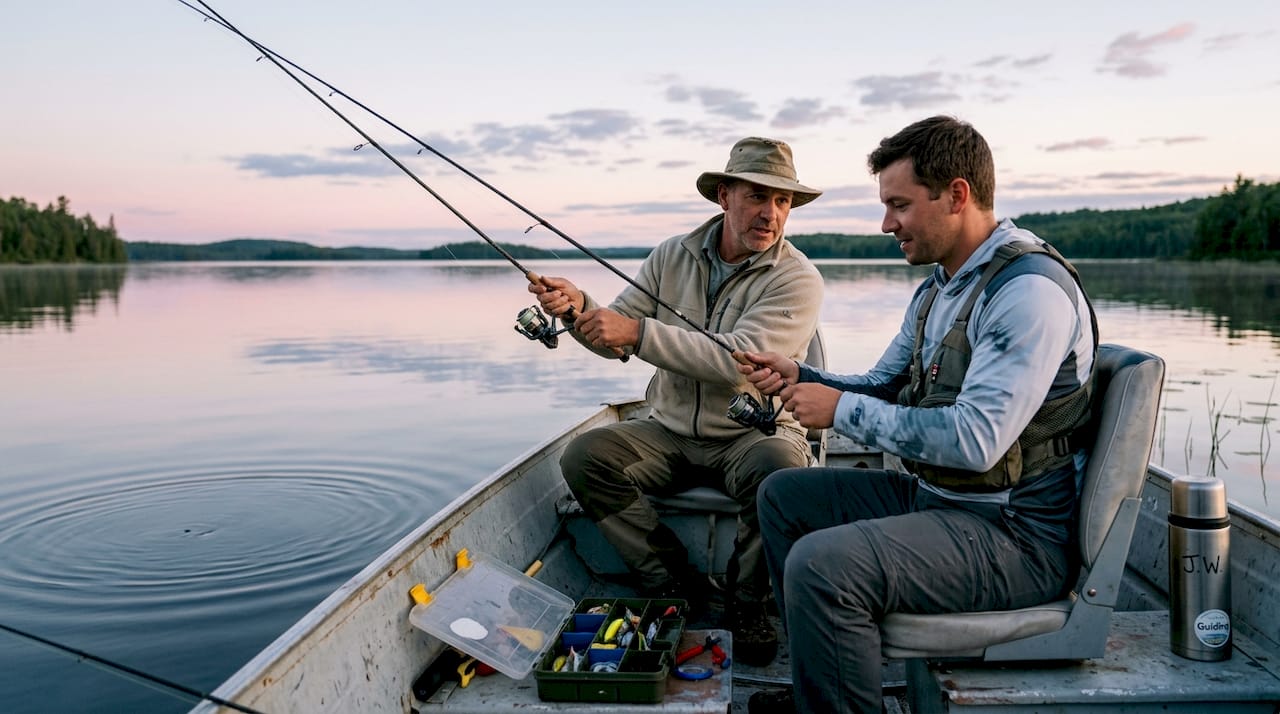
Most people picture a fishing guide pointing at a spot on the water and saying, “Cast there.” The reality is far more involved. A professional guide is part host, part safety officer, part coach, and part logistics manager, all rolled into one person who genuinely wants you to have the best day possible on the water.
Before you even step on the boat, your guide has already done hours of work. They’ve checked weather forecasts, scouted conditions, secured permits, prepped and tested all the equipment, and planned contingencies if conditions change. By the time you arrive, the hard work is done. You just show up and fish.
Once you’re out there, the guide’s role shifts constantly. They teach casting techniques, explain why certain baits work in specific conditions, demonstrate knot tying, and coach you through fighting a fish without losing it. If you’re new to the sport, they’ll walk you through every step patiently. If you’re experienced, they’ll challenge you with advanced tactics.
The fishing guide hospitality side of the job is just as important as the technical side. As highlighted by fishing industry experts, guides handle communication, patience, fish cleaning, meal preparation, and the overall experience to make sure every angler walks away satisfied, regardless of skill level.
Here’s a quick look at what a full-service guide typically covers:
- Securing all required fishing permits and licenses
- Preparing and maintaining all rods, reels, and terminal tackle
- Teaching casting, retrieval, and hook-setting techniques
- Identifying fish species and explaining local regulations
- Cleaning and packaging your catch at the end of the day
- Managing safety protocols on the water
The essential gear for guides they use matters too. A guide equipped with quality rods and reliable tackle gives you a real advantage before the first cast.
“The best guides don’t just find fish. They create an experience that makes you want to come back, no matter how many you caught.”
Pro Tip: Before booking, tell your guide exactly what you want from the trip. Whether it’s learning new techniques, targeting a specific species, or just relaxing and having fun, a great guide will tailor the entire day to your goals.
How fishing guides boost your success rate
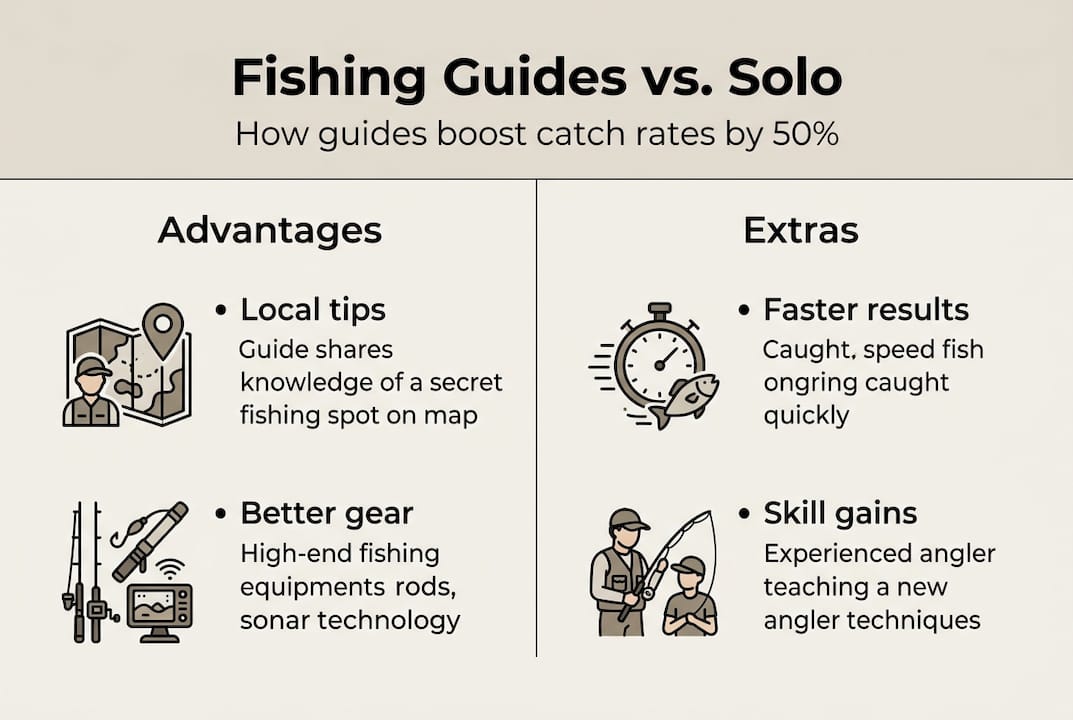
Let’s talk numbers. Solo recreational anglers catch fish on roughly 50 to 60% of their outings according to US participation data. That means nearly half of all solo trips end without a single catch. Guided trips consistently outperform that baseline because guides remove the guesswork from every decision.
A guide knows which tides trigger feeding activity for local species. They know which structure holds fish in summer versus winter. They understand how barometric pressure changes affect fish behavior and can pivot tactics mid-trip when conditions shift. That depth of local knowledge takes years to build on your own. With a guide, you access it on day one.
| Factor | Solo angler | Guided angler |
|---|---|---|
| Local knowledge | Limited | Extensive |
| Equipment readiness | Variable | Fully prepared |
| Permit and legal compliance | Self-managed | Guide handles it |
| Catch rate | ~50 to 60% | Consistently higher |
| Skill development | Slow, trial and error | Fast, targeted coaching |
| Safety management | Self-managed | Professionally handled |
The difference isn’t just about catching more fish. Guided anglers also spend less time troubleshooting gear, untangling lines, or wondering if they’re in the right spot. Every minute is focused on fishing, which means more casts, more bites, and more opportunities.
Stat to remember: On destinations like the Maldives and Seychelles, where species like GT and bonefish require precise technique, the gap between guided and solo success rates widens dramatically.
Pro Tip: Even if you’ve fished for 20 years, visiting a new destination without a guide means starting from scratch. A guide shortens that learning curve from months to a single morning session.
When you plan your fishing trip with an experienced guide already booked, you arrive with a real strategy instead of a hopeful guess.
Skill development: Learning from the pros
Beyond the catch count, one of the most underrated benefits of hiring a guide is what you take home after the trip. Not just fish. Skills. Real, applicable techniques that make you a better angler on every future outing.
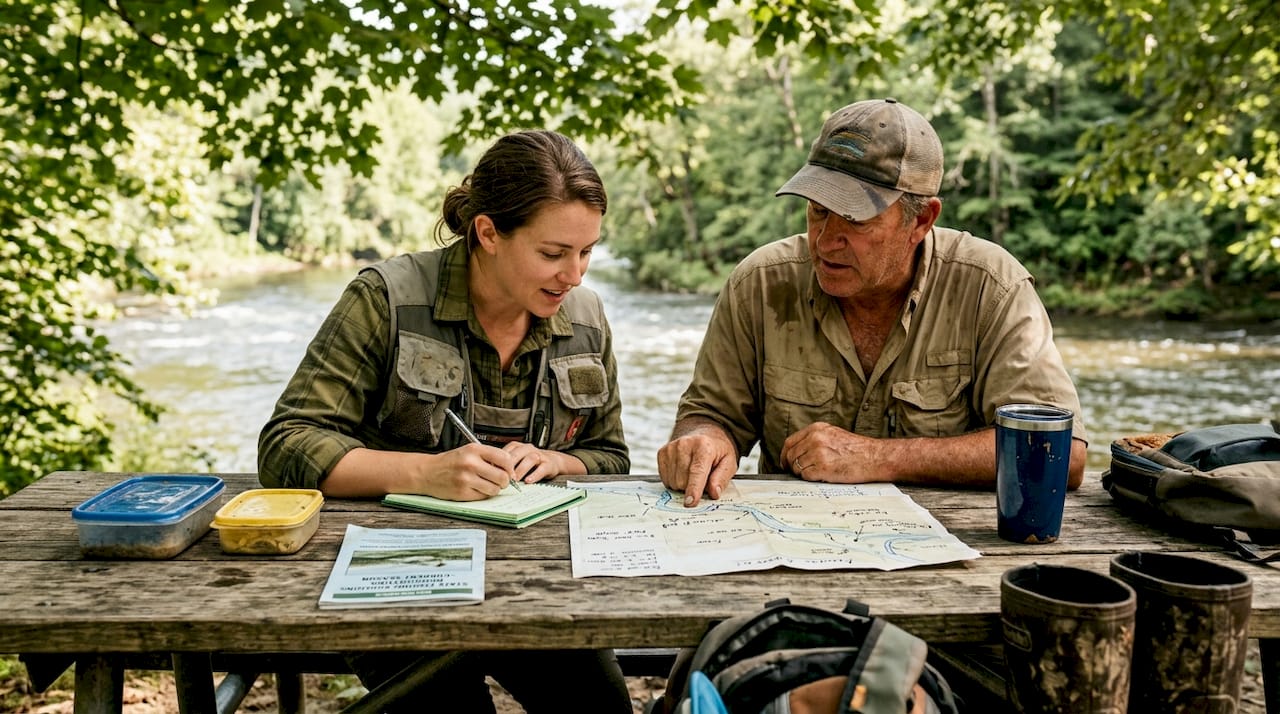
Guides share hard-won knowledge that you simply can’t find in a YouTube video. They’ll show you how to read a current break to find where predators are waiting. They’ll explain why a specific color lure outperforms others in stained water. They’ll demonstrate the exact rod angle that keeps a big fish from throwing the hook. This is coaching that’s specific to the water you’re on, the species you’re targeting, and the conditions you’re facing right now.
As fishing industry experts note, guides accelerate learning of local patterns and techniques, making them especially valuable when you’re fishing in a new destination for the first time.
A typical learning arc on a guided trip looks something like this:
- Understanding local species behavior and feeding patterns
- Mastering the right knots for the target species and line weight
- Learning proper catch-and-release technique to protect fish stocks
- Perfecting bait presentation and lure retrieval speed
- Reading water structure to predict where fish are holding
“A single guided day in unfamiliar water teaches you more than a dozen solo trips. The feedback is immediate, specific, and impossible to replicate on your own.”
You can also find angler learning stories from other travelers who’ve experienced this firsthand. And if you want to practice what you learn, exploring advanced lure strategies with quality gear helps you apply those guide-taught techniques at home.
Guides as gateways: Exploring new water worldwide
Every fishing destination in the world comes with its own rulebook. Permit requirements, seasonal closures, protected species lists, access restrictions, and local customs all vary dramatically from one country to the next. Trying to navigate all of that solo while also figuring out where to fish is genuinely overwhelming.
A guide handles every layer of that complexity. They know which areas require special permits and how to get them. They understand local conservation rules and make sure you’re compliant. They know the safest routes, the most productive spots, and the best times to be on the water. You focus on fishing. They handle everything else.
| Planning element | Solo trip | Guided trip |
|---|---|---|
| Permit research | Hours of research | Guide handles it |
| Local access | Often restricted | Guide has established access |
| Weather contingencies | Self-managed | Guide pivots the plan |
| Emergency protocols | Unprepared | Guide trained and equipped |
| Local species knowledge | Minimal | Deep and current |
Beyond logistics, a great guide also enriches your trip culturally. Fishing in Kenya, Morocco, or Socotra isn’t just about the catch. It’s about understanding how local communities relate to the water, what species matter to them, and what fishing means in that specific place. Guides bridge that gap in a way no travel blog ever could.
Here’s what to check before booking any guide abroad:
- Confirm they hold current local guiding licenses
- Ask specifically about permit requirements for your target species
- Understand their weather cancellation and rescheduling policy
- Ask how they handle medical emergencies on the water
Pro Tip: Ask your guide directly about emergency protocols before the trip. A professional guide will have a clear answer ready. If they hesitate, that tells you something important.
When you explore guided trips abroad through a trusted platform, these details are already vetted. Browsing global fishing opportunities across destinations like the UAE, Egypt, and the Seychelles becomes a much less stressful process when you know the logistics are handled.
Why guides matter more than you think
Here’s the part most fishing content gets wrong. Guides are not a crutch for beginners. They are a strategic advantage for anyone who wants to fish smarter, grow faster, and experience more in less time.
There’s a persistent idea in fishing culture that going solo is somehow more authentic or more impressive. We’d push back on that hard. The best real angler stories we’ve seen almost always have a great guide somewhere in the background. Someone who knew the tides, read the weather, and put the angler in exactly the right place at exactly the right moment.
In new environments, local wisdom consistently beats DIY preparation. No amount of online research replaces someone who fished that exact reef last Tuesday. Veterans who hire guides in new destinations don’t become less skilled. They become more effective.
The deeper truth is this: a great guide delivers joy, not just fish. They create the conditions for a story worth telling. That’s not a beginner’s need. That’s a universal one.
Ready to fish smarter? Plan your next adventure
Now that you understand what fishing guides actually bring to the table, the next step is putting that knowledge into action. JustFishing Group connects anglers with experienced guides and curated fishing trips across the Maldives, UAE, Kenya, Seychelles, Egypt, Socotra, Oman, and Morocco.
Whether you’re ready to book your guided fishing trip or still exploring options, the platform makes it easy to find the right destination, the right guide, and the right gear. You can explore Just Fishing for destination guides, trip packages, and angler resources all in one place. Need to gear up before you go? Browse best fishing gear from top brands to make sure you arrive prepared for whatever the water throws at you.
Frequently asked questions
What should I ask before hiring a fishing guide?
Ask about their local experience, what equipment they provide, permit requirements for your target species, and how they handle weather changes or on-water emergencies. Guides handle regulations, access, and safety as a core part of their service.
Is hiring a guide only for beginners?
Not at all. Experienced anglers benefit significantly from guides, especially in new destinations or when targeting unfamiliar species. Guides accelerate learning of local patterns and techniques regardless of your current skill level.
Do guided fishing trips always guarantee catches?
No fishing trip can guarantee results, but guided trips consistently outperform solo outings. Recreational fishing success runs 50 to 60% solo, and guides use local expertise to push those odds meaningfully higher.
How do guides improve fishing skills?
Guides provide hands-on instruction, immediate feedback, and destination-specific techniques that books and forums simply can’t replicate. Guides accelerate learning of local patterns in ways that stick long after the trip ends.