Address: M5, Al Naumi Tower , Al Mina Road, Al Zahya Area, Abu Dhabi City, UAE
Email: support@justfishinggroup.com
Store Hours: 10:00 - 18:00, Mon - Sat
Legal
© 2025 JustFishing. All Rights Reserved.



Address: M5, Al Naumi Tower , Al Mina Road, Al Zahya Area, Abu Dhabi City, UAE
Email: support@justfishinggroup.com
Legal
© 2025 JustFishing. All Rights Reserved.
Night Offshore Fishing: What Every Angler Must Know
June 22, 2026, 125
TL;DR:
- Night offshore fishing targets pelagic species like swordfish and tuna in deep waters after sunset, utilizing specialized lighting, live bait, and safety protocols to improve success. Strategically positioning and using green underwater lights attract bait and predators, making the experience more productive and rewarding than daytime fishing. Preparation, safety measures, and proper gear are essential for a safe, efficient, and enjoyable night fishing trip offshore.
Night offshore fishing is the practice of targeting pelagic and reef species in deep ocean waters after sunset, typically 80 to 120 miles from shore, using specialized gear and strict safety protocols. This is not simply daytime fishing conducted in the dark. The strategic approach changes entirely because fish behavior, feeding patterns, and environmental conditions shift dramatically once the sun goes down. Species like swordfish, yellowfin tuna, and squid become far more accessible at night, making after-dark offshore trips a genuinely different and often more productive experience than anything you’ll find in daylight. If you’ve only fished during the day, a night offshore excursion will reframe what you think is possible on the water.
Night offshore fishing, known in the industry as overnight offshore or night charter fishing, works because low light conditions trigger aggressive feeding behavior in many of the ocean’s most prized species. Swordfish, for example, rise from deep water to feed near the surface after dark. Yellowfin tuna and blackfin tuna aggregate near structure and bait schools at dusk and through the night. Grouper and snapper, typically cautious during daylight, move more freely and feed more actively once the sun sets.
The biological reason is straightforward. Baitfish like squid, mackerel, and small reef fish become disoriented or more visible near light sources at night, which draws predators in. Swordfish rise at night to feed near the surface, a behavior that makes them nearly impossible to target effectively during the day. This vertical migration is the single biggest reason serious swordfish anglers only fish at night.
Professional captains working the Gulf Shores, the East Coast canyons, and the Maldives position for nocturnal species rather than following daytime schedules. They run out to the grounds in the afternoon, anchor or drift in position, and fish through the night to be exactly where the bite happens. That positioning advantage is what separates a productive overnight trip from a long, expensive boat ride.
Pro Tip: Scout your target grounds during the day before your first night trip. Knowing the bottom structure, current lines, and bait concentrations in daylight makes positioning after dark far more precise and far less stressful.

The offshore fishing gear required for night trips goes well beyond a rod and reel. Safety and visibility equipment are non-negotiable, and the right lighting setup directly affects how many fish you catch.
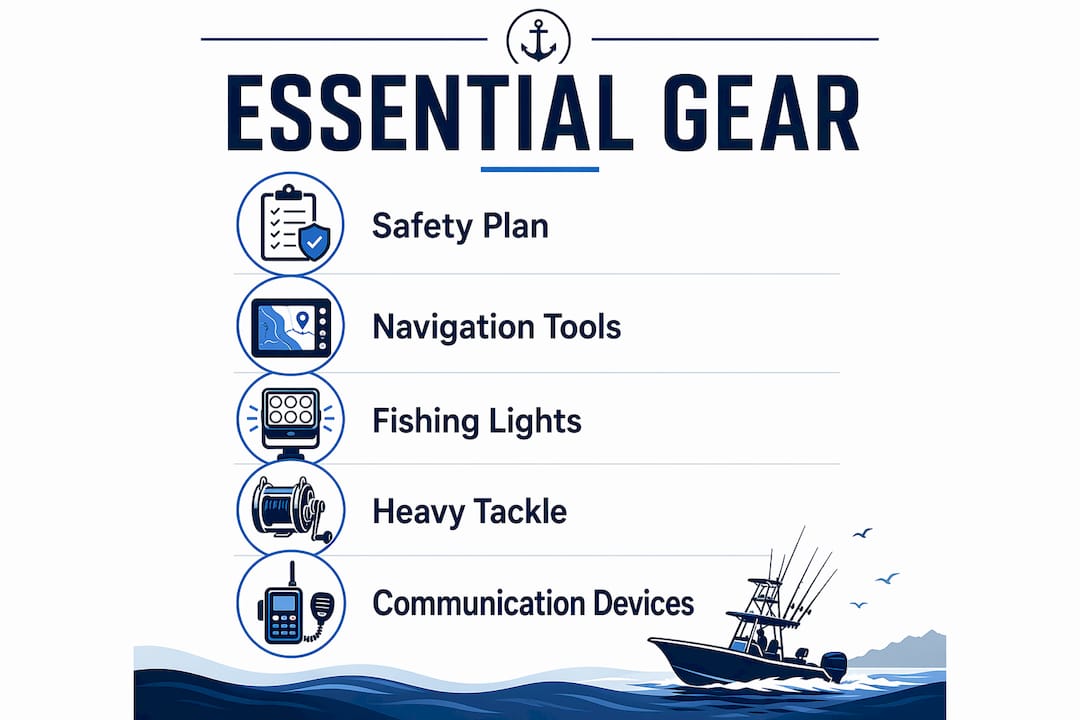
Navigation lights are legally required between sunset and sunrise on all vessels. Beyond the legal minimum, experienced captains carry:
A detailed float plan left with someone onshore is not optional. It should include your departure time, destination coordinates, expected return, and the number of people aboard. If something goes wrong 100 miles offshore at 2 a.m., that float plan is what gets the Coast Guard moving in the right direction.
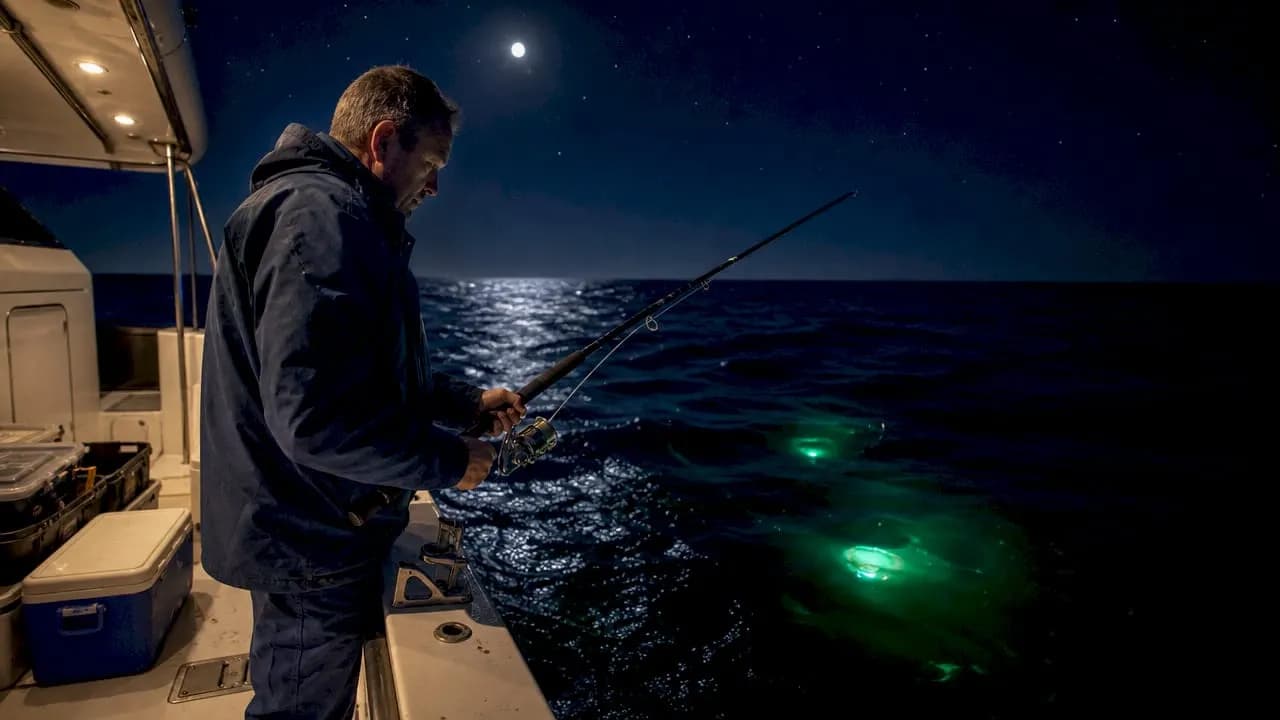
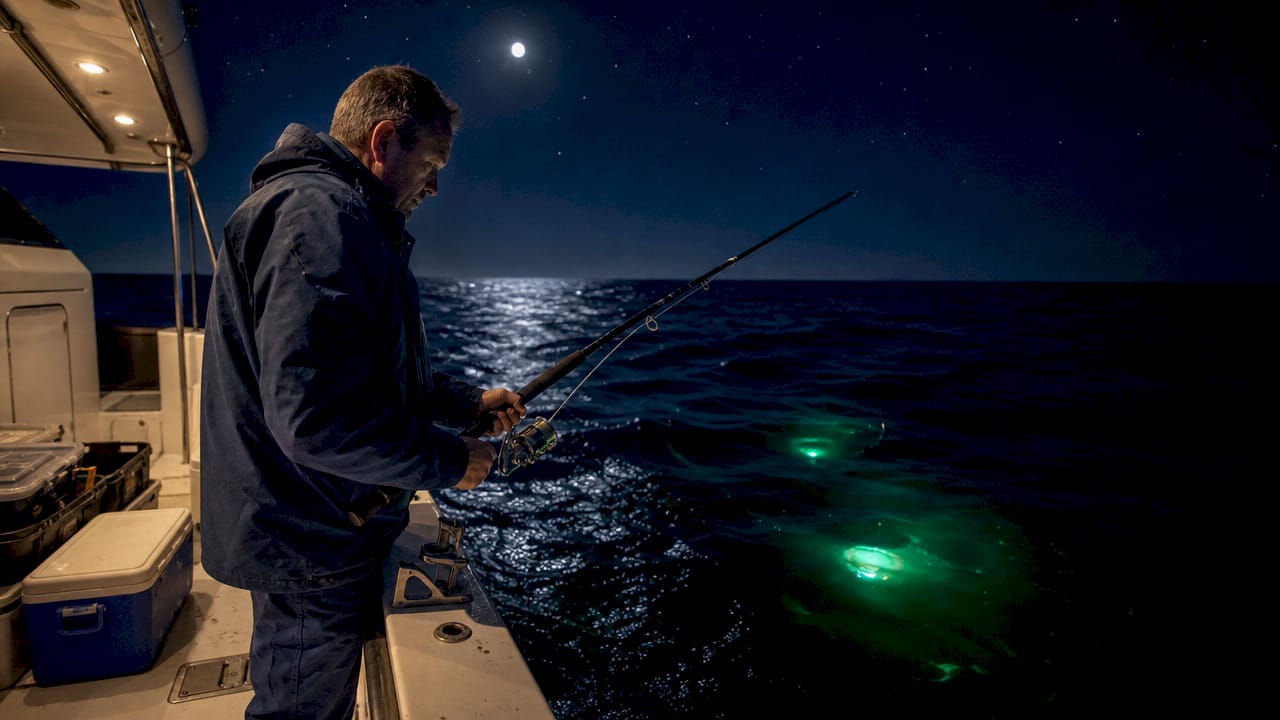
Green underwater fishing lights attract significantly more bait than white, blue, or pink alternatives. In controlled overnight tests, green lights doubled bait attraction. More bait means more predators, which means more fishing opportunities. Submersible green LED lights hung off the stern or transom are now standard equipment on serious overnight offshore rigs.
For tackle, heavier conventional setups in the 50 to 130-pound class handle swordfish and large tuna. Fluorocarbon leaders are preferred at night because fish get closer to the boat before detecting the line. Squid jigs, deep-drop rigs, and live bait setups rigged with squid trolling lures are the most productive presentations after dark.
Pro Tip: Use a headlamp with a red light setting instead of white light when handling tackle at night. Red light preserves your night vision so you can still see the water clearly between tasks.
Preparation for a night offshore excursion starts at least 24 hours before departure. Checking NOAA marine forecasts and wind models like Windy or PredictWind is the first step. Offshore conditions change faster than inshore waters, and a trip that looks manageable at sunset can turn dangerous by midnight if a front moves through.
Trip durations range from short 4-hour evening outings to full 36-plus-hour overnight expeditions. Shorter trips work well for anglers targeting species that feed heavily at dusk and early evening. Longer trips allow access to peak feeding windows across multiple tidal cycles and give captains the flexibility to reposition if the bite moves.
Before leaving the dock, experienced crews follow a structured preparation routine:
Once on the grounds, the most effective night offshore fishing technique centers on light attraction and live bait. Deploy your green submersible lights as soon as you arrive. Within 20 to 30 minutes, squid and baitfish will gather under the boat. Catch squid on small jigs using a dip net to collect them, then rig them live. Live squid rigged as bait dramatically increases predator strike rates compared to dead or artificial presentations.
Managing crew fatigue on longer trips is as important as any fishing technique. Rotate watch-standing duties in two-hour shifts. Keep food and warm drinks available. Fatigue causes mistakes, and mistakes offshore at night carry real consequences. The best crews treat a 24-hour trip like a military operation in terms of scheduling and discipline.
The biggest challenge in night offshore fishing is not the fishing itself. It is managing the environment. Crab pot buoys and floating debris are nearly invisible at night, and hitting one at speed can disable a vessel or injure crew. Experienced skippers run at reduced speeds in unfamiliar areas and keep a dedicated watch-stander scanning ahead with a spotlight at all times.
Sharks are the second major challenge. Offshore night fishing attracts sharks because the same lights and bait that draw your target species also draw opportunistic predators. If sharks move in and start stealing fish or cutting leaders, the most effective response is to pull the lights, reposition 200 to 300 yards away, and redeploy. Staying in the same spot and fighting sharks all night wastes time and bait.
Here are the most effective offshore night fishing tips that experienced anglers use consistently:
Pro Tip: If you’re targeting swordfish specifically, fish your bait at 150 to 250 feet down on a slow drift with a light stick attached near the bait. Swordfish are attracted to the glow and will investigate before striking.
The nighttime offers a uniquely peaceful environment that daytime trips simply cannot replicate. The absence of boat traffic, the cooler temperatures, and the stillness of the open ocean at 2 a.m. create an atmosphere that experienced offshore anglers describe as genuinely addictive.
Night offshore fishing works because nocturnal species like swordfish and yellowfin tuna feed aggressively after dark, and strategic positioning combined with proper lighting and live bait gives anglers a measurable advantage over daytime methods.
| Point | Details |
|---|---|
| Core definition | Night offshore fishing targets pelagic species 80 to 120 miles from shore after sunset using specialized gear. |
| Green lights are critical | Submersible green lights double bait attraction compared to other colors, drawing predators to your boat. |
| Safety is non-negotiable | Navigation lights, VHF radio, float plans, and a dedicated watch-stander are required for every night trip. |
| Live squid outperforms everything | Catching squid under your lights and rigging them live produces far more strikes than dead or artificial bait. |
| Trip length determines species access | Longer trips of 24 to 36 hours expose you to multiple peak feeding windows and rarer offshore species. |
The first time I ran 90 miles offshore after dark, I expected it to feel like daytime fishing with worse visibility. It felt nothing like that. The ocean at night is a completely different place. The surface goes glassy in ways it rarely does during the day, the bioluminescence lights up your wake, and the fish that show up under your lights are not the same fish you’d see at noon.
What I’ve learned after years of night trips is that most anglers underestimate the preparation required and overestimate the difficulty of the actual fishing. The hard part is the safety discipline: filing float plans, maintaining watch rotations, keeping the deck clear, and resisting the urge to run fast in unfamiliar water. Get those fundamentals right and the fishing itself is often easier than daytime work because the fish come to you.
The one thing I’d push back on is the idea that night offshore fishing is only for experienced anglers. A well-run charter with a professional captain handles the navigation and safety. Your job is to fish. If you’ve been curious about a night fishing excursion but held back because it seemed too advanced, book a guided trip first. You’ll understand within the first hour why serious offshore anglers rarely want to go back to fishing in daylight.
— Alaa
Justfishinggroup stocks the offshore fishing gear you need for productive night trips, from squid trolling lures and torpedo jigs to terminal tackle built for deep-water predators. The platform also connects anglers with charter fishing trips across the Maldives, UAE, Seychelles, Kenya, and beyond, including destinations where night offshore fishing produces some of the most exciting catches in the world. Browse the full range of offshore fishing trips and gear at Justfishinggroup to find everything you need before your next after-dark excursion on the water.
Night offshore fishing is the practice of targeting pelagic and reef species in deep ocean waters after sunset, typically 80 to 120 miles from shore. It uses specialized lighting, live bait, and safety equipment to capitalize on the aggressive nocturnal feeding behavior of species like swordfish, tuna, and grouper.
Swordfish, yellowfin tuna, blackfin tuna, grouper, snapper, and squid are the primary targets on night offshore trips. Swordfish in particular are almost exclusively targeted at night because they rise from deep water to feed near the surface after dark.
Trip lengths range from 4-hour evening outings to full 36-plus-hour overnight expeditions. Longer trips allow captains to position on prime grounds and fish through multiple peak feeding windows, increasing the chances of targeting rarer offshore species.
Navigation lights, a VHF radio, GPS chartplotter, life jackets, throwable rescue devices, flares, and an EPIRB are all required or strongly recommended. A detailed float plan left with a shore contact before departure is also a critical safety step for any offshore night trip.
Live squid caught under green submersible lights is the most effective bait for night offshore fishing. Squid jigs and dip nets are used to collect squid as they gather under the boat’s lights, and rigging them live produces significantly higher strike rates from large predators than any artificial alternative.
Rate this blog
Categories
Popular Tags