


Multi-day fishing adventure guide: Prepare, pack, and enjoy
TL;DR:
- Proper planning is crucial for multi-day fishing trips, as poor preparation can lead to discomfort and missed opportunities. It requires managing lodging, permits, gear organization, weather contingencies, and destination choices to ensure success and safety. Strategic packing, shelter setup, and guide collaboration enhance the overall experience and maximize fishing time.
You arrive at camp on day three, soaked through because your rain layer was packed at the bottom of your bag, your backup rod tip snapped on day two, and the freeze-dried meals you forgot to bring have been replaced by stale crackers. Sound familiar? It doesn’t have to. Multi-day fishing adventures are one of the most rewarding experiences an angler can have, but they punish poor planning faster than any single-day outing ever could. This guide walks you through every critical planning layer, from early paperwork to destination selection, so you spend more time fishing and less time problem-solving in the rain.
Table of Contents
- Essential prep: What you need before you start
- Packing and organizing gear for efficiency and comfort
- Shelter, weather readiness, and contingency planning
- Choosing destinations and working with guides
- What most guides won’t tell you about multi-day fishing success
- Get the right gear and guidance for your fishing adventure
- Frequently asked questions
Key Takeaways
| Point | Details |
|---|---|
| Prepare for multi-day logistics | Managing shelter, meals, weather, and gear is essential to enjoying all days of your fishing adventure. |
| Pack lean and functional | Grouping gear and eliminating extras reduces carrying fatigue and keeps your trip simple. |
| Adapt for weather and safety | Scheduling for varying conditions and prepping dry clothing keeps you comfortable and safe. |
| Choose destinations wisely | Finding locations with both fishing and additional activities ensures satisfaction for all group members. |
| Communicate effectively with guides | Align skills and trip priorities early to avoid missteps and maximize results. |
Essential prep: What you need before you start
Most anglers who’ve spent years doing day trips assume the leap to a multi-day adventure is straightforward. It isn’t. According to multi-day trip planning experts, you must manage lodging, food, equipment protection, weather changes, and keep the plan enjoyable through day three and four. That’s a fundamentally different discipline.
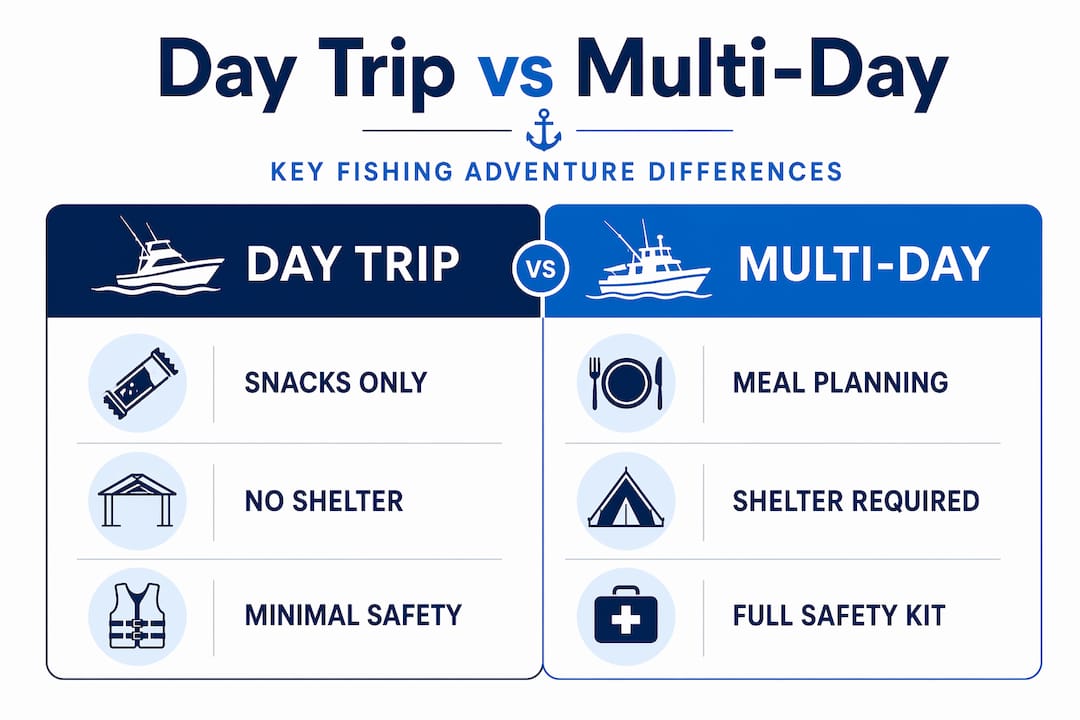
Day trips have a safety net. If you forgot your extra leader, you drive home. If the weather turns nasty, you call it. On a multi-day adventure, that safety net disappears. Everything you need has to come with you, and everything you bring has to earn its space.
Start your prep well before departure. Licenses and permits are the easiest item to overlook and the most legally consequential. Some regions require species-specific permits that can take weeks to process. Check state or local regulations carefully, especially if you’re crossing jurisdictions or targeting regulated species like striped bass, trout, or certain saltwater fish.
Core pre-trip checklist:
- Valid fishing license for each angler
- Species-specific permits where required
- Travel insurance covering adventure activities
- Personal flotation device (PFD, also called a life jacket, worn to keep you afloat in water)
- First aid kit with blister treatment and pain relief
- Navigation tools: waterproof map, compass, and a backup GPS
- Forecast-driven clothing choices (more on this in section four)
- Emergency contact plan left with someone at home
The essential fishing trip checklist confirms that forecast-driven clothing, first aid, PFDs, navigation redundancy, and essential water and food storage are non-negotiable safety and legal items for any serious multi-day outing.
Day trip vs. multi-day adventure: Key differences
| Category | Day trip | Multi-day adventure |
|---|---|---|
| Shelter | Not needed | Essential |
| Food planning | Snacks and lunch | Full meal system |
| Clothing | One set | Layered, weather-adaptive |
| Safety gear | Minimal | Full kit required |
| Permits | Standard license | May need extra permits |
| Navigation | Phone GPS | Redundant systems |
| Equipment repair | Drive home | Field-fix or improvise |
If you’re planning to fish from a boat, gear like longtail rods safety gear should be evaluated alongside your standard safety inventory, since specialized rod types require specific handling and storage on extended boat trips.
Pro Tip: Start your paperwork at least three weeks out. Regulations change seasonally, and species-specific licenses can have processing delays. Build that buffer into your timeline before you ever touch a tackle box.
With the primary setup outlined, let’s move into how to pack and organize gear for efficiency.
Packing and organizing gear for efficiency and comfort
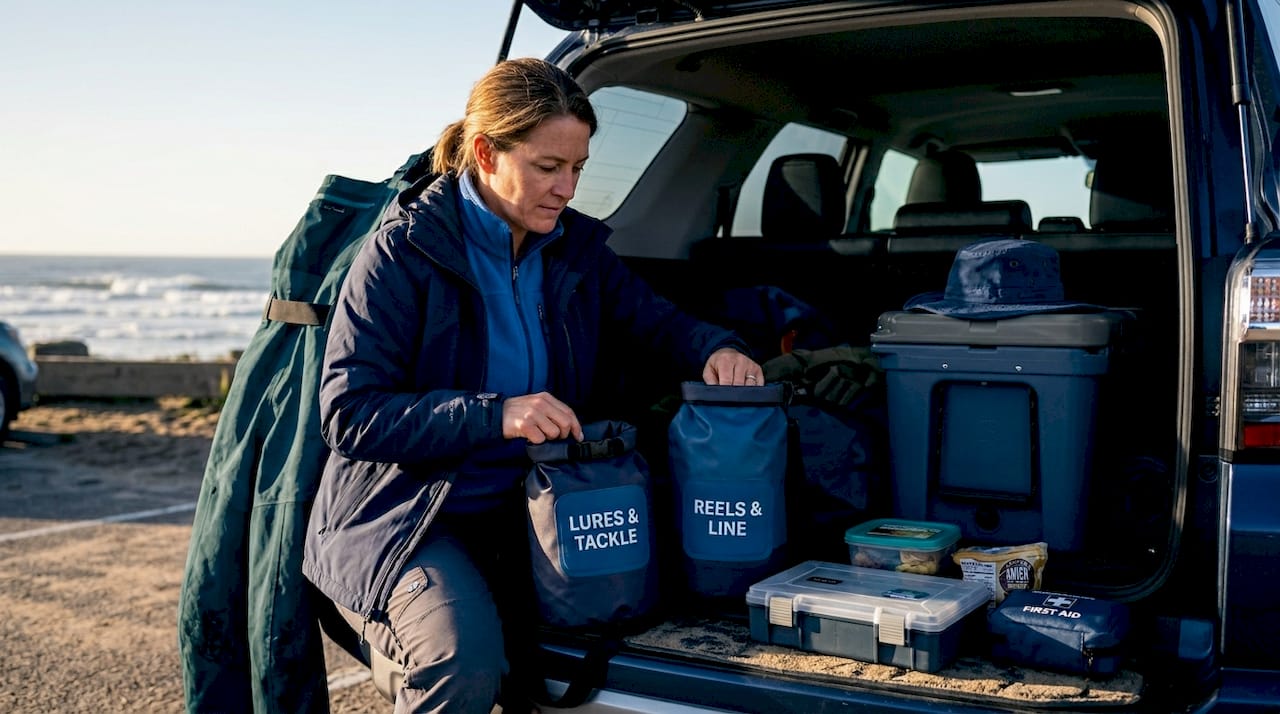
The single biggest packing mistake experienced anglers make on multi-day trips is bringing too much. Not too little. Too much. Extra tackle boxes, duplicate lures, three backup reels for a single rod setup. By day two, all that extra weight becomes a physical and mental burden.
The smarter approach is to pack correctly, not pack everything, and organize gear into functional groups so you can find items without unloading your entire pack. This sounds simple. In practice, it takes discipline.
Five functional gear groups for multi-day packing:
- Catching gear: Rods, reels, lines, leaders, lures, jigs, and hooks organized by priority species. Limit yourself to what the trip genuinely requires.
- Sleeping system: Tent or shelter, sleeping bag rated for expected overnight temperatures, and a compact sleeping pad.
- Cooking and eating: Compact stove, fuel, pot, utensils, and your meal system. Freeze-dried meals save significant space and eliminate prep cleanup.
- Clothing: Two base layers, one waterproof shell, one insulating mid-layer, and a dedicated dry set sealed in a waterproof bag.
- Small essentials: Headlamp with extra batteries, waterproof document pouch for licenses, multi-tool, sunscreen, insect repellent, and emergency whistle.
Your lure bag gear selection matters more than you think. A well-organized lure bag reduces the time spent searching during a feeding window, which can be the difference between a successful session and a missed opportunity.
For rod and reel decisions, packing for deep-sea fishing principles apply broadly: match your setup to the specific target species and water type, and bring only what you’ll realistically rotate through.
Trip-specific gear options should be packed based on trip length and fishing type, including multi-day essentials like extra line and leaders, sun and water protection, and a simple meal system.
Essential vs. optional items for multi-day fishing
| Item | Essential | Optional |
|---|---|---|
| Rod and reel (primary setup) | Yes | |
| Backup rod tip | Yes | |
| Extra line and leaders | Yes | |
| Second full rod setup | Yes | |
| Tackle box with all lures | Yes | |
| Compact first aid kit | Yes | |
| Freeze-dried meals | Yes | |
| Portable stove and fuel | Yes | |
| Portable coffee press | Yes | |
| Waterproof dry bags | Yes | |
| Spare clothing set | Yes |
For broader gear inspiration and trusted product comparisons, browsing top fishing brands helps you identify equipment built specifically for multi-day endurance rather than weekend convenience. And when you’re ready to build your kit systematically, exploring premium fishing gear by category ensures you’re matching quality to the demands of extended time on the water.
Pro Tip: Use waterproof dry bags for your small electronics, licenses, and spare clothing. A single unexpected capsize or downpour can ruin unprotected gear, and the cost of replacing a soaked license or a dead headlamp battery mid-trip far outweighs the cost of a $12 dry bag.
Once gear is packed, managing shelter and adapting to weather is the next critical priority.
Shelter, weather readiness, and contingency planning
Shelter choice is often treated as an afterthought on fishing trips, especially for anglers who’ve done overnight camping before. But the demands of fishing camp differ from standard backpacking. You need fast setup after a long day on the water, good ventilation to reduce morning condensation on gear, and enough room to store and dry equipment overnight.
Effective multi-day shelter must address your specific exposure needs, including rain, wind, and morning dew, and should be something you can set up and take down quickly without needing full daylight or a team effort.
Shelter and weather readiness essentials:
- Choose a freestanding tent (one that stands without staking) for flexible campsite placement on uneven or rocky fishing terrain
- Confirm your shelter’s water resistance rating before the trip. Look for a hydrostatic head rating above 3,000mm for reliable rain protection
- Practice setup at home at least once before the trip
- Pack a tarp as a secondary weather shield over your fishing area or kitchen spot
- Store all tackle and non-weatherproof gear inside or under cover each night
For clothing, layering is the system that works. A moisture-wicking base layer against your skin, an insulating mid-layer for warmth, and a waterproof outer shell for wind and rain. This gives you flexibility to add or remove as conditions shift throughout the day.
On a four-day river trip, the anglers who catch fish on day three aren’t always the most technical. They’re the ones who stayed warm and dry on day two when the front moved through and everyone else was too cold and miserable to focus. Readiness beats technique when conditions turn against you.
Weather contingency planning means building flexibility into your schedule from day one. Expect weather to change, and have a rough plan B ready, whether that’s an alternate fishing location, a different technique, or simply a rest day built into the itinerary. If your entire trip success depends on a single set of conditions on a single stretch of water, you’re setting yourself up for disappointment.
General adventure safety advice and weather contingency tips from outdoor experts consistently reinforce the same principle: the most dangerous trips are the ones with no backup plan.
Pro Tip: Before you leave home, pre-pack one complete dry outfit including socks, underwear, base layer, and a light insulating layer inside a sealed, brightly colored dry sack. Mark it clearly and don’t open it unless it’s an emergency. Having that option available on day three, when everything else is damp, is a serious morale and safety asset.
With logistics managed, choosing the right fishing destination and working with guides become the adventure’s start point.
Choosing destinations and working with guides
Destination selection for a multi-day trip carries more weight than it does for a day outing. You’re committing time, money, and physical energy to a location. Choosing well means balancing fishing quality with your group’s broader interests, your skill level, and logistical practicality.
What to evaluate when choosing a destination:
- Quality and diversity of fishing: Does the location offer the species you’re targeting during the season you’re traveling?
- Group composition: Does your group include non-anglers? Are there activity options beyond fishing?
- Accessibility: How long does it take to reach fishable water each morning? Remote locations add romance but also add complexity.
- Lodging and resupply: Can you get fresh food or replace lost gear if needed?
- Guide availability: Does the region have established, reputable guide services?
Multi-sport fly fishing hubs are a smart solution for groups with mixed interests. These destinations pair excellent fishing with hiking, rafting, mountain biking, or local culture, so partners and non-anglers stay engaged rather than restless. Several regions in the American West, the Patagonian corridor, and island destinations around the Indian Ocean fit this model beautifully.
Fly fishing and multi-sport destination comparison
| Destination type | Fishing quality | Non-fishing activities | Accessibility | Guided trips available |
|---|---|---|---|---|
| Remote river lodge | Excellent | Limited | Difficult | Yes |
| Multi-sport adventure hub | Very good | Extensive | Moderate | Yes |
| Coastal island destination | Excellent | Moderate | Varies | Yes |
| National park zone | Good | Extensive | Easy to moderate | Varies |
Working with guides is where many anglers lose value, not because the guide is poor but because expectations weren’t aligned before day one. Booking a fishing guide correctly means confirming species targets, preferred techniques (lures versus flies, trolling versus casting), and whether the priority is trophy catch-and-release or keeping fish for a meal. These aren’t small preferences. They shape the entire day’s approach.
Be honest about your skill level. A guide who knows you’re an intermediate caster will set up spots that play to your strengths. A guide who assumes you’re advanced because you didn’t want to seem inexperienced will put you in positions where you’re frustrated and unsuccessful.
For destination ideas and fully supported fishing trips with guides across the Maldives, Seychelles, Oman, and beyond, the options span everything from GT (giant trevally) bluewater action to technical reef fishing. You can also find trip-specific preparation advice in the Just Fishing blogs, which covers destination nuances in detail.
Pro Tip: When you first contact a guide, ask two specific questions: “What’s the number one thing clients do that limits their success with you?” and “What should I practice before I arrive?” Their answers reveal how they communicate and how they’ll handle real-time challenges on the water.
After trip execution, a fresh perspective helps verify planning effectiveness and highlights lessons learned.
What most guides won’t tell you about multi-day fishing success
Here’s the uncomfortable truth we’ve observed across hundreds of fishing trips: most anglers overprepare their tackle and underprepare everything else. They’ll spend weeks researching the perfect jig color and bring five rod setups, then forget a dry bag, skip the weather check, and skip the pre-trip conversation with their guide.
The guide misalignment problem is real and more common than most people admit. When technique preferences, target species, and trophy-versus-table priorities aren’t resolved before day one, guides spend the first morning figuring out what you actually want rather than putting you on fish. That’s a half-day wasted on a four-day trip.
Packing less but packing correctly is a genuine performance advantage. By day three, every extra pound you’re carrying has accumulated fatigue. Lighter pack equals better energy management, which translates directly to better focus on the water and more time enjoying the experience rather than dreading the walk back to camp.
The meal system decision is also underrated. Anglers who bring real cookware and ambitious camp meals spend 40 minutes cooking and 20 minutes cleaning after a long day on the water. Anglers who use simple freeze-dried meals spend eight minutes on dinner and are back to rigging or relaxing by 7:30 PM. That difference compounds over four days. The Just Fishing blogs regularly features trip reports that highlight exactly these kinds of logistics lessons from real destinations.
Edge-case readiness, meaning your ability to handle the bad day when weather turns or a key piece of gear fails, is what separates a trip that builds lifelong memories from one that becomes a cautionary tale. Run two worst-case scenarios through your plan before you finalize it. Ask yourself: “What happens if it rains all of day two and night three?” and “What do we do if our primary fishing spot is occupied or unfishable?” If you have real, actionable answers, you’re ready. If you’re hoping those things won’t happen, you’re not.
Pro Tip: Before finalizing your packing list and itinerary, write down two edge-case scenarios specific to your destination and walk through your response to each. This single exercise catches more planning gaps than any checklist.
Get the right gear and guidance for your fishing adventure
Planning a multi-day fishing adventure is half the reward. The other half is stepping onto the water with the right gear, the right support, and the confidence that you’re prepared for whatever the trip throws at you.
At JustFishing Group, we’ve built our platform around exactly that kind of confidence. Whether you’re gearing up with a lure bag built for organized, efficient access or you’re ready to book a fully guided trip to world-class destinations in the Maldives, Seychelles, Kenya, Oman, or Morocco, we connect you with the tools and expertise that serious anglers rely on. Browse our destination portfolio, shop trusted gear, and plan your next adventure with guides who know the water.
Frequently asked questions
What is the most critical item to pack for a multi-day fishing trip?
Weather-appropriate clothing and safety gear are the highest priority items, as forecast-driven clothing, first aid, and PFDs protect you in every environment and cannot be improvised in the field.
How can I minimize packing fatigue during a multi-day adventure?
Organize gear into functional groups and resist the urge to pack duplicates. The “pack correctly, not everything” method reduces carry weight and keeps essentials accessible without emptying your full pack.
How early should I finalize my fishing destination and guide?
Aim to confirm your destination and guide expectations at least three to four weeks before departure, giving enough lead time for permits, gear orders, and logistics adjustments.
What’s a backup plan if weather changes suddenly?
Keep a pre-packed dry outfit in a sealed waterproof bag and identify an alternate fishing spot or tactic before the trip begins. Building contingency into your schedule means bad weather becomes an inconvenience rather than a trip-ender.
How do I balance fishing with group interests on multi-day trips?
Select destinations that offer activities beyond fishing for non-anglers. Multi-sport fly fishing hubs combine quality fishing with hiking, rafting, or cultural experiences that keep the whole group engaged and the trip enjoyable for everyone.