Marlin Fishing Explained: Sport, Species, and Technique
June 22, 2026, 523
TL;DR:
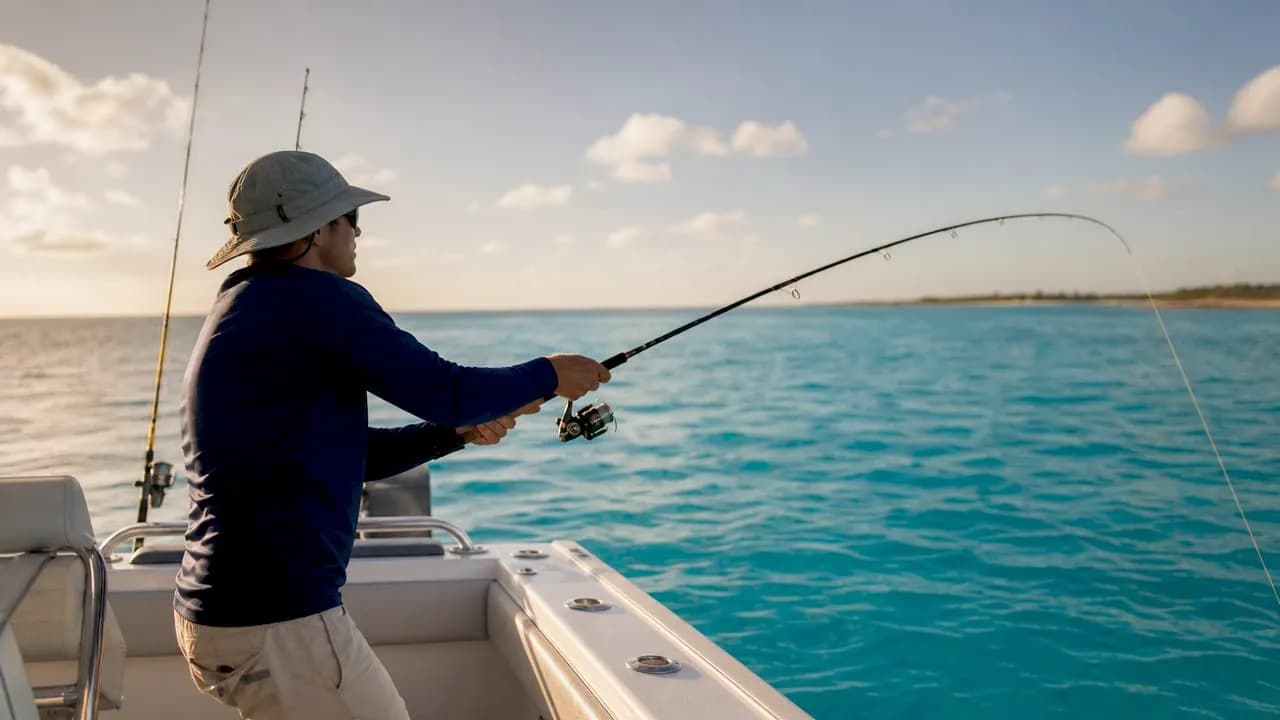
- Marlin fishing is a recreational sport targeting large, fast, and acrobatic billfish species using rod-and-reel tackle. It involves techniques like trolling, pitch-baiting, and kite fishing, with success dependent on ocean conditions and proper gear. The sport emphasizes fight quality, teamwork, and conservation through catch-and-release practices.
Marlin fishing is defined as a form of big-game sport fishing that targets large, fast, and acrobatic billfish species using conventional rod-and-reel tackle. Known formally within the sport fishing world as offshore big-game angling, it focuses on four primary species: blue marlin, black marlin, white marlin, and striped marlin. These fish are prized not for their table value but for the sheer challenge they present. Blue marlin can reach speeds of 70 mph and exceed 1,000 pounds, making them among the most demanding targets in all of recreational fishing. If you want to understand what marlin fishing involves from species to technique to the experience on the water, this guide covers it all.
What is marlin fishing and which species are targeted?
Marlin belong to the family Istiophoridae, a group of large, predatory fish defined by their elongated bills and powerful, torpedo-shaped bodies. Each species has distinct traits that shape how and where anglers pursue them.
Blue marlin (Makaira nigricans) is the flagship species of big-game fishing. Found in tropical and subtropical Atlantic and Pacific waters, blue marlin are the heaviest of the four species. A fish exceeding 1,000 pounds earns the legendary title of “grander,” a benchmark every serious offshore angler chases. Black marlin (Istiompax indica) rivals the blue in size and is concentrated in the Indo-Pacific, particularly off the Great Barrier Reef in Australia and the coasts of Kenya and the Seychelles.
Striped marlin (Kajikia audax) is the speed specialist. Striped marlin swim up to 50 mph, making them explosive fighters on light tackle. They prefer cooler, temperate Pacific and Indian Ocean waters and are a top target in destinations like Cabo San Lucas, Mexico, and the waters off Oman. White marlin (Kajikia albida) is the smallest of the four and is found almost exclusively in the Atlantic. Despite its modest size, white marlin are celebrated for their acrobatics and are a prized catch on lighter 30-pound class tackle.
| Species | Average Weight | Top Speed | Primary Range |
|---|---|---|---|
| Blue marlin | 200–400 lbs (up to 1,000+ lbs) | Up to 70 mph | Atlantic, Pacific, Indian Ocean |
| Black marlin | 200–500 lbs | Up to 80 mph | Indo-Pacific, Great Barrier Reef |
| Striped marlin | 100–200 lbs | Up to 50 mph | Pacific, Indian Ocean |
| White marlin | 40–80 lbs | Up to 50 mph | Atlantic Ocean |
Pro Tip: If you are targeting striped marlin for the first time, start with 30-pound class tackle. The lighter gear amplifies the fight and makes the fish’s aerial runs far more dramatic and rewarding.
Marlin fishing techniques and tackle essentials
Learning how to catch marlin starts with understanding the three core methods: trolling, pitch-baiting, and kite fishing. Each suits different conditions and species.
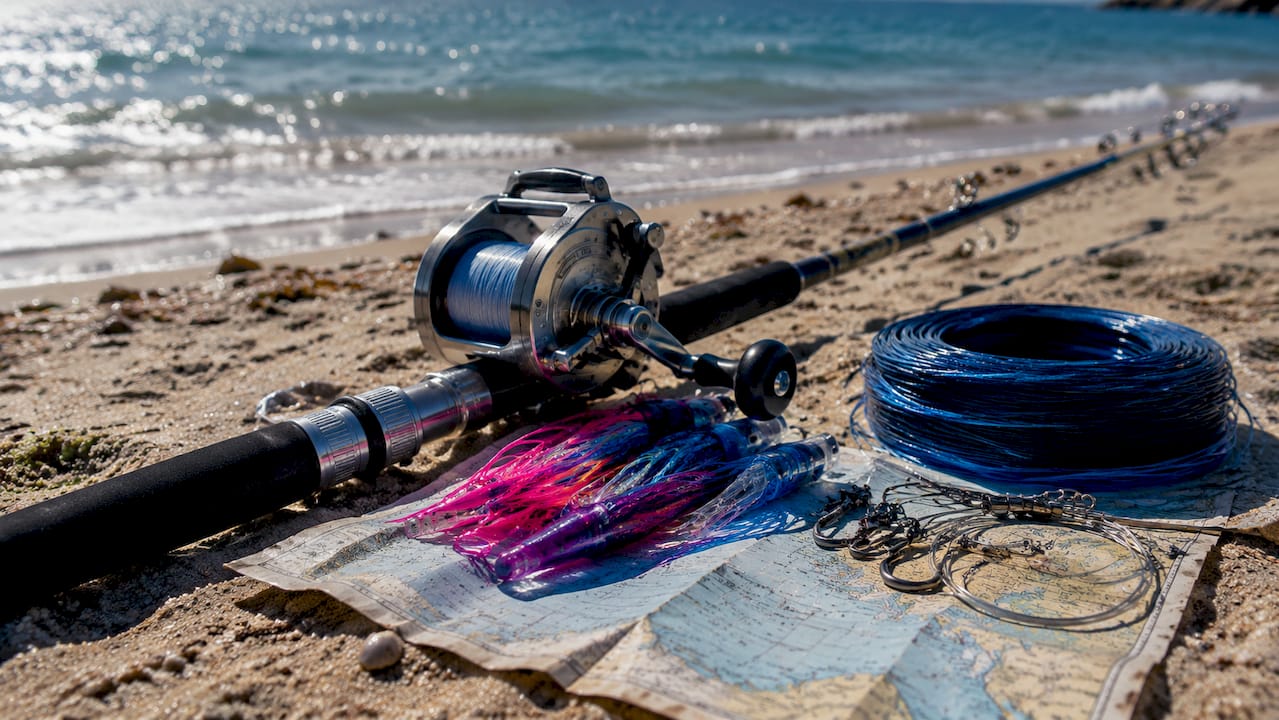
Trolling is the most widely used marlin fishing technique. The boat moves at a controlled speed, typically 5 mph or less, dragging lures or rigged baits across the surface. The key to effective trolling is lure presentation. S-turn boat maneuvers improve lure action by mimicking the erratic movement of fleeing baitfish, which triggers more strikes than a straight-line troll. Varying speed and direction keeps the spread looking alive.
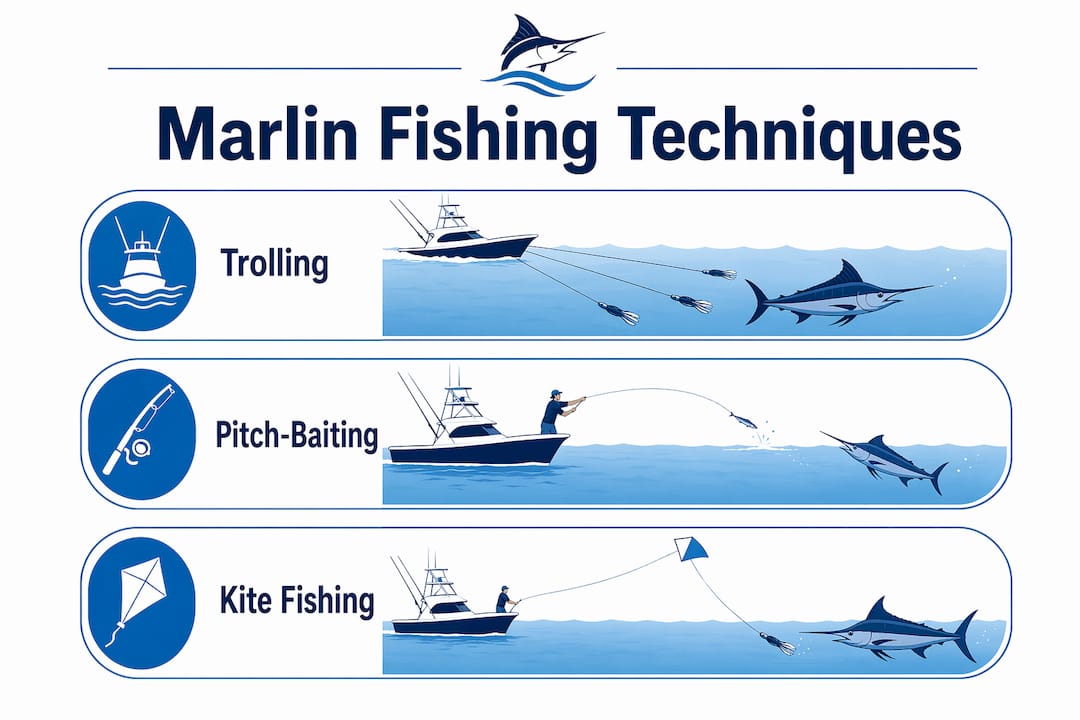
Pitch-baiting is a more precise, reactive method. When a marlin is spotted following the trolling spread, the captain slows the boat and an angler pitches a live or dead bait directly at the fish. This technique demands fast reflexes and accurate casting. Monofilament top-shot over braided backing is the standard line setup for pitch-baiting because the mono absorbs the shock of a sudden, explosive hook-up without snapping.
Kite fishing suspends live bait at the surface using a kite, keeping it skipping and struggling in a way that drives marlin into a feeding frenzy. It is particularly effective in light-wind conditions when trolling lures lose their action.
Here is what a standard marlin tackle setup looks like:
- Rods: Heavy-duty stand-up or bent-butt rods rated for 50 to 130-pound class line
- Reels: Two-speed lever-drag reels such as the Shimano Tiagra or Penn International series
- Line: 80 to 130-pound monofilament or braided line with a monofilament top-shot
- Hooks: Circle hooks increase survival rates on release compared to J-hooks, making them the preferred choice for conservation-minded anglers
- Leaders: 15 to 20 feet of 300 to 600-pound monofilament or wire leader
Pro Tip: Marlin are notorious short-strikers. When a fish misses the bait, drop it back and wait. Fish often circle back if the bait remains in the water after a missed strike, giving you a second chance most anglers throw away by reeling in too fast.
How ocean conditions affect marlin fishing success
Finding marlin is as much a science as catching them. These fish do not distribute randomly across the ocean. They concentrate in specific zones defined by temperature, food, and structure.
Marlin aggregate near temperature breaks, weed lines, and underwater structures where warm and cool water masses collide. These thermal edges concentrate baitfish, which in turn attract marlin. A fish finder paired with sea surface temperature charts is the most reliable way to locate these zones before you even drop a line. Learning to read a fish finder correctly can cut your search time significantly and put you on fish faster.
Seasonal timing matters just as much as location. The table below shows peak marlin fishing windows at some of the world’s top destinations.
| Destination | Peak Season | Primary Species |
|---|---|---|
| Cabo San Lucas, Mexico | November to March | Striped marlin |
| Kona, Hawaii | June to September | Blue marlin |
| Cairns, Australia | September to December | Black marlin |
| Maldives | November to April | Blue marlin |
| Kenya and Seychelles | October to March | Blue and black marlin |
Marlin feeding behavior also shifts with depth and time of day. Striped marlin surface-feed despite being found in waters deeper than 80 meters, which is why topwater trolling and pitch-baiting are so effective. Early morning and late afternoon are the most productive windows, as marlin push baitfish toward the surface during low-light periods.
Water color is another reliable indicator. Blue, clear water with high visibility signals open-ocean marlin territory. When you find a color change where blue meets green, that edge is worth working thoroughly. Baitfish schools visible on the surface or on sonar are the strongest single indicator that marlin are nearby.
What is the experience like when fishing for marlin?
The moment a marlin crashes a trolling lure, everything on the boat changes. Marlin perform aerial somersaults and tail walks as evasive tactics, and that first leap is something no angler forgets. The fish can clear the water by several feet, shaking its head violently to throw the hook. That unpredictable aerial display makes every fight unique and demands constant adjustment from the angler.
Landing a large marlin is a team effort. The captain controls the boat, backing down on the fish to recover line and preventing the marlin from using the current to its advantage. The crew manages the other lines, clears the cockpit, and prepares the leader. The angler’s job is to maintain pressure without burning out. Fights with large blue or black marlin can last anywhere from 20 minutes to several hours.
The physical demands are real. Pumping a heavy rod against a 400-pound fish running at speed puts serious strain on your back, arms, and legs. Here is what the experience demands from you:
- Endurance: Long fights require sustained physical output, not just bursts of strength
- Focus: Slack line for even a second can result in a lost fish
- Teamwork: Communication with the captain and crew determines the outcome as much as individual skill
- Patience: Rushing the fight leads to pulled hooks or broken lines
Marlin fishing is defined as recreational, not commercial, and the sport measures success by the quality of the fight and the experience, not just the catch. Catch-and-release is the dominant practice at most destinations, and it is the right call. A marlin released alive fights again and contributes to a healthy population. The International Game Fish Association (IGFA) actively promotes release practices, and most reputable charter operations require it for undersized or non-record fish.
Key takeaways
Marlin fishing is a big-game sport that rewards preparation, patience, and respect for the fish above all else.
| Point | Details |
|---|---|
| Four target species | Blue, black, white, and striped marlin each require different tackle and tactics. |
| Trolling is the foundation | Trolling at 5 mph or less with S-turn maneuvers is the most reliable method for locating marlin. |
| Circle hooks protect fish | Circle hooks improve post-release survival and are now standard on conservation-focused charters. |
| Ocean conditions decide location | Temperature breaks, weed lines, and baitfish schools are the primary indicators of marlin presence. |
| The fight is a team sport | Captain, crew, and angler must work together to land a large marlin successfully. |
Why marlin fishing gets under your skin
I have watched a lot of anglers step onto a boat for their first marlin trip expecting a straightforward offshore experience. Most of them walk off the dock changed. The fish does that to you.
What I find most misunderstood about marlin fishing is that beginners focus entirely on the gear and almost nothing on reading the water. The best tackle in the world means nothing if you are trolling in the wrong temperature zone. I have seen anglers with entry-level setups catch granders because their captain knew exactly where the thermal break was sitting that morning. Invest time in understanding sea surface temperature maps and baitfish patterns before you spend money upgrading your reel.
The other mistake I see constantly is rushing the hook-set on a pitch-bait. With circle hooks, the technique is counterintuitive. You do not snap the rod. You let the fish eat, drop the rod tip, and let the hook find the corner of the mouth as the line comes tight. Anglers who fight that instinct lose fish. Anglers who trust the process land them.
The conservation side of this sport matters more than most people admit. Releasing a 500-pound blue marlin in good condition is genuinely harder than killing it, and it takes more skill. That is the standard worth holding yourself to.
— Alaa
Plan your marlin fishing adventure with Justfishinggroup
Justfishinggroup connects anglers with guided fishing trips across prime marlin destinations including the Maldives, Kenya, Seychelles, Oman, and the UAE. Each trip is built around local expertise and the right gear for the conditions. The Justfishinggroup store also carries specialized tackle for offshore big-game fishing, including high-performance lures and precision-engineered hooks designed for the demands of marlin fishing. Whether you are booking your first offshore trip or upgrading your tackle before a serious expedition, Justfishinggroup has the resources to get you ready.
FAQ
What is marlin fishing?
Marlin fishing is a form of big-game sport fishing that targets large billfish species, primarily blue, black, white, and striped marlin, using rod-and-reel tackle offshore. It is classified as recreational fishing, with success measured by the quality of the fight rather than the harvest.
What is the best technique for catching marlin?
Trolling at 5 mph or less with rigged lures or baits is the most widely used marlin fishing technique, with S-turn maneuvers used to improve lure action and trigger more strikes. Pitch-baiting and kite fishing are effective alternatives when a marlin is spotted near the boat.
What gear do you need for marlin fishing?
Standard marlin fishing gear includes a heavy-duty rod rated for 50 to 130-pound class line, a two-speed lever-drag reel, monofilament or braided line with a mono top-shot, and circle hooks for conservation-friendly catch-and-release.
Where are the best marlin fishing spots in the world?
The top marlin fishing destinations include Kona in Hawaii for blue marlin, Cairns in Australia for black marlin, Cabo San Lucas in Mexico for striped marlin, and the Maldives and Seychelles for blue and black marlin during their respective peak seasons.
Is catch-and-release standard in marlin fishing?
Catch-and-release is the dominant practice in modern marlin fishing and is actively promoted by organizations like the IGFA. Circle hooks are the conservation standard because they improve post-release survival rates compared to traditional J-hooks.
Recommended
Customer Reviews
Rate this blog
Rating Breakdown
Categories
Popular Tags