


A liveaboard fishing trip is exactly what it sounds like: you sleep, eat, and live on the boat for the duration of a multi-day fishing expedition. No hotel, no daily commute to the water, no wasted hours running back to the marina. You wake up already anchored in prime fishing grounds, and the day starts the moment the light does. One well-documented trip to Magdalena Bay logged extensive hours on prime water across just two fishing days, effectively delivering three days’ worth of fishing time. That compression of opportunity is the whole point.
Here is what defines a liveaboard fishing trip at a glance:
You live aboard the vessel for the full trip duration, typically 3–7 days
Fishing starts at first light and runs until dark, with no daily transit to shore
The boat serves as your base camp, kitchen, sleeping quarters, and tackle room
Trips reach remote waters that day charters simply cannot access
You fish alongside guides who are also living on the boat, which accelerates learning fast
What types of liveaboard fishing trips are out there?
Not all liveaboard setups are built the same, and the vessel type shapes everything from your comfort level to which fish you can realistically target.
There are two main operation types: fixed motherships that stay moored in one productive location for the season, and moving yachts that reposition based on tides, weather, and fish activity. Fixed operations work well when the target species concentrates in one area. Moving yachts give you the flexibility to chase fish across a wider range of water.
Vessel sizes vary considerably:
- Sportfisherman (35–50 ft): Compact, fast, and capable. Typically 2–4 cabins with shared heads. Think purpose-built fishing machines with modest living quarters.
- Luxury motherships (80–120+ ft): Spacious staterooms, full galleys, entertainment areas, and dedicated tackle rooms. These rival a mid-range fishing lodge in comfort.
- Shallow-draft barges and houseboats: Used in freshwater environments like the Amazon, where low water levels demand a boat that can push into tight, remote river systems.
- Catamaran-style liveaboards: Stable platforms common in tropical destinations like Madagascar and the Indian Ocean islands, often used as a floating base with smaller skiffs running anglers to the actual fishing spots.
The number of cabins, shared versus private heads, air conditioning, and galley quality all vary by vessel. Knowing what you are getting before you book is not optional.
Why liveaboard trips beat land-based fishing in several key ways
The core advantage is time. When your boat is already anchored in the best water, the run to the first fishing spot takes minutes, not hours. That matters most when targeting species like tarpon or marlin, where the best action happens right at first and last light. A day charter that leaves the dock early and returns mid-afternoon, with significant transit time, gives you limited actual fishing hours. A liveaboard allows many more hours of fishing daily.
Beyond time, the access is genuinely different. Mobile expeditions can cover 100+ miles of coastline over the course of a week, hitting multiple inlets, channels, and zones that see almost no boat traffic. Fish in those areas behave differently. They are less pressured, less conditioned to constant activity, and more likely to eat.
Key liveaboard fishing benefits at a glance:
- Extended daily fishing hours, from pre-dawn to after dark
- Access to remote, low-pressure waters unreachable from shore
- Ability to reposition overnight to an entirely new fishery
- Living with guides creates daily knowledge transfer during downtime
- Flexibility to move with tides and fish movements rather than a fixed schedule
- Consistent immersion in the fishing environment sharpens focus and technique
The social dimension is underrated. Sharing a drink with your guide at the end of the day and dissecting what happened on the water is a different kind of education than any YouTube tutorial.
The real drawbacks you should know before booking
Liveaboard trips cost more than land-based alternatives, and that gap is not arbitrary. Running these operations in remote locations means shipping out fresh food, fuel, and all the supplies needed to feed and house both guests and crew for the full trip. There is no nearby grocery store, no fuel dock around the corner. That logistical complexity is baked into the price.
The other challenges are worth taking seriously:
- Seasickness: You are on the boat for the entire trip, with no option to step off. On a 65-hour trip, that is a long time to be miserable if your stomach does not cooperate.
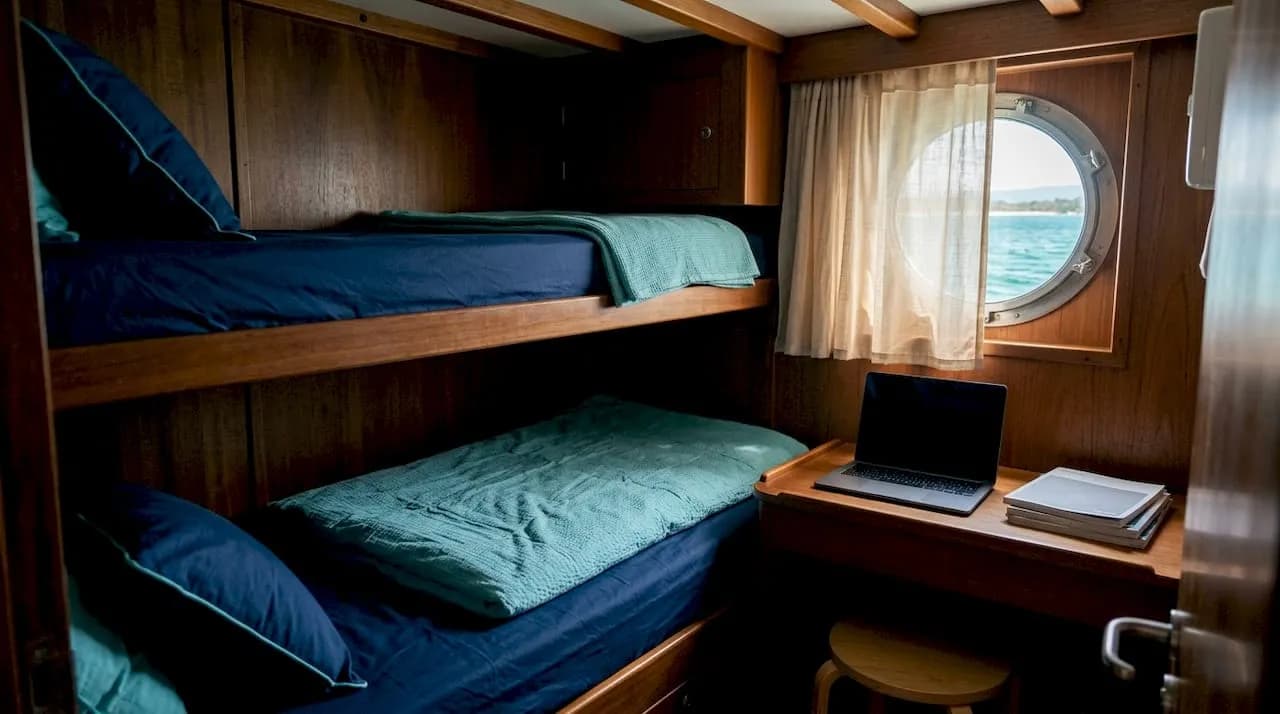
- Limited space: Cabins on sportfisherman-style boats are small. Bunks are narrow. If you are a larger person or prone to claustrophobia, matching vessel size to your needs is critical before you commit.
- Weather dependency: If conditions turn dangerous, the trip changes. You may lose fishing days, or the boat may need to shelter in a protected anchorage. A backup plan is not optional.
- Full commitment required: You cannot bail after day two because the bite slowed. Liveaboard trips demand a full multi-day commitment, and that suits some anglers better than others.
- Creature comforts are limited: Freshwater is rationed. Showers may be brief. Premier linens and bespoke sleeping arrangements are not part of the deal on most vessels.
- Group dynamics matter: A mismatched group in a small space for several days can wear on everyone. Choose your fishing partners carefully.
None of these are dealbreakers, but they are real. Going in with clear expectations is what separates a trip of a lifetime from a miserable week at sea.
Questions worth asking before you book a liveaboard trip
Good research before booking pays off more on a liveaboard than almost any other fishing trip format. You are committing to several days in a confined space, often far from the nearest town, so the details matter.
Pro Tip: Call the operator, do not just email. Any operator worth booking will want to talk through the trip with you. One that avoids a phone conversation is a red flag.
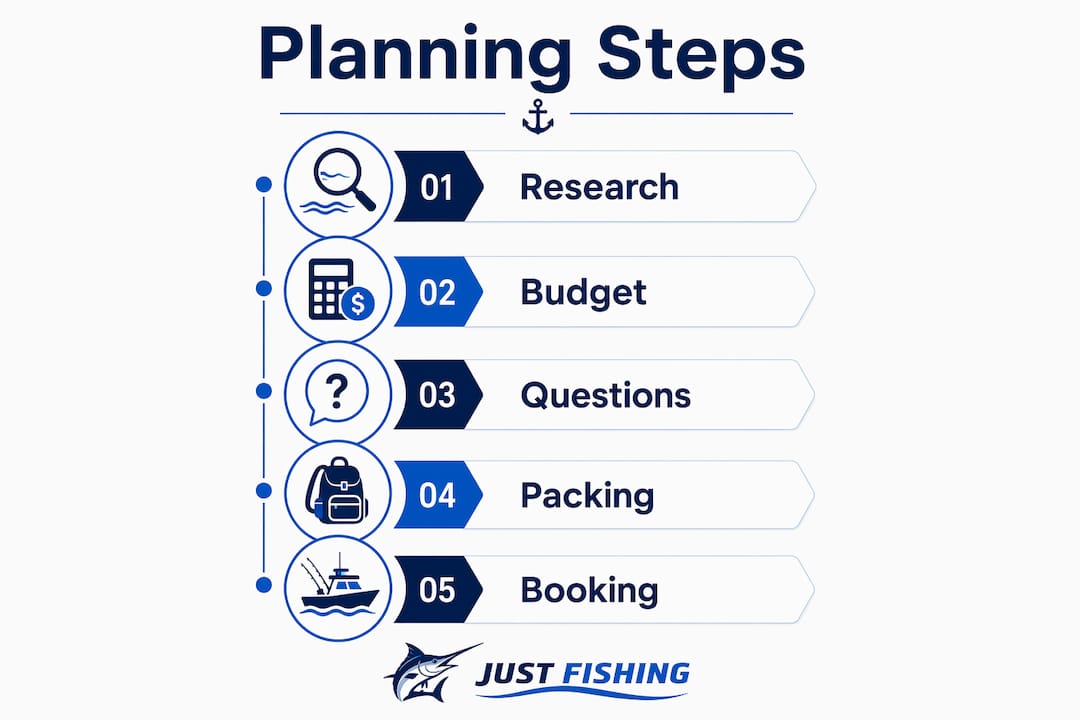
Work through these questions before you put down a deposit:
- What type of vessel is it, and how many guests does it carry? A 40-foot sportfisherman with six anglers fishes very differently than a 100-foot mothership with the same group.
- What is the daily schedule? How many hours are spent actually fishing versus running? Do you fish every day, or are some days transit days?
- What is included in the price? Fuel, food, tackle, licenses, gratuities for crew? Get this in writing.
- What is the weather contingency plan? If conditions make the primary destination unsafe, what happens? Do you get a refund, a credit, or alternative charters?
- What experience level does the trip require? Some expeditions are best suited to experienced anglers comfortable with changing conditions and remote travel.
- How is seasickness handled? Does the operator stock medication? Is there a protocol for guests who struggle?
- What are the luggage and gear restrictions? Most liveaboards require soft-sided bags because hard cases do not fit in cabin storage. Knowing this before you pack saves real frustration.
- What safety equipment is onboard? Life rafts, EPIRBs, first aid protocols, and emergency communication should be standard. Ask anyway.
Careful planning at this stage is what separates a well-run trip from a costly disappointment.
Logistics, comfort myths, and what experts actually say
The idea that liveaboards are rough, spartan experiences is outdated. Modern mothership operations now include first-rate entertainment centers, comfortable communal areas both indoors and out, and cabins designed to make the most of limited space. Chefs prepare fresh seafood alongside alternative dishes for anglers who prefer something else. The gap between a well-appointed liveaboard and a mid-range fishing lodge has narrowed considerably.
That said, space is still at a premium. The design philosophy is optimization, not luxury for its own sake. Cabins are thoughtfully laid out, but they are not hotel rooms. Anglers who adjust their expectations accordingly tend to find the experience far more comfortable than they anticipated.
The mobility advantage is where liveaboards genuinely have no equal. A fixed lodge puts you within a fixed radius of fishable water. A moving liveaboard positions you at productive zones daily, relocating as conditions, tides, and fish movement dictate. You are not hoping the fish show up near the lodge. You are going where the fish are.
Living with your guides for several days creates a depth of knowledge transfer that a day charter simply cannot replicate. Conversations during downtime, watching how guides read water and weather, asking questions when there is no time pressure: these moments compound over a week in ways that genuinely improve your fishing. By day three of a well-run liveaboard trip, most anglers are already thinking about where they want to do the next one.
Pro Tip: Pack soft-sided duffel bags instead of hard-shell cases. Storage compartments aboard most liveaboards are narrow and oddly shaped, and a rigid suitcase will not fit.
Key expert insights worth keeping in mind:
- Vessel size and group composition are the single biggest factors in whether a liveaboard feels comfortable or claustrophobic
- Moving liveaboards offer adaptability that fixed lodges cannot match, repositioning overnight to entirely new fisheries when needed
- The cost premium over land-based lodges reflects real logistical complexity, not inflated margins
- Social time with guides onboard consistently produces skill gains that outlast the trip itself
- Anglers who commit fully to the format, rather than treating it like a day charter that happens to have beds, get the most out of it
Key Takeaways
A liveaboard fishing trip delivers more fishing time, access to remote waters, and a depth of immersion that no land-based alternative can match, provided you choose the right vessel and go in prepared.
| Point | Details |
|---|---|
| Time on water | Liveaboards deliver significantly more fishing hours per day than day charters, with one trip delivering three days’ worth of fishing time in just two days. |
| Two vessel types | Fixed motherships stay moored in one location; moving yachts reposition based on fish activity and can cover 100+ miles of coastline in a week. |
| Cost reflects logistics | Higher prices come from shipping food, fuel, and housing crew in remote locations, not from inflated margins. |
| Vessel match matters | Matching boat size and group composition to your comfort needs is the most critical factor in trip satisfaction. |
| Pack soft-sided bags | Cabin storage on most liveaboards is narrow; hard-shell luggage will not fit and creates unnecessary friction. |