How to Select Sustainable Fishing Tours That Matter
June 08, 2026, 66

How to Select Sustainable Fishing Tours That Matter
TL;DR:
- Choosing certified sustainable fishing tours helps ensure environmental conservation and community equity through verified practices. Evaluating species targeted, gear used, community involvement, group size, and timing is essential for responsible angling experiences. Supporting operators that disclose policies, employ local guides, and adapt to seasonal data fosters genuine eco-conscious tourism.
Sustainable fishing tours are defined as guided angling experiences that actively minimize environmental impact, support marine conservation, and deliver measurable benefits to local fishing communities. Knowing how to select sustainable fishing tours separates genuine eco-conscious experiences from polished marketing. Certification bodies like Green Fins, Project AWARE, and the Global Sustainable Tourism Council (GSTC) provide the clearest independent validation of an operator’s real commitment. Pescatourism, the recognized industry term for tourism built around traditional fishing culture and sustainable angling, is growing fast across destinations from the Maldives to Morocco. Choosing the right operator means your trip funds conservation rather than undermining it.
How to select sustainable fishing tours using certifications
Certifications are the fastest filter for weeding out greenwashing. Verified sustainability standards from Green Fins, Project AWARE, and GSTC give you a concrete baseline to compare operators against, rather than relying on vague claims like “eco-friendly” or “nature-first” printed on a brochure. Each of these bodies conducts audits, requires documented policies, and publishes results. That transparency is the point.
Here is what to look for when evaluating certifications:
- Green Fins focuses specifically on marine tourism and measures operators against 15 environmental indicators, including waste management, anchoring practices, and briefing quality.
- Project AWARE certifies operators who actively contribute to ocean protection programs and educate guests on marine conservation.
- GSTC sets the global baseline for sustainable tourism across environmental, social, and economic criteria.
- Audit year matters. A certification earned in 2019 and never renewed tells you little about current practices. Ask the operator for their most recent audit date.
- Policy transparency. Operators committed to sustainability publish their group caps, wildlife interaction policies, and local hiring practices publicly. If that information is buried or unavailable, treat it as a red flag.
Many certified operators still maintain poor operational practices in the field. A logo on a website does not guarantee on-water behavior. Certification alone is insufficient. Genuine sustainability requires public disclosure of group caps, local hiring ratios, and wildlife interaction policies. Always verify the claim directly with the operator before booking.
Pro Tip: Ask the operator to send you their most recent certification audit report or sustainability policy document. Any operator serious about conservation will have this ready.
How to evaluate fishing practices and gear for sustainability
The species you target and the gear you use carry as much ecological weight as any certification. Responsible fishing tour selection means understanding which fish populations can absorb recreational pressure and which cannot.
Follow these steps when evaluating a tour’s fishing practices:
- Check the target species list. Avoid apex predators like bluefin tuna, swordfish, and monkfish. These species are either overfished, slow to reproduce, or both. Targeting them on a recreational tour adds pressure to already stressed populations.
- Use Seafood Watch. The Monterey Bay Aquarium’s Seafood Watch app provides real-time species status by region. Cross-reference the tour’s target species against current Seafood Watch ratings before you book.
- Confirm catch-and-release policy. Tours that practice catch-and-release as a default, rather than an option, demonstrate a structural commitment to fish population health rather than a marketing preference.
- Inspect the gear. Eco-friendly fishing tackle made from recycled or biodegradable materials reduces microplastic contamination and ghost gear risk. Ask whether the operator uses lead-free weights and monofilament alternatives.
- Ask about timing. Fishing forecast technology guides anglers away from crowded areas and sensitive spawning windows, reducing environmental impact and improving conservation outcomes. Operators who use these tools show they are thinking beyond the day’s catch.
Pro Tip: Download the Seafood Watch app before your trip and screenshot the ratings for the species your tour targets. It takes five minutes and gives you a credible, independent reference point for any conversation with your operator.
Why community involvement defines genuinely sustainable tours
An operator can hold every certification available and still cause harm if their business model displaces the local fishing communities they claim to celebrate. Some eco-tours displace small-scale fishers by monopolizing access to prime fishing grounds, undercutting traditional livelihoods in the process. Equitable pescatourism does the opposite.
Look for these indicators of genuine community involvement:
- Local guides on the water. Tours that hire local fishers as guides create direct income for fishing families and transfer authentic knowledge to guests. This is the clearest signal of equitable practice.
- Transparent hiring disclosures. Operators who publicly state what percentage of their guides and crew are local residents demonstrate accountability. Vague references to “community partnerships” without numbers mean little.
- Conservation project links. Sustainable fishing tourism integrates with local conservation projects and research organizations, ensuring tourist dollars fund habitat restoration and anti-poaching efforts rather than simply sustaining a commercial charter operation.
- Community contribution disclosures. Ask whether a portion of tour revenue goes to local fishers’ cooperatives, marine habitat restoration funds, or community development programs. Operators who cannot answer this question specifically are not prioritizing equity.
Operators who hire local fishers and explain conservation measures build genuine stewardship and create the conditions for equitable ecotourism to thrive long-term. The fishing experience you get from a local guide who has worked these waters for 20 years is also, frankly, better.
How group size, location, and timing shape your tour’s impact
Logistics are not a secondary concern in sustainable tour selection. They are a primary one. The ecological footprint of a fishing tour scales directly with how many people are on the boat, where the boat goes, and when it goes there.
| Factor | Sustainable standard | Red flag |
|---|---|---|
| Group size | 10 to 12 persons maximum | Groups of 20 or more with no cap policy |
| Zone access | Controlled-use or recreation zones | Operating inside no-take sanctuary zones |
| Timing | Off-peak seasons and non-spawning windows | Year-round identical schedules with no seasonal adjustment |
| Wildlife distance | Documented minimum approach distances | No stated wildlife interaction policy |
Pescatourism tours typically cap groups at 10 to 12 people to reduce both ecological and social footprint. That size limit is not arbitrary. Smaller groups mean less noise disturbance, less physical pressure on a fishing site, and a higher-quality experience for each guest.
No-take sanctuary zones offer the highest level of marine protection. Operators who explain why certain areas are off-limits demonstrate a deeper commitment to conservation education than those who simply avoid them without comment. That explanation signals that the operator understands the science, not just the rules.
Temporal and spatial fishing planning reduces ecological stress and benefits fish population recovery. Off-peak timing also tends to mean less boat traffic, calmer water, and better fishing. Sustainability and quality align more often than most anglers expect.
Pro Tip: Ask your operator directly: “Do you adjust your routes or target species based on seasonal spawning data?” A confident, specific answer tells you they are using forecast tools and seasonal planning. A vague answer tells you they are not.
Steps to research and book the best eco-friendly fishing trip
Choosing eco-friendly fishing trips requires a structured approach. Here is a practical process for vetting and booking a responsible tour:
- Start with certification verification. Search the operator’s name in the Green Fins, Project AWARE, or GSTC databases. If they claim certification but do not appear in the database, contact the certifying body directly.
- Read reviews on independent platforms. Look for mentions of group size, guide behavior, species handling, and whether the operator enforced catch-and-release. Patterns across multiple reviews are more reliable than individual testimonials.
- Contact the operator with direct questions. Ask about group caps, local guide hiring, target species, gear type, and whether they use fishing forecast tools. Responsible fishing tour providers answer these questions without hesitation.
- Check pricing transparency. Sustainable tours cost more because they pay fair wages, use better gear, and limit group size. Pescatourism experiences run around $98 per person for small-group outings. Unusually low prices often signal compromises in sustainability or community equity.
- Verify species and location choices independently. Use Seafood Watch for species status and cross-reference your destination’s marine protected area maps to confirm the operator is working within legal and ethical zones. Justfishinggroup’s fishing tips and resources are a useful starting point for destination-specific guidance.
- Watch for red flags. Vague sustainability language with no specifics, large group sizes, no local guides, and no public policy documents are the clearest warning signs that a tour’s green credentials are marketing rather than practice.
A comparison of what separates credible operators from those using sustainability as a selling point:
| Credible operator | Greenwashing operator |
|---|---|
| Publishes group cap and wildlife policies | Uses “eco-friendly” without specifics |
| Hires local fishers as guides | Uses non-local staff with no community ties |
| Adjusts routes based on spawning data | Runs identical routes year-round |
| Linked to conservation NGO or research body | No documented conservation partnerships |
| Certification with recent audit date | Outdated or unverifiable certification |
Key takeaways
Selecting a genuinely sustainable fishing tour requires verifying certifications, evaluating fishing practices and gear, confirming community involvement, and assessing group size and timing before you book.
| Point | Details |
|---|---|
| Verify certifications rigorously | Check Green Fins, Project AWARE, or GSTC databases and confirm the most recent audit date. |
| Prioritize species and gear choices | Avoid overfished apex predators and confirm catch-and-release and eco-friendly tackle as defaults. |
| Demand community transparency | Operators should publicly disclose local hiring ratios and conservation project contributions. |
| Limit group size and optimize timing | Tours capped at 10 to 12 people operating in off-peak seasons cause the least ecological damage. |
| Use independent tools to verify claims | Seafood Watch, marine protected area maps, and direct operator contact are your best vetting resources. |
What I’ve learned from years of choosing fishing tours the hard way
I spent years booking fishing trips based on operator websites that looked the part. Drone footage of pristine reefs, logos from organizations I had never heard of, and phrases like “conservation-minded” scattered across every page. What I found on the water was often different. Large groups, non-local guides who could not name the species we were targeting, and zero conversation about why certain zones were restricted.
The shift came when I started treating certification logos the way I treat hotel star ratings. A starting point, not a conclusion. I began calling operators directly and asking specific questions. The ones worth booking answered immediately and with detail. The ones to avoid got defensive or pivoted to their website.
The most underrated tool I have found is fishing forecast technology. Using it before a trip changed not just my conservation footprint but the quality of my fishing. Avoiding spawning aggregations and overcrowded sites means you are fishing where fish actually are, not where every other boat went last weekend.
My honest advice: support small operators who employ local guides and practice catch-and-release as a default. They are harder to find, but Justfishinggroup’s curated trip listings make that search considerably easier. The fishing is better, the experience is richer, and your money does something real.
— Alaa
Explore sustainable fishing tours with Justfishinggroup
Justfishinggroup connects conscious anglers with fishing experiences across the Maldives, UAE, Kenya, Seychelles, Egypt, Oman, and Morocco, with a focus on operators who prioritize conservation and community equity.
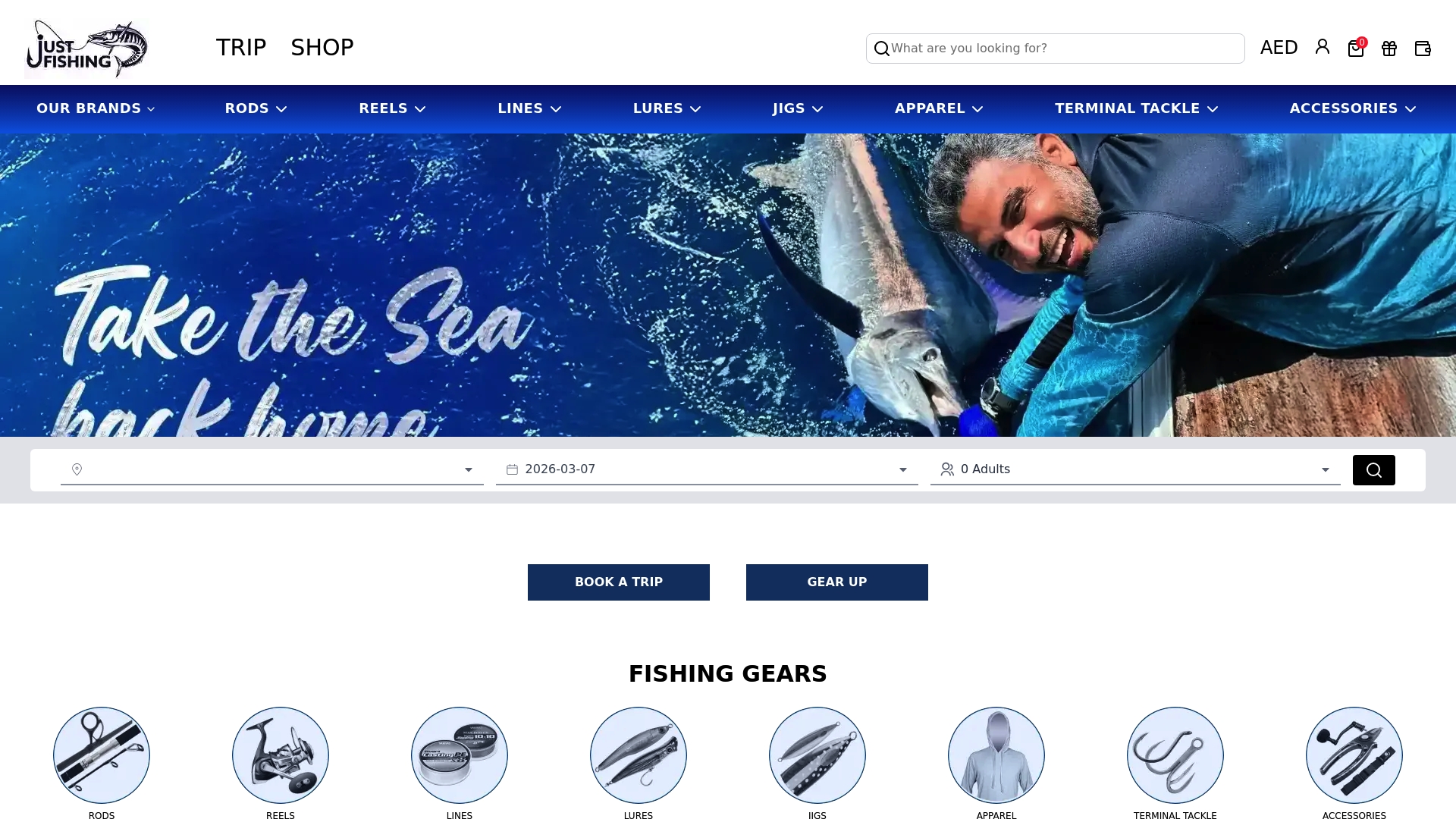
Whether you are looking for catch-and-release deep sea trips or community-based pescatourism experiences, Justfishinggroup curates options that align with the criteria covered in this guide. The platform also stocks eco-conscious fishing gear for anglers who want their tackle to match their values. Browse verified tours, compare destinations, and book with the confidence that your trip supports the ecosystems and communities that make great fishing possible.
FAQ
What certifications should I look for in sustainable fishing tours?
Look for certifications from Green Fins, Project AWARE, and the Global Sustainable Tourism Council. Always verify the operator appears in the certifying body’s database and confirm the most recent audit year.
How do I know if a fishing tour is genuinely eco-friendly or just greenwashing?
Credible operators publish specific policies on group caps, local guide hiring, wildlife interaction distances, and conservation partnerships. Vague language with no supporting documentation is the clearest sign of greenwashing.
What fish species should I avoid targeting on sustainable fishing trips?
Avoid apex predators like bluefin tuna, swordfish, and monkfish, which are overfished or slow to reproduce. Use the Seafood Watch app to check the current status of target species by region before booking.
Why does group size matter for sustainable fishing tourism?
Smaller groups of 10 to 12 people reduce noise disturbance, physical pressure on fishing sites, and overall ecological footprint. Large groups with no stated cap policy are a reliable indicator of unsustainable operations.
How does timing affect the sustainability of a fishing tour?
Fishing during off-peak seasons and outside spawning windows reduces stress on fish populations and supports recovery. Operators who use fishing forecast technology to plan routes seasonally demonstrate a measurable commitment to conservation outcomes.
Recommended
Customer Reviews
Rate this blog
Rating Breakdown
Categories
Popular Tags