Address: M5, Al Naumi Tower , Al Mina Road, Al Zahya Area, Abu Dhabi City, UAE
Email: support@justfishinggroup.com
Store Hours: 10:00 - 18:00, Mon - Sat
Legal
© 2025 JustFishing. All Rights Reserved.



Address: M5, Al Naumi Tower , Al Mina Road, Al Zahya Area, Abu Dhabi City, UAE
Email: support@justfishinggroup.com
Legal
© 2025 JustFishing. All Rights Reserved.
How to Select Jigging Gear for Any Depth or Species
June 22, 2026, 119
TL;DR:
- Selecting the right jigging gear involves matching rod action, weight, line diameter, and jigs to your specific depth and current conditions to ensure effective presentations. A quality parabolic rod in the 100-400g range paired with a smooth conventional reel and thin braid offers versatile offshore performance, while gear should be chosen based on function over brand. Proper matching of components maximizes jig action, sensitivity, and fish-catching success in various fishing scenarios.
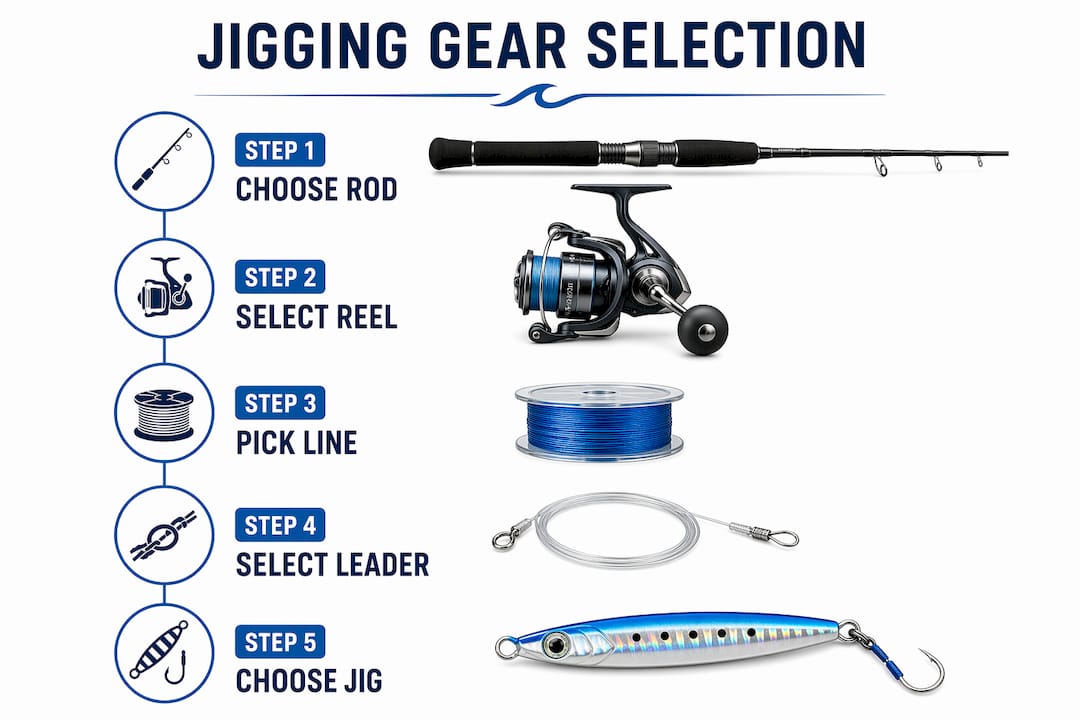
Selecting the right jigging gear means choosing rods, reels, lines, and jigs that work together to create precise vertical control, sensitivity, and efficient jig movement for your target species and conditions. Knowing how to select jigging gear separates anglers who consistently land fish from those who struggle with missed strikes and tangled presentations. The core categories are rods, reels, braided lines, and jigs, and each one must be matched to your fishing depth, current speed, and technique. Brands like Shimano, Daiwa, and Varivas dominate the market for good reason, but function always outranks the name on the blank.
The rod is the most critical component in your jigging tackle setup because it directly controls jig action, bite detection, and angler fatigue over a long session. Get the rod wrong and no reel or line upgrade will fix your presentation.
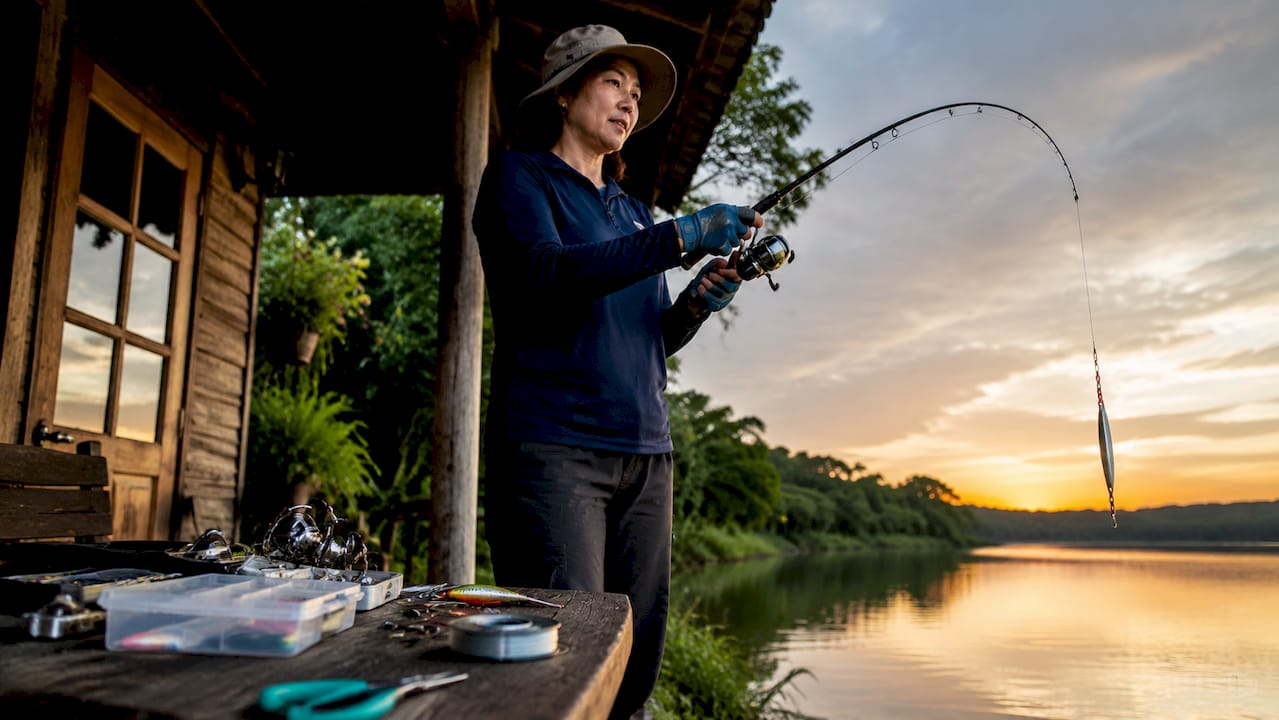
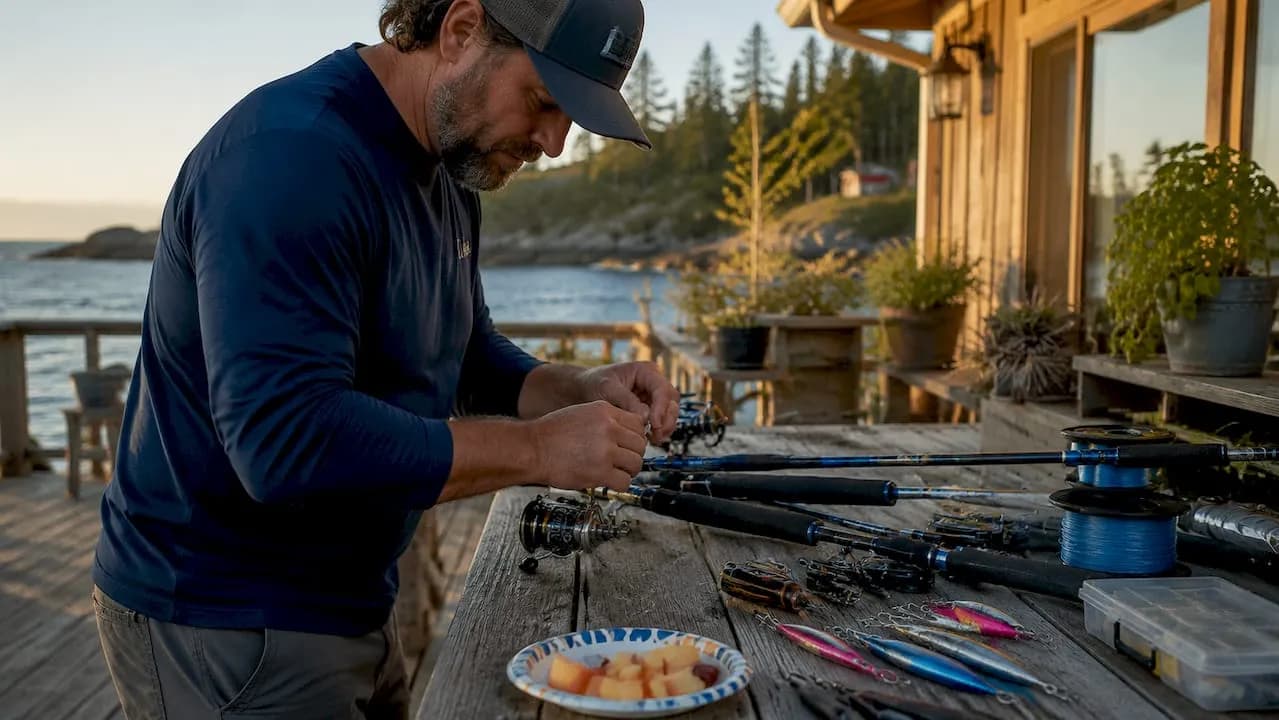
Two rod weight classes cover nearly every jigging scenario. A 100 to 400 gram rod handles the vast majority of situations, from moderate depths to standard current conditions. A 400 to 1000 gram rod is reserved for heavy current, deep water, or oversized jigs targeting large amberjack or grouper. Most experienced anglers reach for the lighter class nine times out of ten, keeping the heavier setup rigged and ready as a backup.
Parabolic rods bend deeply through the mid-section, which loads the blank and releases energy to create a natural jig flutter that predators find irresistible. Fast-tip rods suit speed jigging, where rapid, aggressive retrieves replace the subtle fall-and-flutter rhythm of slow-pitch technique. Choosing the wrong action for your technique is one of the most common errors in choosing jigging tackle. A parabolic rod used for speed jigging loses its efficiency, and a fast-tip rod used for slow-pitch kills the jig’s natural movement.
Rod length ranges from 6’3" to 7’3", and the trade-off is straightforward: shorter rods deliver more leverage and precision for repeated lifting, while longer rods allow finer, more subtle jig manipulation. Nano carbon construction, used in rods like the Daiwa Saltiga series, reduces blank weight without sacrificing sensitivity. The nano carbon taper design allows the rod to “kick” the jig forward before it flutters back, which maximizes lure action on every single drop. That kick-and-flutter cycle is what triggers strikes from fish that ignore conventional presentations.
Pro Tip: Match your rod’s gram rating to the jig weight you plan to fish most often. Running a 200g jig on a 400-1000g rod kills the action because the blank never loads properly.
The reel’s job in any jigging setup is to maintain smooth drag under load, hold enough line for your target depth, and retrieve line fast enough to recover slack or burn the jig up when needed. Top jigging reels combine reliable drag systems, adequate line capacity, and fast retrieval speed in one package.
Spinning reels suit anglers who prefer lighter jigs and more relaxed technique, particularly in shallower water. Conventional reels, also called overhead reels, dominate serious jigging because they handle heavier line, deeper water, and the repetitive cranking motion of speed jigging without fatigue. The Shimano Ocea Jigger series is the benchmark conventional reel for offshore jigging, featuring an auto-engage clutch that prevents accidental free-spool during the drop. The Jigging Master level wind system is another feature worth noting for anglers targeting very deep structure, as it distributes line evenly under pressure.
Drag smoothness matters more than maximum drag rating. A reel that delivers 15 kg of drag with zero stutter is more useful than one rated at 25 kg that surges under load. For slow-pitch jigging, the drag must release line smoothly when a fish runs, because the parabolic rod already absorbs shock and any drag spike can break the leader. Line capacity should match your target depth with at least 50 meters of buffer. Fishing 200 meters of water requires a reel that holds 300 meters of your chosen braid comfortably.
Pro Tip: Spool your reel with braid, then add a 20 to 30 meter topshot of fluorocarbon as a leader buffer. This protects the main line from abrasion near structure and reduces visibility at the business end.
Line choice in jigging is not about raw strength. It is about diameter, stretch, and how the line behaves in current. Braid’s thin diameter and low stretch deliver superior sensitivity and vertical line control compared to monofilament, which is why mono is essentially obsolete for serious jigging applications.
The table below summarizes the standard line recommendations based on fishing depth and current conditions.
| Depth / Condition | Recommended Line | Diameter Range |
|---|---|---|
| Under 300 ft, moderate current | 20 to 30 lb braid | 0.19 to 0.25 mm |
| Over 300 ft, current above 2 knots | 15 lb or lighter braid | Under 0.19 mm |
| Any depth, strong current | Thinnest diameter possible | Prioritize diameter over test |
Current above 2 knots creates significant line drag that pushes your jig off vertical, reducing sensitivity and killing the action. Dropping to a thinner diameter braid solves this faster than switching to a heavier jig. Varivas Avani and Daiwa J-Braid are two lines that balance fine diameter with high abrasion resistance, making them reliable choices for offshore jigging in varied conditions.
Fluorocarbon leaders are the standard choice for jigging because fluorocarbon is nearly invisible underwater and resists abrasion from structure and fish teeth. Monofilament leaders work in clear, shallow water where abrasion is minimal, but fluorocarbon outperforms in most offshore scenarios. Leader strength should be 1.5 to 2 times the main line rating, giving you a weak link at the jig rather than mid-line. Seaguar produces fluorocarbon leaders trusted by offshore anglers worldwide for their consistency and knot strength.
Jig selection is where many anglers overthink the process. The most effective principle in jigging is to use the smallest jig that maintains vertical line angle, because lighter jigs mimic natural prey more convincingly and require less energy from predators to capture. Large fish regularly eat small jigs. The reverse is rarely true.
Different jig shapes produce different actions, and matching the shape to your technique determines how fish respond.
Jig weight is determined by depth and current, not by fish size. In 100 meters of water with light current, a 150g jig is often sufficient. In the same depth with a 3-knot current, you may need 250g to stay vertical. Color matters less than most anglers believe, but the general rule is silver and blue in clear water, pink and chartreuse in low visibility, and darker patterns at depth where light penetration is minimal.
Pro Tip: Carry jigs in three weight increments for every target depth. If your 150g jig drifts off vertical, step up to 200g before changing technique. Current, not fish preference, usually drives the need to switch.
Most jigging failures trace back to a small set of repeatable errors. Recognizing them before you buy saves money and frustration on the water.
Pro Tip: Before any offshore trip, check the expected current speed for your target area. Experienced anglers bring multiple reels spooled with different line diameters to adapt when conditions change mid-session.
Effective jigging gear selection requires matching every component, from rod action to line diameter, to your specific depth, current speed, and target species.
| Point | Details |
|---|---|
| Rod weight class matters | Use a 100-400g rod for most conditions; reserve the 400-1000g setup for heavy current and deep water. |
| Drag smoothness beats drag rating | A reel with smooth, consistent drag protects leaders and lands more fish than a high-rated but surging drag. |
| Line diameter controls presentation | In current above 2 knots, switch to thinner braid before increasing jig weight to maintain vertical angle. |
| Use the smallest effective jig | Light jigs mimic natural prey more convincingly and trigger more strikes from large fish than heavy ones. |
| Function over brand | Rod action, line diameter, and drag quality determine jigging success more than the name on the gear. |
Most anglers I see on the water spend their budget on reels and skimp on rods and line. That is exactly backwards. The rod is your primary connection to the jig, and a blank with the wrong action or gram rating makes every other piece of gear perform below its potential. I have watched anglers fish expensive Shimano Ocea Jigger reels paired with a rod that never loads correctly, and they wonder why their jig has no action.
The other thing I would push back on is the idea that you need a full quiver of specialized rods before you start. One quality parabolic rod in the 100-400g range, paired with a smooth conventional reel and thin-diameter braid, covers the majority of offshore jigging scenarios most recreational anglers will ever encounter. Add a second reel spooled with lighter line for strong-current days, and you are genuinely prepared for most conditions.
Gear upgrades should follow experience, not precede it. Fish the 100-400g setup until you understand exactly what it cannot do. That gap in performance will tell you precisely what to buy next, and you will spend your money far more wisely than any gear guide can predict in advance.
— Alaa
Justfishinggroup stocks the rods, reels, lines, and jigs covered in this guide, sourced from the brands that serious offshore anglers actually use. Whether you need Shimano Ocea Jigger reels for a deep-water amberjack session, Varivas Avani braided lines for precise diameter control in strong current, or a selection of Savage Gear minnow jigs to cover multiple species, the full range is available at Justfishinggroup. The platform also offers expert-curated fishing trips across the Maldives, UAE, Seychelles, and beyond, so you can test your new setup in world-class water.
Parabolic action is the standard for slow-pitch jigging because the rod loads deeply through the mid-section, creating a natural jig flutter on the fall that triggers strikes. Fast-tip rods suit speed jigging but kill the action in slow-pitch technique.
Match line weight to depth and current. Use 20-30 lb braid (0.19-0.25 mm diameter) for water under 300 feet with moderate current, and drop to 15 lb or lighter when current exceeds 2 knots to maintain vertical line angle.
Conventional reels are preferred for serious offshore jigging because they handle heavier line, deeper water, and repetitive cranking without fatigue. Spinning reels work well for lighter jigs in shallower water.
Jig weight should be the minimum needed to maintain a vertical line angle at your target depth. In 100 meters with light current, 150g is often sufficient. Increase weight only when current pushes the jig off vertical, not to target larger fish.
Color is less critical than shape and weight, but silver and blue work well in clear water, pink and chartreuse in low visibility, and darker patterns at depth where light is limited. Prioritize getting the jig vertical over fine-tuning color selection.
Rate this blog
Categories
Popular Tags