



How to plan a fishing trip: 5 essential steps
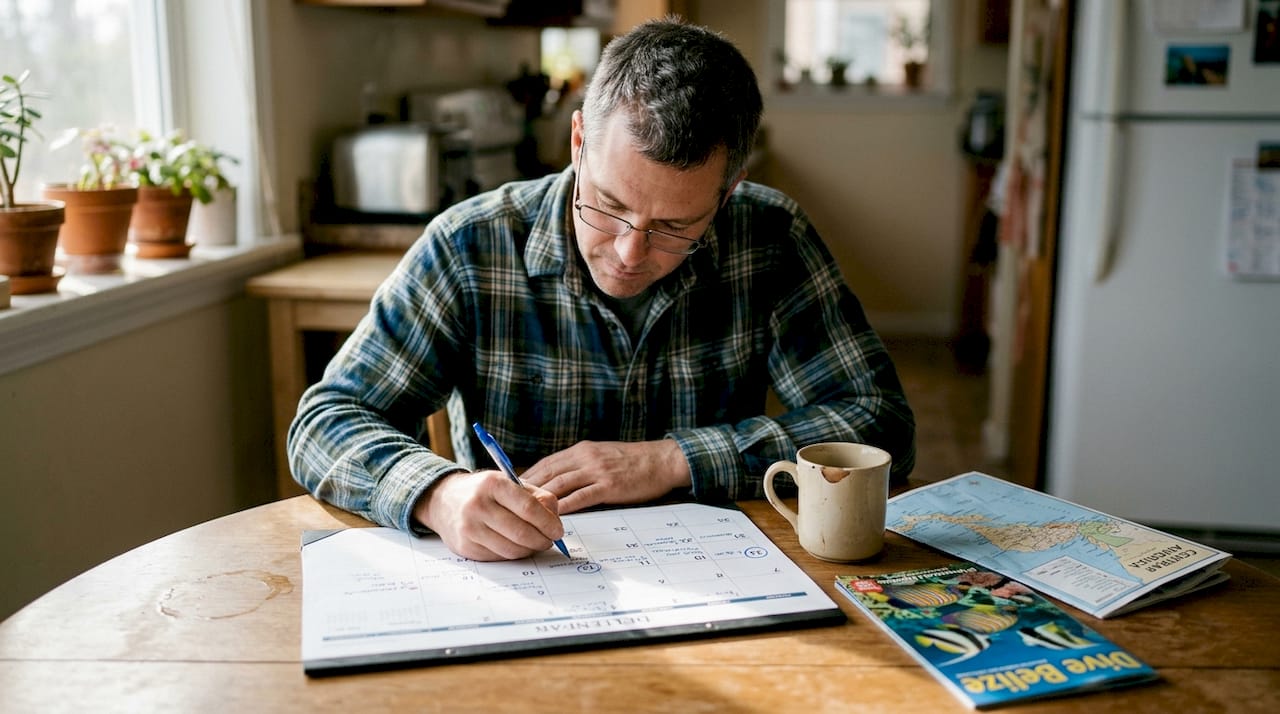
Picture this: you’ve flown 14 hours to your dream fishing destination, only to discover the season peaked two weeks ago, your gear got flagged at customs, and you need a permit you’ve never heard of. It’s a scenario more anglers face than you’d think, and it’s almost entirely avoidable. A well-planned fishing trip doesn’t just mean more fish on the line. It means less stress, smoother logistics, and memories that hold up long after you’re home. This guide walks you through every critical step, from picking your destination and timing to packing smart, staying safe, and connecting with local knowledge that no travel blog can replicate.
Table of Contents
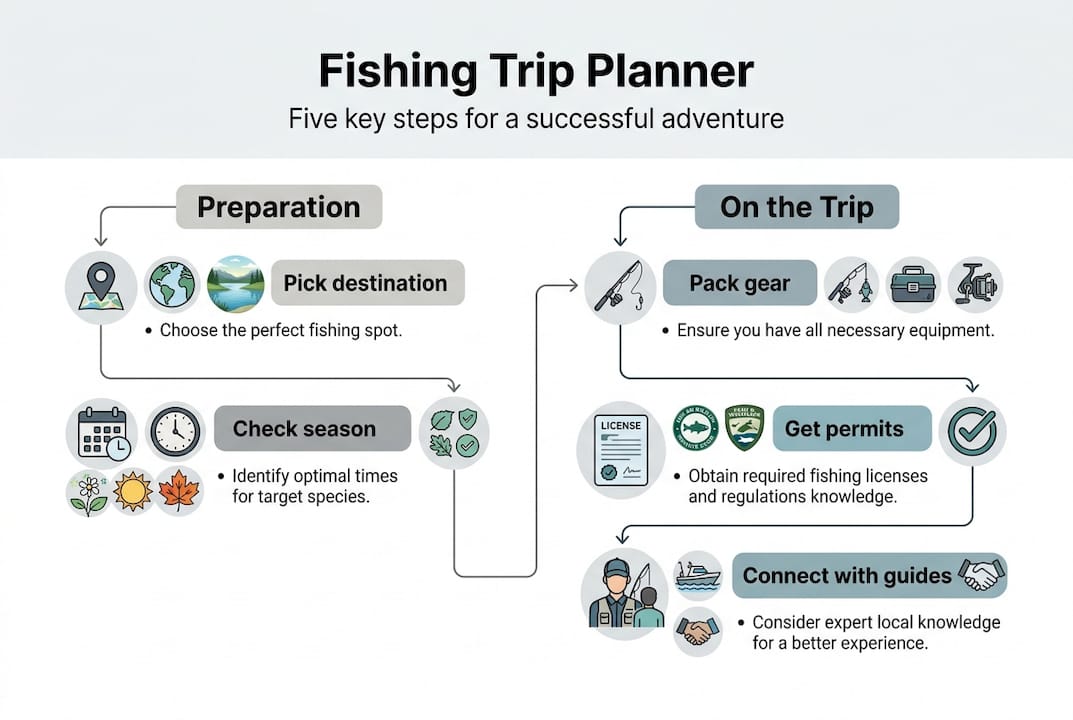
- Choose your destination and timing for maximum success
- Navigate local fishing regulations and secure permits
- Pack smart: Gear, travel essentials, and expert packing tips
- Prioritize health, safety, and casting skills for your adventure
- Connect with locals, guides, and adapt to changing conditions
- What most fishing trip guides won’t tell you
- Plan your dream fishing trip with Just Fishing
- Frequently asked questions
Key Takeaways
| Point | Details |
|---|---|
| Destination and timing matter | Choose your location and trip dates based on the best match for your target fish species and local seasons. |
| Research legal requirements | Check local fishing laws and secure all necessary permits or licenses before you travel. |
| Pack for travel and conditions | Bring versatile, durable gear and use travel-tested packing strategies for hassle-free fishing. |
| Health and safety are crucial | Plan for vaccinations, sun protection, and emergency preparedness on every trip. |
| Local knowledge is invaluable | Engage with local guides and communities to adapt your plan and maximize your fishing success. |
Choose your destination and timing for maximum success
The single biggest factor separating a great fishing trip from a disappointing one is timing. Fish don’t wait for your vacation schedule. Species like yellowfin tuna, GT (giant trevally), and sailfish follow seasonal migration patterns tied to water temperature, baitfish movement, and lunar cycles. Book during the wrong window and you might be casting into empty water.
Start by identifying your target species, then work backward to find when and where they’re most active. Seasonal fishing tips from experienced travelers consistently show that matching your trip to peak migration windows dramatically improves catch rates. Once you know your species, research the top fishing destinations that offer consistent access to them.
Here’s a quick comparison of popular exotic destinations and their prime fishing windows:
| Destination | Prime season | Target species |
|---|---|---|
| Maldives | November to April | GT, tuna, wahoo |
| UAE | October to March | Kingfish, queenfish |
| Seychelles | April to October | GT, bonefish, milkfish |
| Kenya | August to March | Marlin, sailfish, dorado |
| Morocco | May to September | Bluefin tuna, amberjack |
For remote or international locations, the choice between DIY planning and using an outfitter matters a lot. Outfitters handle tides, lodging, and guides, which is exactly what you need when navigating unfamiliar waters. As destination and timing research confirms, using outfitters for exotic spots removes logistical headaches that can derail even the most experienced angler.
Key things to research before booking:
- Local weather patterns and storm seasons
- Water temperature ranges for your target species
- Tidal windows that affect feeding behavior
- Availability of guided fishing trips in your target area
- Historical catch reports from the past 2 to 3 seasons
Pro Tip: Shoulder seasons, the weeks just before or after peak season, often offer the best combination of active fish, lower prices, and fewer boats on the water. It’s one of the most underused strategies in trip planning.
Navigate local fishing regulations and secure permits
After choosing the perfect location and timing, it’s vital to ensure you’re following all local fishing laws, and that starts long before you hit the water.
Fishing regulations vary wildly around the world, and ignorance is never a legal defense. In the UAE, for example, tourists and residents are required to fish through licensed charters to access permits. Thailand, by contrast, requires no license for basic rod fishing but strictly bans fishing in national park waters. European coastal countries often require region-specific licenses that differ from one country to the next.
As international fishing regulations outline, permit requirements vary by country and must be researched early, especially for protected species covered under CITES (the Convention on International Trade in Endangered Species). Bringing home a trophy or fish product from a protected species without documentation can result in confiscation and heavy fines.
Here’s a comparison of permit requirements across key destinations:
| Country | License required | Charter required | Protected species rules |
|---|---|---|---|
| UAE | Yes, via charter | Yes | Strict CITES compliance |
| Thailand | No (rod fishing) | No | Park bans enforced |
| Morocco | Yes (saltwater) | Optional | Bluefin tuna quotas |
| Seychelles | Yes (tourist permit) | Recommended | Marine park restrictions |
Steps to secure permits before your trip:
- Identify the governing fisheries authority for your destination country.
- Check if tourist fishing requires a charter or can be done independently.
- Review bag limits and prohibited gear lists for your target species.
- Confirm permit requirements in Abu Dhabi or your specific region with a local operator.
- Download or print all permits and keep digital copies in your email.
“Requirements vary by country and must be secured early. Some regions require tourists to fish only through licensed charters to legally access permits.” Always verify current rules directly with local authorities, as regulations change seasonally.
Pack smart: Gear, travel essentials, and expert packing tips
With paperwork and logistics in hand, the next challenge is bringing the right gear without overpacking or risking travel hassles.
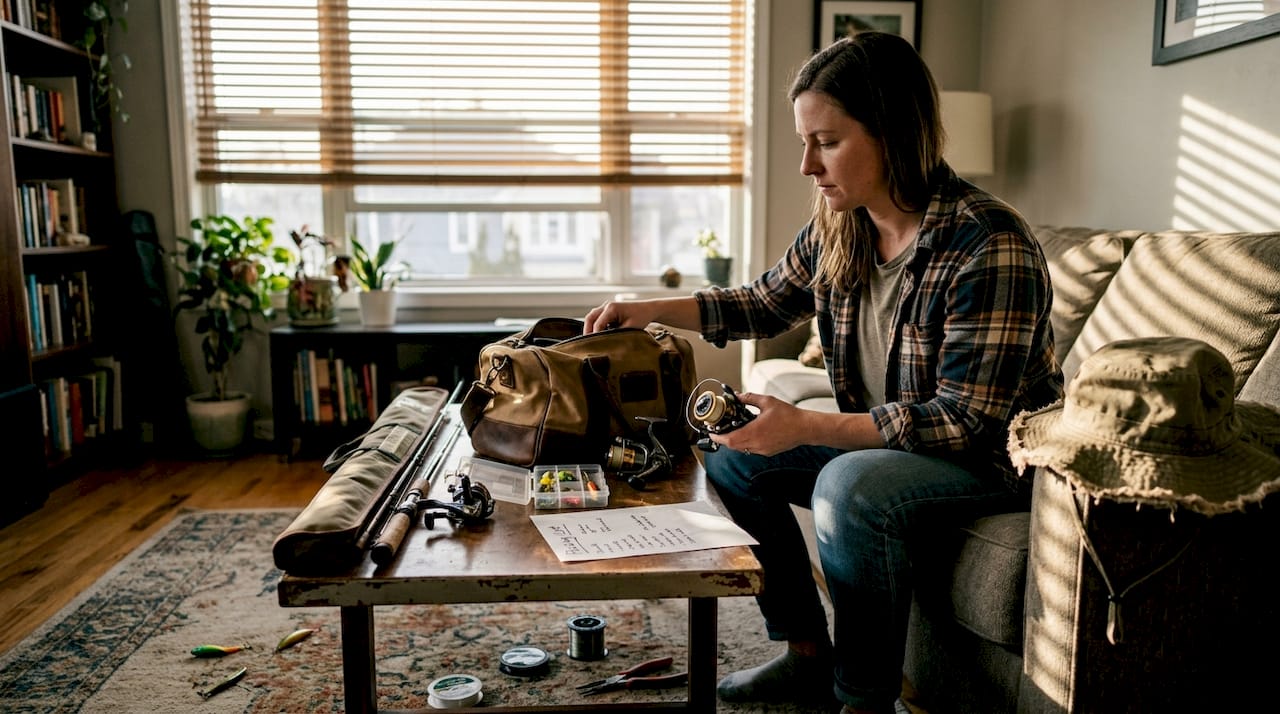
Air travel with fishing gear is one of the most common sources of stress for international anglers. Oversized rod cases get flagged. Reels get damaged in checked luggage. Lures and hooks trigger security checks. The solution is a smart, disciplined packing strategy built around what you actually need.
According to international packing tips, the gold standard is a multi-piece travel rod in a hard case kept under 7 feet to avoid airline oversized baggage fees. Sealed reels, extra line, and spare leaders should travel in labeled pouches inside your checked bag, while your most critical items go in carry-on.
Essential gear checklist for international fishing trips:
- Multi-piece travel rods (4 to 6 sections for compact packing)
- Hard rod case with foam padding
- Sealed spinning or conventional reels in protective pouches
- Spare braided line and fluorocarbon leaders
- Assorted lures, jigs, and terminal tackle in a compact lure bag gear
- Dry bags for waterproofing electronics and documents
- Polarized sunglasses and UV-protective clothing
Browse trusted fishing gear brands to find travel-rated options before your trip, and buy fishing gear that’s been tested in saltwater conditions. Local tackle shops are rare in remote destinations, so self-sufficiency is key.
Pro Tip: Label every pouch and case with your name, destination, and contact info. Airport security staff are far more cooperative when gear is clearly organized and identified.
Prioritize health, safety, and casting skills for your adventure
Even the best planning can be derailed by health or safety missteps, so here’s how to protect yourself and fish with confidence.
Tropical and remote fishing destinations come with environmental hazards that anglers from temperate climates often underestimate. Strong equatorial sun, jellyfish, unfamiliar currents, and limited medical access are real risks. A few simple precautions make a significant difference.
Start with health prep. Check destination-specific vaccine recommendations through your country’s travel health advisory at least 6 to 8 weeks before departure. Some destinations require proof of vaccination for entry. Pack a compact first-aid kit that includes antiseptic, blister treatment, motion sickness tablets, and any prescription medications you rely on.
Steps to prepare for health and safety on the water:
- Visit a travel health clinic and update vaccinations based on your destination.
- Pack a waterproof first-aid kit with basic wound care and oral rehydration salts.
- Share your full itinerary with someone at home before departure.
- Wear long-sleeve UV shirts, apply SPF 50+ sunscreen every two hours, and use polarized sunglasses.
- Practice your casting before the trip, especially fishing safety best practices like casting accurately into wind at 40 feet or more.
“Preparation for health and safety is as important as any piece of gear. Polarized glasses protect your eyes from hooks and glare. Long sleeves protect your skin for the full day on the water.”
Don’t overlook your casting skills. Arriving at a GT flat in the Maldives without the ability to punch a cast into a 20-knot headwind is a frustrating experience. Practice with the same weight lures you plan to use, and consider rugged tackle options that hold up under pressure.
Connect with locals, guides, and adapt to changing conditions
Once every other detail is aligned, your best resource is local knowledge and your willingness to adjust as needed.
No amount of online research replaces what a local guide knows about a specific stretch of water. Guides understand micro-tidal patterns, feeding windows, and which spots hold fish after a weather shift. They also know what’s changed recently, whether that’s a new regulation, a baitfish migration, or a storm that stirred up the bottom.
Local guide advice consistently points to flexibility as the trait that separates anglers who succeed from those who don’t. Weather changes. Tides shift. Regulations get updated mid-season. The anglers who adapt, rather than fight the conditions, almost always end up with better results.
How to leverage local knowledge effectively:
- Book guides with verified reviews and ask specific questions before arrival
- Join destination-specific fishing forums and Facebook groups for recent reports
- Visit local tackle shops on arrival for current intel on what’s working
- Stay flexible with your daily schedule based on tidal windows
- Check insider tips from experienced anglers who’ve fished your destination
For multi-stop trips across multiple countries, consider shipping your gear ahead or renting locally at each stop. Hauling a full rod case through three airports adds friction and risk. Lightweight gear recommendations and compact basic tackle options make multi-destination trips far more manageable.
Pro Tip: Join a destination-specific fishing forum at least 3 months before your trip. The intel you gather from anglers who were just there is worth more than any guidebook.
What most fishing trip guides won’t tell you
Most planning checklists cover the basics well. What they rarely address is the mindset gap between anglers who have a great trip and those who don’t.
Here’s the honest truth: the angler who obsesses over gear and ignores local knowledge almost always underperforms the angler who shows up with average tackle and a willingness to listen. We’ve seen it repeatedly. The best rod in the world won’t help you if you’re fishing the wrong tide on the wrong flat.
DIY budget trips have real advantages, including flexibility and lower cost. But guided luxury outings aren’t just about comfort. They compress the learning curve dramatically. For first-time international anglers, that compression is often the difference between a frustrating trip and a transformative one.
The biggest mistakes we see? Overpacking gear while underpreparing on permits. Ignoring shoulder seasons because peak sounds better. And underestimating how much the people you meet, your guide, the local shop owner, the other angler at the dock, shape the entire experience. Check angler experiences from others who’ve been there before you book. The trip you remember most won’t be defined by the fish you caught. It’ll be defined by the people who helped you catch them.
Plan your dream fishing trip with Just Fishing
You’ve got the strategy. Now it’s time to put it into action with the right support behind you.
At JustFishing Group, we specialize in exactly this kind of trip. Whether you’re targeting GT in the Maldives, kingfish in the UAE, or marlin off the Kenyan coast, we offer curated guided fishing trips with experienced local guides, permit handling, and real-world logistics support. You can also shop specialty lures and travel-tested gear proven in the destinations we serve. Ready to stop planning and start fishing? Plan your adventure with a team that’s been there, caught that, and knows exactly what you need.
Frequently asked questions
What are the most important documents needed for an international fishing trip?
You’ll typically need a passport, entry visa, and any fishing permits or licenses required by your destination. Requirements vary by country and should be confirmed well before your departure date.
How do I choose the best fishing location for my target species?
Research migration seasons and water conditions for your target species, then cross-reference with recent catch reports. Destination and timing matched to your species is the single most reliable predictor of success.
Can I rent fishing gear at my destination or should I bring my own?
For multi-stop or remote trips, renting locally or shipping gear ahead can simplify travel. That said, always bring your core essentials since rental quality and availability vary widely.
What health precautions should I take before going on a fishing trip abroad?
Visit a travel health clinic 6 to 8 weeks before departure, update your vaccinations, and pack sun protection and a basic first-aid kit. Health and safety prep is as important as any piece of gear you bring.
Do permit and regulation requirements change if I book through an outfitter?
Many outfitters handle permits on your behalf, but always verify what’s covered. In some regions, like the UAE, tourists need charters to legally access fishing licenses at all.