



How to Book Eco Fishing Tours Without Harming Nature

TL;DR:
- Genuine eco-friendly fishing tours prioritize catch-and-release, vessel efficiency, and local guide employment.
- Research operators through reviews, websites, and direct questions to confirm specific conservation practices.
- Booking responsibly contributes to industry shifts but has limited impact without broader systemic change.
Passionate anglers know the feeling: you want an unforgettable fishing adventure in a pristine location, but you also care about what happens to that ecosystem after you leave. Finding a fishing tour that genuinely protects the environment instead of just claiming to is harder than most operators let on. The “eco” label gets slapped on everything from budget boat trips to luxury charters, and it rarely tells you much on its own. This guide cuts through the noise and gives you a practical framework for finding, vetting, and booking fishing tours that deliver real thrills while doing right by the ocean.
Table of Contents
- Understanding what makes a fishing tour eco-friendly
- How to research and shortlist eco fishing tours
- Evaluating operators: policies, equipment, and conservation efforts
- Final steps: Booking and preparing for your eco fishing trip
- Our perspective: The real impact and limits of eco fishing tours
- Find your next eco fishing adventure with Just Fishing
- Frequently asked questions
Key Takeaways
| Point | Details |
|---|---|
| Research eco credentials | Carefully review each operator’s conservation policies and customer reviews before booking any fishing tour. |
| Assess provided gear | Choose tours that offer reusable or sustainable gear and vessels to further reduce your environmental impact. |
| No universal certification | Since there is no global eco-fishing standard, personal due diligence is critical when choosing a tour. |
| Triple-check before booking | Confirm all details before committing to ensure the trip meets your environmental and adventure goals. |
Understanding what makes a fishing tour eco-friendly
Before you can find a responsible operator, you need to know exactly what you’re looking for. The term “eco-friendly” in the fishing tour industry is loosely used and almost entirely self-reported. Unlike hotels, which can earn recognized green certifications, there is no universal eco-fishing certification that you can rely on as a quick stamp of approval. That means you have to do more of the detective work yourself.
So what actually separates a genuinely sustainable fishing tour from one that just uses the word “eco” in its marketing? Several core practices matter.
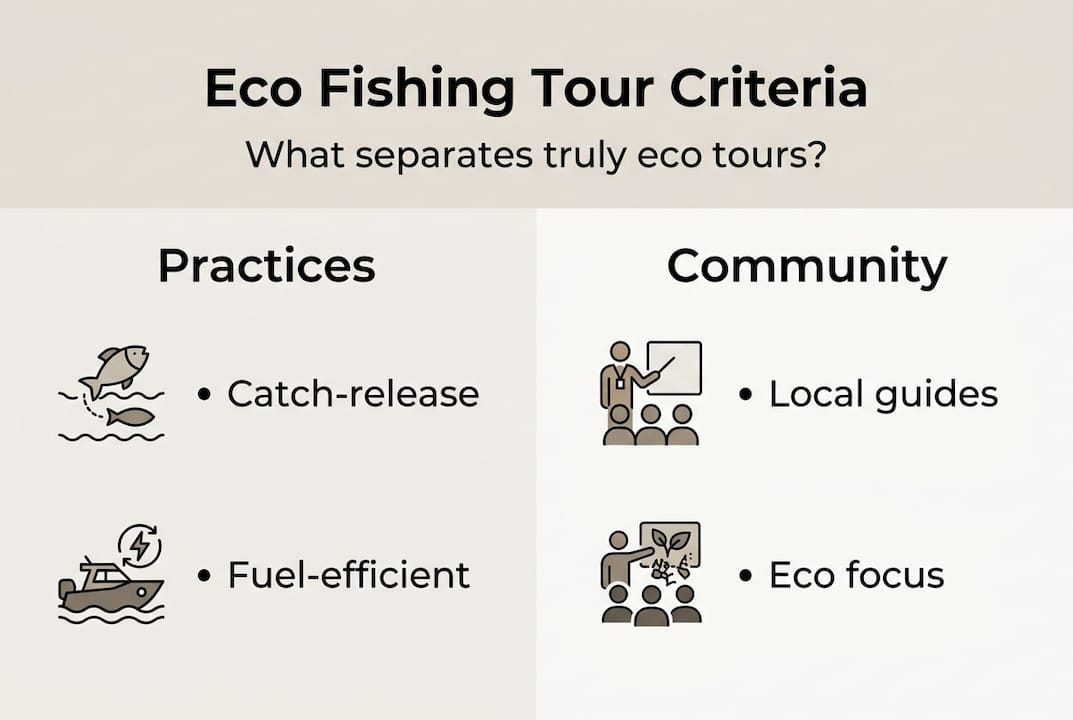
Catch-and-release policies. Operators that practice catch-and-release, especially for threatened or slow-reproducing species, have a measurable positive effect on local fish populations. The details matter too. How are fish handled? Are they kept out of water briefly and released carefully, or handled roughly and tossed back in stress? A good operator trains guides on proper handling and uses barbless hooks to minimize injury.
Vessel efficiency and fuel practices. Fishing boats are significant sources of carbon emissions. Vessel efficiency improvements like using modern engines, optimizing hull design, and reducing idle time can cut CO2 output meaningfully, though it’s worth being realistic that a single charter’s savings are a small fraction of the broader fishing industry’s footprint. Still, it signals that an operator takes sustainability seriously.
Use of local guides and staff. Eco-conscious operations invest in the local community. Hiring local guides reduces the economic pressure on communities to exploit natural resources in unsustainable ways. It also ensures that guests learn from people who genuinely know and care about the ecosystem they’re fishing in.
Conservation fees and partnerships. Some operators contribute a portion of their booking revenue to marine conservation organizations or habitat restoration programs. This is a strong positive signal, but you should ask specifically which organizations they support and how much goes toward conservation.
Here is a quick breakdown of what separates genuine eco practices from greenwashing:
- Specific, named conservation partners vs. vague “we care about nature” statements
- Published catch limits and species protection lists vs. “we follow local laws” (which may be minimal)
- Barbless hooks and fish-friendly handling procedures included as standard vs. available only on request
- Fuel-efficient or electric vessels vs. aging, high-emission engines with no upgrade plan
- Guides hired from local fishing communities vs. imported staff with no local connection
“Real eco credentials show up in the details of an operator’s policies, not in their marketing copy. If you can’t find specifics on their website, that’s already a red flag.”
You can review eco-focused tour experiences and ratings on platforms like World-Tourism.org to get a sense of how real operators structure responsible fishing charters. When browsing eco fishing options, look for operators that openly share their conservation policies and not just their catch photos.
How to research and shortlist eco fishing tours
Once you know what makes a tour eco-friendly, you need to identify the most legitimate options. The research phase is where most anglers either give up or make hasty decisions. Here’s a step-by-step process that actually works.
Step 1: Start with trusted review platforms. Use platforms like World-Tourism.org and TravelersUniverse, which include user reviews that specifically mention conservation practices, guide conduct, and environmental policies. Generic travel review sites often miss this detail. Look for eco charter reviews that confirm catch-and-release procedures, gear quality, and flexibility in scheduling around weather or wildlife conditions.
Step 2: Visit operator websites with a critical eye. Don’t stop at the homepage. Navigate to the “About” or “Sustainability” page. Look for specifics: Do they list the species they protect? Do they mention partnerships with named conservation bodies? Do they explain how their vessels are maintained for efficiency? A vague mission statement is not enough.
Step 3: Cross-reference social media and independent blogs. Anglers who’ve taken eco tours often post detailed accounts of their experiences. Search for trip reports on fishing forums and Instagram. These firsthand accounts frequently reveal whether an operator’s eco promises hold up on the water.
Step 4: Contact operators directly before booking. Email or call shortlisted operators and ask direct questions. How do they handle undersized fish? What happens if a guest accidentally catches a protected species? Do guides carry fish-friendly handling kits? The quality and specificity of their answers tells you a lot.
Step 5: Shortlist based on three core criteria. Prioritize operators with flexible scheduling that adapts to conservation conditions (like spawning seasons), included eco gear such as barbless hooks or dehooking tools, and a documented conservation focus backed by real partnerships.
Pro Tip: Build a comparison table during your research phase. Jot down each operator’s vessel type, guide credentials, conservation partnerships, gear provided, and cancellation policy side by side. It makes the final decision much easier.
Here’s a simple comparison framework you can adapt:
| Criteria | Operator A | Operator B | Operator C |
|---|---|---|---|
| Catch-and-release policy | Yes, documented | Partial | Yes, documented |
| Vessel efficiency | Modern, low-emission | Older diesel | Solar-assisted |
| Local guides | Yes | Mixed | Yes |
| Conservation fee | 5% of booking | None | Named partner |
| Gear included | Barbless hooks, net | Standard hooks | Full eco kit |
| Flexible scheduling | Yes | Limited | Yes |
For more guidance on planning your fishing travel responsibly, our fishing travel tips cover destination-specific considerations across multiple regions.
Evaluating operators: policies, equipment, and conservation efforts
After shortlisting, the next step is to dig deeper into what each operator truly offers. This is where you separate the genuinely committed operators from those using eco marketing as a selling point without the substance to back it up.
Gear and equipment. Pay close attention to what gear is included in the tour price and what you’re expected to bring. Responsible operators typically provide or strongly encourage barbless hooks, which reduce injury to released fish significantly. Dehooking tools, fish-friendly rubberized nets, and wet hands handling procedures are other indicators of a serious approach. If an operator still hands out treble hooks and monofilament line with no eco alternative, that’s a meaningful gap between their words and their practices.
The gear question also extends to what you bring personally. Many anglers don’t realize that the type of fishing line, lure coatings, and sinker materials all have environmental implications. Lead sinkers, for example, are banned in several countries due to toxicity to birds and aquatic life. Visiting reliable eco-friendly brands before your trip helps you make smart gear choices that complement your operator’s own practices.
Vessel efficiency. Ask about the boat you’ll be fishing from. According to data on vessel efficiency and emissions, modern engine upgrades and optimized vessel design can meaningfully reduce a charter boat’s carbon output compared to older diesel-heavy models. It won’t single-handedly solve ocean health, but it matters as part of a broader commitment. An operator who has invested in engine upgrades or uses hybrid or solar-assisted vessels is putting money behind their values.
Local hiring and community investment. Ask specifically what percentage of guides and crew are hired locally. Local employment reduces the economic pressure on coastal communities and keeps tourism dollars within the region. It also gives you access to guides with genuine ecological knowledge of local waters, which makes for a better fishing experience anyway.
Here’s a checklist for evaluating any operator in depth:
- Do they publish species-specific catch limits and seasonal restrictions?
- Are guides certified in fish handling or marine conservation?
- Do they have a written policy on what happens if a guest catches a protected species?
- Is there a stated conservation contribution per booking?
- Can they name at least one specific conservation partner organization?
Pro Tip: Ask the operator for references from previous clients who specifically cared about sustainability. How they respond to this request is itself revealing. Confident, genuine operators will connect you happily.
For additional gear recommendations matched to eco-conscious fishing destinations, our blog covers specific setups for different environments, from tropical saltwater flats to deep-water offshore charters.
Final steps: Booking and preparing for your eco fishing trip
With your preferred operator picked, carefully complete your booking and prepare to travel sustainably. The booking process itself contains several checkpoints that protect both your investment and the environment.

Step 1: Confirm the cancellation and rebooking policy. Responsible eco operators often schedule trips around tidal conditions, spawning seasons, and weather in ways that may require flexibility. Before you pay, understand exactly how their cancellation policy works and whether you can reschedule if conservation conditions make a planned trip inadvisable. For detailed booking tips, including what to check before committing, our fishing trips page walks through the full process.
Step 2: Verify what’s included and what isn’t. Get a written list of everything included in the tour: gear, licenses, conservation fees, and guide gratuities. Some operators advertise inclusive eco packages but charge separately for barbless hook sets or catch-and-release guidance. Confirm these details before your card gets charged.
Step 3: Understand local regulations. Every destination has specific rules covering size limits, bag limits, protected species, and seasonal closures. Your operator should brief you thoroughly, but you should also do your own research. Reading up on local marine regulations before you arrive shows respect for the ecosystem and the local fishing community.
Step 4: Pack with sustainability in mind. Bring a reusable water bottle, reef-safe sunscreen, and appropriate clothing to avoid needing disposable alternatives on the water. If you’re bringing your own tackle, stick to tour prep guide recommendations for specific destinations and avoid gear made with toxic materials.
Here’s a quick packing checklist for eco fishing trips:
- Reusable water bottle and snack containers (no single-use plastics)
- Reef-safe, biodegradable sunscreen and insect repellent
- Barbless hooks and a dehooking tool if bringing personal tackle
- Polarized sunglasses (reduces glare and fish stress from shadow)
- A waterproof field guide to local species for identification
- Rain gear that doubles as sun protection to minimize clothing waste
Pro Tip: Confirm eco tour details directly with your operator 72 hours before departure. Use this call to reconfirm the conservation briefing schedule, gear provided, and any weather-related flexibility. It signals that you’re a serious, informed guest.
Our perspective: The real impact and limits of eco fishing tours
Here’s the honest view that most eco travel content skips: booking the most responsible fishing tour available does not automatically make you a conservation hero. The individual choices of a few thousand careful anglers per year are genuinely small against the scale of commercial fishing pressure, coastal development, and climate change.
That said, we’d push back hard on the idea that it doesn’t matter. The global vessel efficiency gap shows that even incremental improvements across the charter fishing sector add up. More importantly, your booking sends a market signal. When eco tours outperform conventional tours commercially, operators across the industry take notice and shift their practices. That’s how individual choices become systemic change.
The real danger isn’t low impact. It’s greenwashing. An operator who calls themselves eco-friendly purely because they don’t litter is setting the bar dangerously low. Your scrutiny, your questions, and your willingness to walk away from vague claims are what hold the industry honest. Read more on how we think about this tension in our eco fishing opinion pieces, where we go deeper into what responsible fishing tourism actually requires.
Find your next eco fishing adventure with Just Fishing
Now that you know what to look for, here’s where to take your next sustainable step.
At JustFishing Group, we curate sustainable fishing trips across some of the world’s most extraordinary destinations, including the Maldives, Seychelles, Oman, Kenya, and Morocco, always with a focus on operators who prioritize conservation alongside performance. Our eco fishing gear store stocks barbless hooks, fish-friendly landing nets, and other essentials so you arrive prepared. Whether you’re planning your first eco charter or adding a new destination to your list, explore Just Fishing to browse tours, read destination guides, and get personalized support from our team.
Frequently asked questions
How can I be sure a fishing tour is truly eco-friendly?
Review customer feedback on dedicated platforms and look for detailed, specific policies on conservation commitments, vessel emissions, and gear use before committing to any booking.
What gear should I bring on an eco fishing tour?
Bring reusable or barbless fishing gear, a dehooking tool, and avoid single-use plastics and lead-based tackle, as these cause measurable harm to aquatic ecosystems.
Are there official certifications for eco fishing tours?
There is no universal eco-fishing certification, which means you must vet operators carefully through their published conservation policies, gear standards, and independently sourced customer reviews.
Can eco fishing tours really make a difference for the environment?
Eco fishing tours support conservation and push the industry toward better practices, but vessel efficiency gains and individual bookings alone are limited without broader regulatory and systemic change across commercial and recreational fishing sectors.