

Group fishing trip coordination: proven workflows that work
TL;DR:
- Most group fishing trips fail due to lack of clear coordination and defined decision triggers. Assigning specific roles, structured planning, and a designated captain significantly improve trip efficiency and enjoyment. Post-trip reviews and honest communication help continuous improvement and ensure memorable experiences for all skill levels.
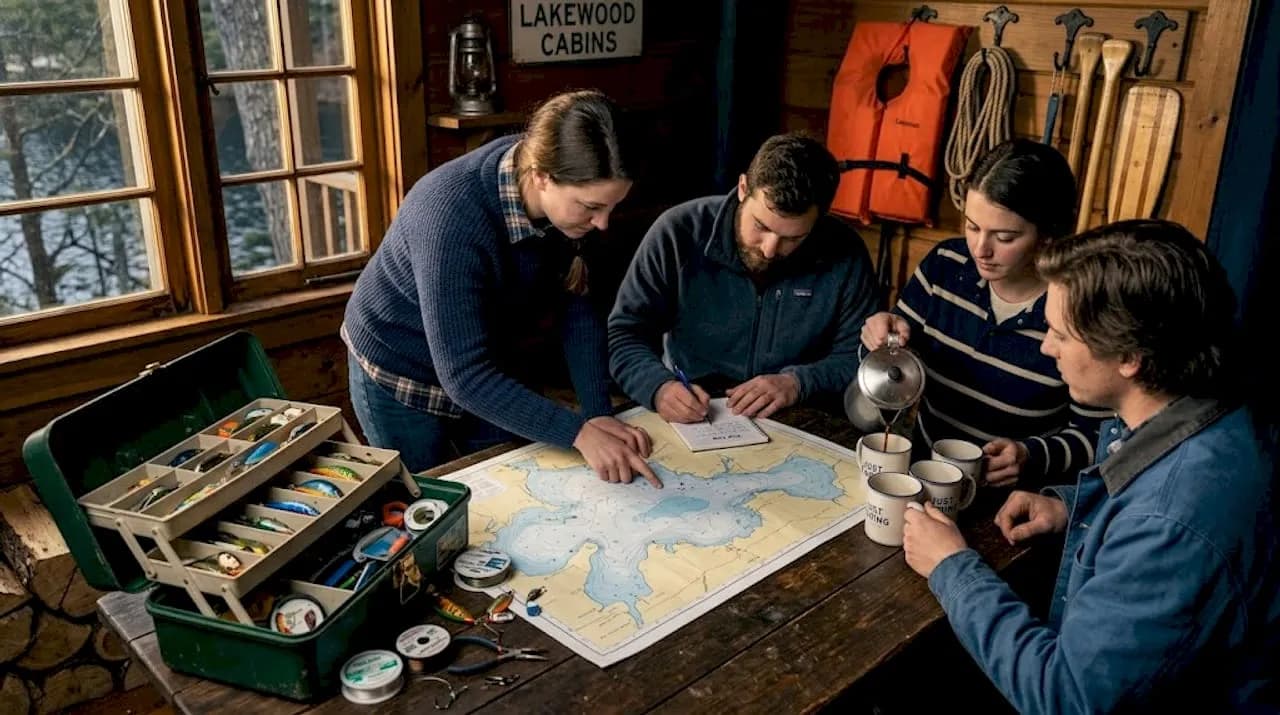
Picture this: eight friends show up at the lake at different times, three people forgot to bring bait, nobody agreed on which spot to fish, and two guys are still arguing about who was supposed to bring the cooler. By noon, half the group has given up, and the fish are long gone. Sound familiar? Chaotic group fishing trips are more common than most anglers admit, and they almost always trace back to one problem: no clear coordination workflow. This article walks you through a proven system for organizing group fishing outings that keeps everyone happy, on time, and actually catching fish.
Table of Contents
- What you need for a smooth group fishing trip
- 5 stages of the group trip coordination workflow
- Managing mixed skill levels and expectations
- Decision-making, adaptability, and plan-B strategies
- Verifying results and using data to improve future trips
- Why most group trip plans fail and how to fix it
- Plan your next fishing trip with ease
- Frequently asked questions
Key Takeaways
| Point | Details |
|---|---|
| Delegate for efficiency | Assign clear roles for gear, food, and transport to prevent confusion and make everyone feel involved. |
| Use a multi-stage workflow | Break planning into structured stages—consensus, assignment, logistics, scheduling, and check-in—to ensure nothing is missed. |
| Align and tailor by skill | Discuss everyone’s skill level and desired outcomes early to avoid mismatched expectations and ensure all enjoy the trip. |
| Plan for adaptation | Designate a leader for key decisions and prepare plan-B options for weather or access issues. |
| Benchmark and review | Check trip outcomes against past experiences and real-world angler surveys to improve future group trips. |
What you need for a smooth group fishing trip
Before you book anything or rally the crew, it pays to understand exactly what a well-organized group fishing trip requires. Think of it like rigging your setup before you cast. You wouldn’t tie on a lure without knowing what fish you’re targeting. The same logic applies here.
The first thing you need is honest information about everyone’s skill level. A group with two experts and four beginners needs a completely different plan than a group of seasoned tournament anglers. According to group trip planning advice, a practical workflow starts with an initial round of planning that aligns the group around a shared goal and explicitly manages mixed skill levels, often through a charter or guided service when beginners are involved.
Once skill levels are clear, you need to assign four essential roles before anything else gets organized:
- Trip lead: The person who owns the master plan, confirms bookings, and makes final calls.
- Gear manager: Responsible for creating the tackle list, confirming who brings what, and managing shared equipment.
- Food and snacks coordinator: Handles meals, hydration, and dietary needs. This role is underrated and extremely important for all-day outings.
- Transport organizer: Coordinates vehicles, maps routes, confirms parking or boat launch access, and manages departure times.
These roles scale with your group size. For a group of four, two people can cover multiple roles. For a group of twelve, you might need to add a permits or licensing coordinator as a fifth role. The critical point is that delegating responsibilities clearly like gear, food, and transportation reduces chaos and dramatically increases participation from everyone involved.
Here is a quick look at how logistics scale with group size:
| Group size | Key roles needed | Recommended booking type |
|---|---|---|
| 2 to 4 anglers | Trip lead, gear manager | DIY or half-day charter |
| 5 to 8 anglers | All four core roles | Full-day charter or guided trip |
| 9 to 14 anglers | Four roles plus permits lead | Multi-boat charter or resort package |
| 15 or more | Dedicated coordinator | Tour operator with full support |
Check out our group trip planning tips for destination-specific advice, and browse our fishing trip packages to see what options fit your group’s size and experience level.
Pro Tip: Create a shared digital document from day one. A simple shared spreadsheet where each role owner tracks their responsibilities saves countless back-and-forth messages and prevents things from slipping through.
5 stages of the group trip coordination workflow
Once you have your crew and roles assigned, it is time to move through a structured workflow. Ad-hoc planning produces ad-hoc results. A structured multi-stage coordination approach that covers scheduling, logistics, and participant management is the core methodology for moving a group efficiently from idea to execution.
Here are the five stages that work for recreational fishing groups of any size:
- Consensus (Week 1 to 2): Poll the group on preferred dates, target species, and budget. Use a free polling tool or group chat to get quick responses. Lock in a decision within two weeks or the trip loses momentum.
- Assignment (Week 2 to 3): Formally assign roles, share the shared document, and set clear deadlines for each coordinator to report back. This is also when you confirm who is driving and how costs will be split.
- Logistics (Week 3 to 4): Gear manager finalizes the equipment list. Transport organizer confirms vehicles and launch sites. Trip lead books the charter, guide, or campsite. Food coordinator confirms meals and drinks.
- Schedule and communication (One week out): Send the final itinerary to the group. Include meeting time, GPS coordinates for the launch point, emergency contacts, weather check protocol, and what to do if someone is running late.
- Final check-in (24 to 48 hours before): Quick confirmation from each role owner. Gear packed? Transportation confirmed? Food bought? Weather checked? This stage catches last-minute gaps before they become trip-ruining problems.
Here is how structured planning stacks up against winging it:
| Factor | Ad-hoc planning | Structured workflow |
|---|---|---|
| Role clarity | Assumed or ignored | Explicitly assigned |
| Logistics gaps | Discovered on the day | Caught in advance |
| Decision-making | Debated on the water | Pre-agreed trigger points |
| Participant engagement | Uneven, often frustrating | Distributed, increases buy-in |
| Trip satisfaction | Inconsistent | Predictably higher |
Our scheduling tips for group fishing go deeper into destination planning, and if you want to explore options for organized fishing outings with built-in logistics support, we have packages that take a lot of the heavy lifting off your plate. For gear-specific prep, check out our multi-stage trip tips when stocking your tackle selection.
Pro Tip: Set a “decision deadline” at the start of stage one. Tell the group that if no response is received by a certain date, you will decide for them. This stops the endless back-and-forth that kills momentum.
Managing mixed skill levels and expectations
Structured workflow gets you moving. Now let’s handle one of the trickiest parts: making sure every participant, from the person who has never held a rod to the angler with twenty years on the water, has a genuinely great time.
The biggest trap here is assuming everyone wants the same thing. An experienced angler might want to work technical structure and try new lures. A beginner just wants to feel a fish on the line without embarrassment. Both goals are valid. Both require different setups. And if you don’t acknowledge them upfront, resentment builds fast.
When using a guide or charter, pre-aligning expectations with the outfitter is critical. Be specific about skill goals: basics and confidence for newer anglers, refined technique or species targeting for experienced ones. Also clarify who is responsible for bringing what gear versus what the guide supplies.
Here are the key steps to align skills and goals before the trip:
- Send a quick skills survey: Ask each participant to rate themselves as beginner, intermediate, or experienced. Three simple categories work fine.
- Set a group goal statement: Something like “everyone lands at least one fish” is more useful than “we’re going fishing.” It creates shared purpose.
- Talk to your guide or charter in advance: Share the skills breakdown. A good guide adjusts the day based on this information.
- Pair anglers strategically: Put beginners next to patient, encouraging anglers rather than competitive ones. This small move changes the social dynamic entirely.
- Define what success looks like: Make sure everyone knows that a perfect trip is not always about the biggest catch. It is about the experience together.
“The best group trips we’ve seen are the ones where the group told us upfront what they each wanted to get out of the day. That information lets us tailor the experience so nobody feels left behind or bored.” This sentiment from experienced guides captures exactly why pre-trip communication pays off so consistently.
For practical ideas on tailoring group trips to mixed experience levels, our blog covers destination-specific advice with guides that specialize in exactly this kind of group dynamic.
Decision-making, adaptability, and plan-B strategies
Aligning expectations covers some variables, but smooth execution depends on adapting to changing conditions mid-trip. Wind picks up. A spot is overcrowded. Visibility drops. Someone wants to move, someone wants to stay. Without a decision framework, this moment turns into a full group debate on the water, which benefits nobody.
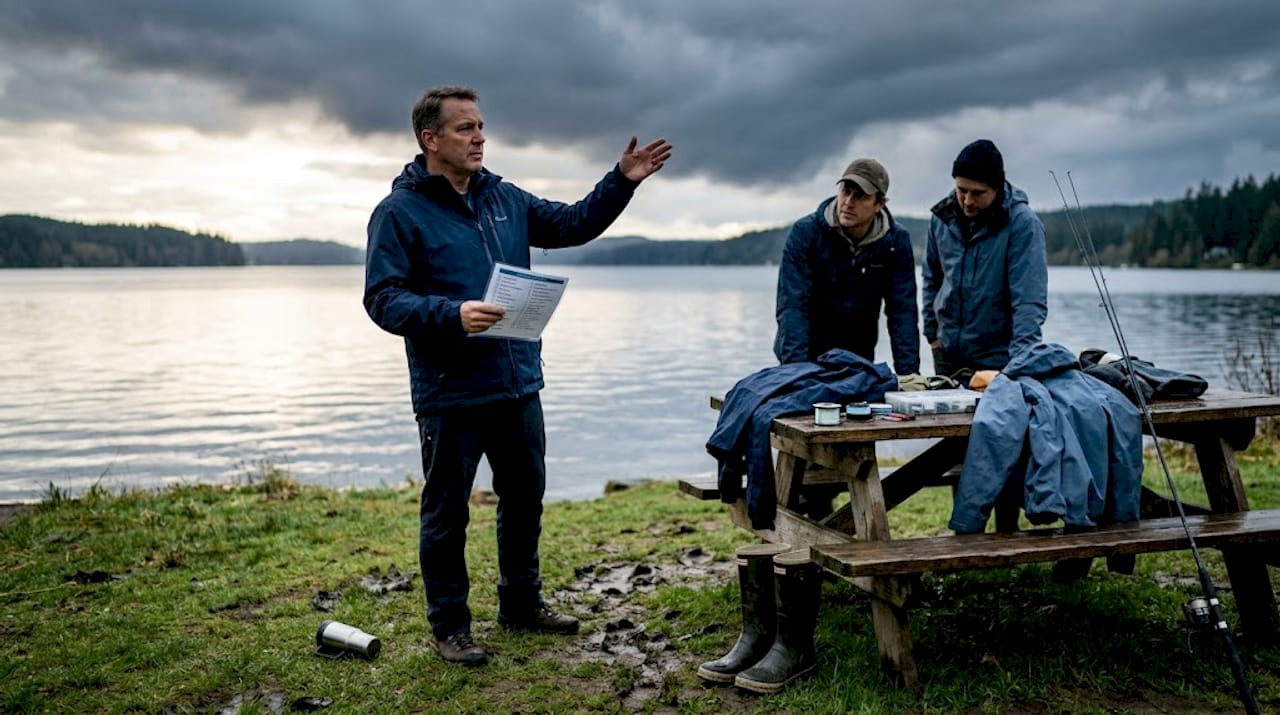
The solution is simple: agree on a designated captain before you launch. In competitive fishing, establishing a team captain who resolves split decisions improves efficiency and removes roadblocks. The same principle applies to recreational groups. The captain is not a dictator. The captain is the person everyone trusts to make the final call so the group keeps moving.
Here is a numbered decision filter to use when conditions change mid-trip:
- Access check: Can we still legally and safely reach the alternative location?
- Fish presence check: Is there recent evidence (reports, visible activity) that fish are likely there?
- Move readiness check: Can the group pack up and relocate in under fifteen minutes without significant disruption?
If all three answers are yes, move. If any answer is no, adjust on the spot rather than relocating.
Alongside the captain system, always prepare two game plans before you launch. Run your backup locations through the same access, fish presence, and move-readiness filters during your pre-trip planning phase, not in the moment. Groups that prepare fallback options report far fewer frustrating weather-related trip cancellations or poor catch days.
Pro Tip: Share the plan-B location and conditions triggers with the whole group at the pre-trip briefing. When everyone already knows what would trigger a location change, the captain’s call feels collaborative rather than arbitrary. That framing keeps group morale high even when things go sideways.
For more on troubleshooting group trips and handling the unexpected, our blog features real-world advice from guides and anglers across multiple destinations.
Verifying results and using data to improve future trips
Your group made it back. Now let’s see what you achieved and how to build on those results next time.
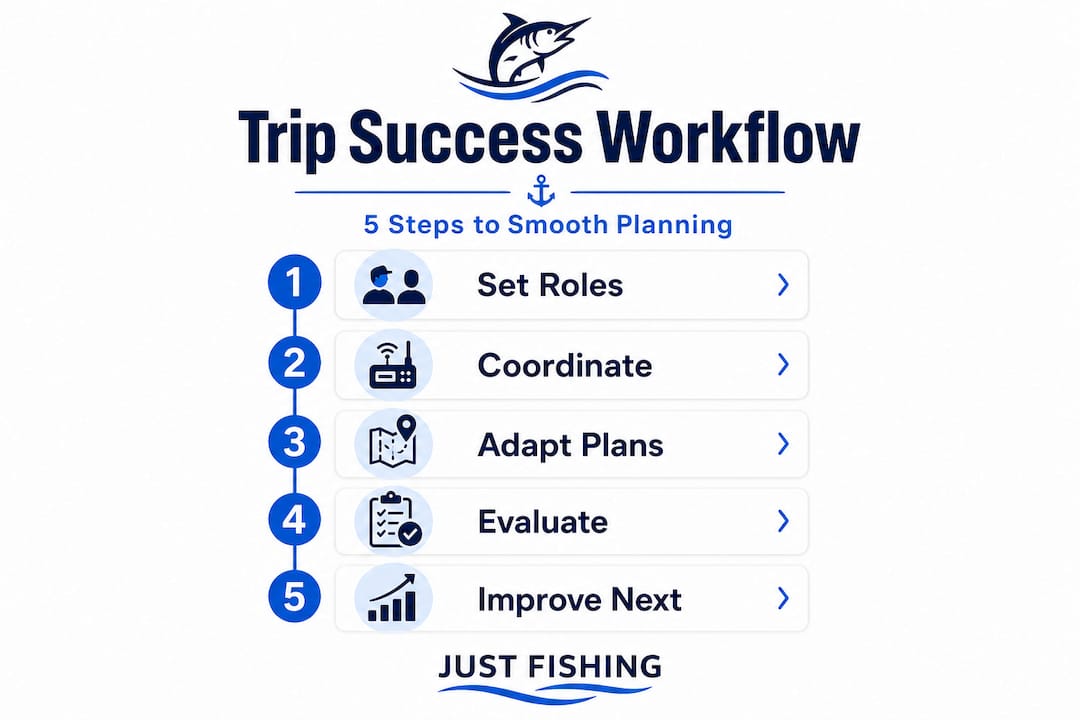
Post-trip review is the step most groups skip entirely. That’s a mistake. Without it, you repeat the same friction points, forget what worked brilliantly, and lose the institutional knowledge that makes your next trip significantly better. The goal is to capture key information while it’s still fresh.
NOAA’s Access Point Angler Intercept Survey (APAIS) collects catch-per-trip data by interviewing anglers at public access sites, giving recreational groups a real benchmark for typical outcomes. Comparing your group’s results against regional averages helps you understand whether your planning made a measurable difference, and where more targeted preparation could improve outcomes on your next outing.
Here is a sample benchmarking table for a half-day group outing:
| Metric | Typical recreational result | Your group’s result | Gap or win |
|---|---|---|---|
| Fish caught per angler | 2 to 4 | Track your number | Record it |
| Hours actively fishing | 3 to 5 | Track your number | Record it |
| Logistics issues on the day | 2 to 3 average | Track your number | Record it |
| Participant satisfaction (1 to 5) | Varies | Survey the group | Record it |
Use these post-trip review questions to guide your debrief:
- Which role performed best, and why?
- Where did logistics break down or cause delays?
- Did the skill-level matching work for beginner participants?
- Was the plan-B option needed, and did it work?
- What single change would most improve the next trip?
Collect responses via a quick group message or voice note round-robin. You don’t need a formal survey. Even five minutes of honest debrief catches the patterns that make your next trip noticeably smoother.
Check out our group fishing trip outcomes posts for real group experiences, and visit the JustFishing homepage for tools and resources that support ongoing improvement across your trips.
Why most group trip plans fail and how to fix it
Here is the thing most planning guides won’t say out loud: goodwill is not a system. Most group trips fail not because people didn’t care, but because they assumed caring was enough. Everyone showed up wanting a good time. Nobody built the structure to ensure it.
The groups that consistently have great outings are not the ones with the most enthusiasm. They’re the ones with the most clearly defined expectations. They know who makes decisions. They know what happens when it rains. They know who owns the cooler situation before they leave the driveway.
There is also a less obvious trap worth naming: over-planning the details while under-planning the triggers. Experienced trip organizers obsess less about the exact tackle list and more about the moments where decisions need to happen. When do we move? When do we call it? When does the captain step in? These decision triggers matter far more than whether you packed the right color jig.
Transparency in expectations is the final piece. When anglers are honest upfront about what they want from the trip, guides can deliver. When group members are honest about their physical limitations, the schedule can accommodate them. When the budget ceiling is stated clearly, nobody feels blindsided by the cost split. Friction in group fishing almost always comes from unspoken assumptions, not from bad luck.
Explore real group trip stories from anglers who’ve learned these lessons firsthand and come back with smarter, more enjoyable outings every time.
Plan your next fishing trip with ease
Ready to put your group fishing plan into action? Here’s where to go next.
JustFishing Group makes it straightforward for recreational groups to move from idea to water. Whether you are coordinating a group of first-timers in the Maldives or organizing a multi-boat outing in Oman, our top fishing trips are built for groups that want results, not logistics headaches. Browse destinations, compare packages, and book with confidence. You can also explore trusted fishing brands for gear that suits every skill level in your group, from entry-level setups to serious tournament-ready tackle. Visit JustFishing Group for the full range of resources, trip planning support, and fishing content that keeps your group improving trip after trip.
Frequently asked questions
How do you split costs and tasks fairly on a group fishing trip?
Assign one person to each major area, including gear, food, and transportation, and track costs upfront to keep things fair for all participants. Using a shared spreadsheet from the start prevents disputes and keeps every coordinator accountable.
How do you manage a group with both beginners and experienced anglers?
Set a shared group goal, clarify instruction depth with your guide, and use a charter service to ensure tailored instruction for all skill levels. Strategic pairing of beginners with patient anglers also smooths out the experience for everyone.
What should you do if weather or conditions change suddenly during your trip?
Have a designated captain make the call using pre-agreed triggers, and rely on pre-planned alternatives filtered for access, fish presence, and move readiness. When the group already knows the fallback plan, the switch happens fast and without debate.
How can we measure the success of our group fishing trip?
Review individual catch counts, participant feedback, and compare outcomes against benchmarks like those collected through NOAA’s APAIS survey data. Consistent post-trip reviews over multiple outings reveal patterns that meaningfully improve your coordination year over year.