

TL;DR:
- Physical fitness is critical for big game anglers to fight fish longer and recover faster. Training core stability, endurance, and aerobic capacity improves performance and helps prevent injuries. Proper preparation and recovery practices are essential for sustained success in offshore fishing.
Physical fitness is the single most underrated factor in big game fishing success. Anglers who train specifically for the sport land more fish, fight longer, and recover faster between days on the water. The role of fitness in big game fishing goes far beyond lifting a heavy rod. It determines how long you stay sharp, how hard you can fight a 200-pound marlin, and whether you can do it all again the next morning.
What is the role of fitness in big game fishing?
Physical conditioning for anglers is the practice of building sport-specific strength, endurance, and mobility to meet the demands of offshore fishing. Big game fishing techniques like stand-up fighting, trolling, and jigging place sustained stress on the core, shoulders, lower back, and legs. None of that stress is random. Each muscle group takes a predictable beating, and training those muscles before you board the boat changes everything.
The physical demands are closer to competitive sport than most anglers admit. Fighting a large tuna or billfish for 30 minutes or more requires aerobic capacity and burst strength working together. Long aerobic sessions build the endurance base, while high-intensity intervals train your body to clear lactate during sudden, explosive efforts. Without both, you gas out mid-fight.
Justfishinggroup works with anglers across destinations like the Maldives, UAE, Kenya, and the Seychelles. The pattern is consistent: anglers who arrive physically prepared catch more fish and enjoy the experience far more than those who don’t.
Which fitness components matter most for offshore anglers?
Four physical qualities separate prepared anglers from exhausted ones: core stability, lower-body endurance, upper-body stamina, and aerobic capacity.
Core stability keeps you balanced on a rocking deck. Without it, your body burns energy just staying upright. A strong core also protects your lower back during long rod fights. Planks, dead bugs, and pallof presses build this foundation directly.
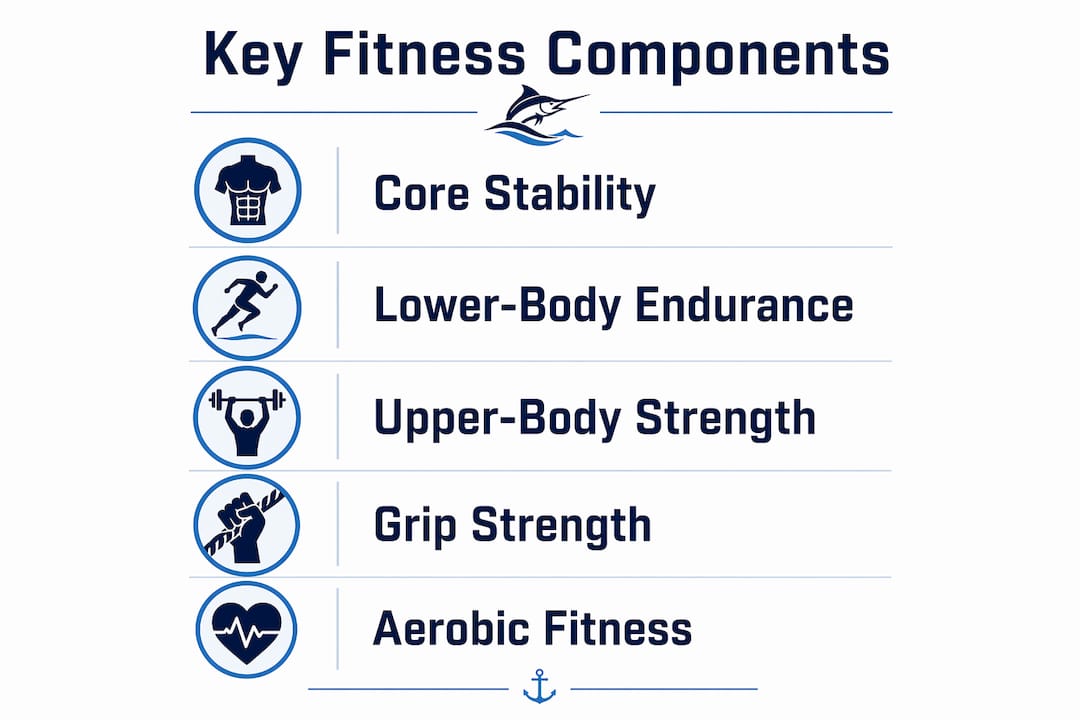
Lower-body endurance matters more than most anglers expect. Standing for 8 to 12 hours on a moving boat taxes your quads, hamstrings, and calves continuously. Squats, lunges, and step-ups build the leg strength to stay comfortable and alert through a full day offshore.
Upper-body stamina drives your ability to reel, cast, and fight fish repeatedly. Rotator cuff and forearm muscles bear the most strain. Resistance band rows, face pulls, and wrist extensor work build the specific strength these areas need. Deadlifts also directly address the lower back loading that comes from hauling heavy gear.
Aerobic capacity ties everything together. A strong aerobic base means you recover faster between fish, stay mentally sharp late in the day, and handle the physical stress of multi-day trips without falling apart.
- Planks (3 sets, 45–60 seconds): core stability and spinal protection
- Deadlifts (3 sets, 6–8 reps): back health and full-body pulling strength
- Resistance band rows (3 sets, 12–15 reps): shoulder endurance and posture
- Goblet squats (3 sets, 10–12 reps): lower-body endurance for long days standing
- Aerobic intervals (20–30 minutes, 2x per week): lactate clearance and cardiovascular base
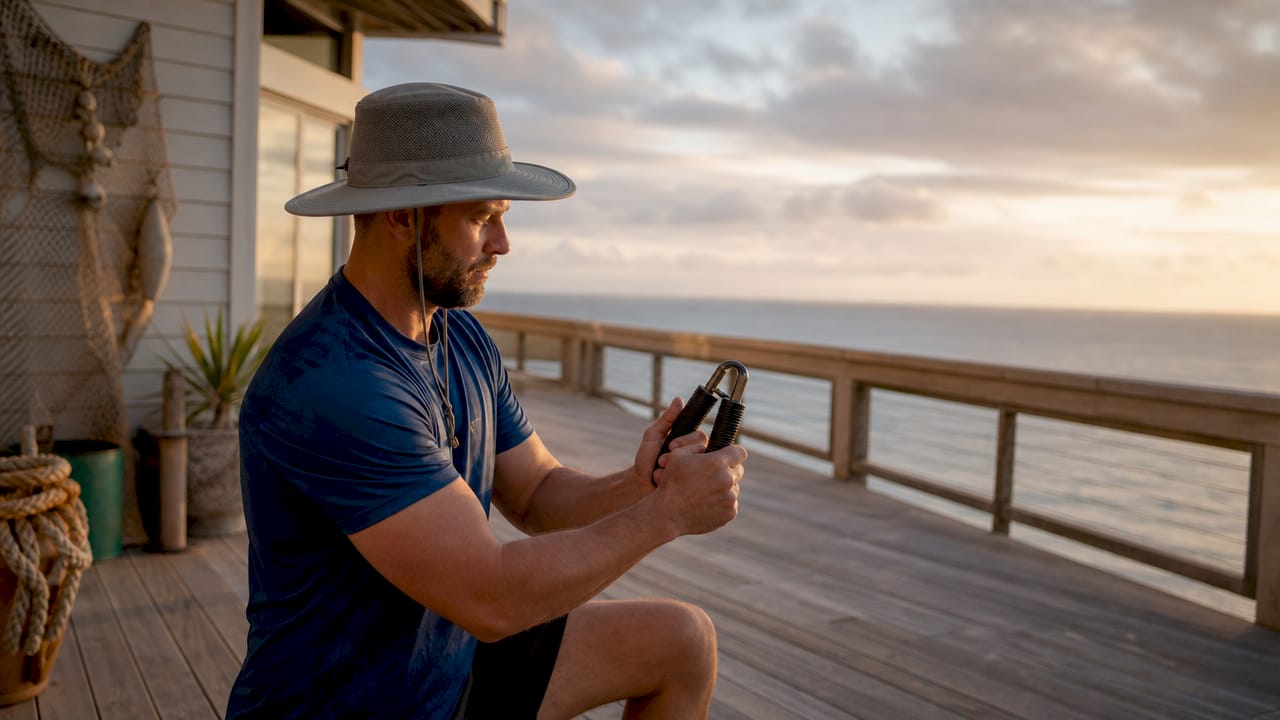
Pro Tip: Pair your aerobic intervals with grip work. Squeeze a stress ball or use a grip trainer during your cardio sessions. Your forearms will thank you on day three of a multi-day trip.
How should anglers prepare physically before a big game trip?
Starting sport-specific conditioning at least 3 months before a major fishing trip gives your body enough time to adapt without risking injury from rushing. A 6–8 week maintenance phase follows the initial build. Skipping straight to hard training two weeks out is the most common mistake anglers make.
A structured preparation plan works in three phases:
- Foundation phase (weeks 1–6): Build aerobic base with 3 sessions per week of moderate-intensity cardio (rowing, cycling, or swimming). Add two strength sessions focused on deadlifts, rows, and squats. Keep intensity moderate and volume low.
- Build phase (weeks 7–10): Introduce high-intensity intervals twice per week. Increase strength training volume. Add balance work such as single-leg deadlifts and stability ball exercises to simulate deck movement.
- Skill-under-fatigue phase (weeks 11–12): Practice fine motor skills under fatigue by tying knots or operating drag systems immediately after a hard workout. This replicates the exact conditions of a real fish fight and builds the mental and physical resilience to perform when it counts.
The skill-under-fatigue approach is one of the most underused tools in angler preparation. Your hands shake after fighting a big fish. Your grip weakens. Practicing technical tasks in that state trains your nervous system to stay functional under pressure.
| Phase | Duration | Focus |
|---|---|---|
| Foundation | Weeks 1–6 | Aerobic base, basic strength |
| Build | Weeks 7–10 | Intervals, balance, volume increase |
| Skill under fatigue | Weeks 11–12 | Technical drills post-workout |
Pro Tip: Add a 10-minute mobility session every morning during your prep phase. Hip flexors and thoracic spine mobility directly affect your casting mechanics and rod-fighting posture.
What injuries do big game anglers face and how do you prevent them?
Fishing causes high-repetition strain injuries including rotator cuff tears, tennis elbow, and lower back strain. These injuries develop gradually from thousands of repetitive casting and reeling motions. Most anglers ignore the early warning signs until the pain forces them off the water.
Prevention is straightforward when you know what to target:
- Forearm stretches before and after casting: Hold each stretch for 30 seconds. This reduces tendon stress and lowers tennis elbow risk significantly.
- Shoulder mobility work: Arm circles, band pull-aparts, and wall slides keep the rotator cuff healthy through a full season.
- Rotate your casting arm: Switching arms periodically during a long session distributes the load and prevents overuse on one side.
- Deadlifts for back health: Deadlifts help alleviate back discomfort caused by repeated hauling and rod-fighting postures. Two sessions per week is enough to build meaningful protection.
- Hydration and nutrition: Dehydrated muscles cramp and fatigue faster. Consistent water intake throughout the day keeps your muscles responsive and reduces cramping risk.
Active recovery and arm rotation are the two most overlooked injury prevention tools in fishing. Most anglers treat rest as passive. Walking, light swimming, and gentle stretching between fishing days keep blood moving through stressed tissue and speed up repair.
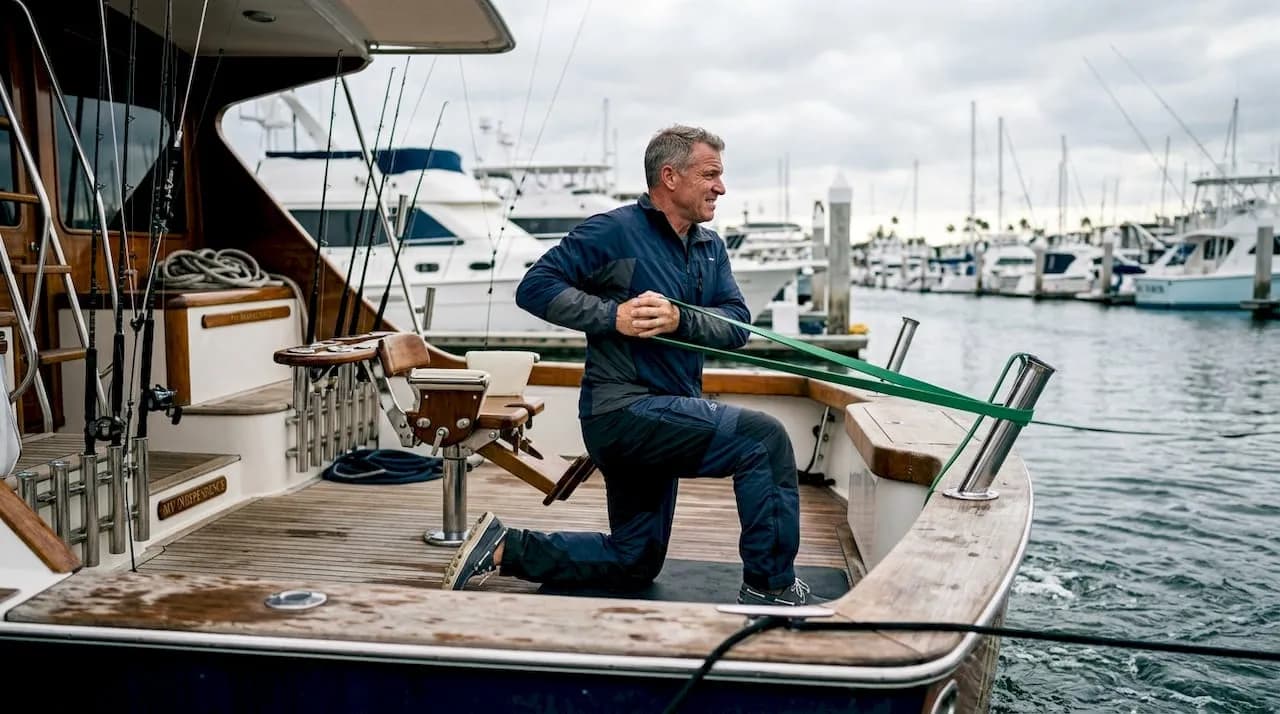
Pro Tip: Keep a resistance band in your tackle bag. Three minutes of band pull-aparts and face pulls before you start casting is one of the most effective shoulder warm-ups available, and it takes up zero space.
How do recovery practices affect performance on consecutive fishing days?
Continuous low-level muscle activation during fishing causes muscle tissue stress comparable to weightlifting. That means anglers need recovery protocols similar to athletes, not just a good night’s sleep. Ignoring this is why so many anglers feel wrecked by day two of a multi-day trip.
Three recovery habits make the biggest difference:
- Protein within one hour of finishing: Protein intake within an hour of activity accelerates muscle repair. A meal or shake with 25–40 grams of protein is the target.
- Heat therapy before bed: Heat therapy accelerates clearance of metabolic waste from shoulder and forearm muscles. A hot shower or heating pad applied to worked muscle groups for 15–20 minutes improves next-day readiness and also shifts the nervous system toward parasympathetic dominance, improving sleep quality after adrenaline-filled days on the water.
- Consistent hydration: Dehydration accelerates fatigue and impairs coordination. Drinking water steadily throughout the day, not just when thirsty, keeps your reaction time and grip strength intact.
“Many anglers neglect fitness and recovery, resulting in early fatigue and reduced performance on multi-day trips. The anglers who treat recovery as part of their preparation consistently outperform those who don’t.”
Sleep quality is the final piece. Heat therapy and reduced caffeine after noon both improve sleep depth. Better sleep means faster tissue repair and sharper decision-making the next morning, which directly affects how you read the water and respond to a strike.
Key Takeaways
Physical fitness is the foundation of big game fishing performance, and anglers who train specifically for the sport catch more fish and recover faster between days on the water.
| Point | Details |
|---|---|
| Start training early | Begin sport-specific conditioning at least 3 months before your trip for best results. |
| Train all four components | Core stability, lower-body endurance, upper-body stamina, and aerobic capacity all matter. |
| Practice skills under fatigue | Tie knots and operate gear after hard workouts to replicate real fish-fight conditions. |
| Prioritize recovery | Heat therapy, protein intake within one hour, and hydration are non-negotiable between fishing days. |
| Prevent overuse injuries | Forearm stretches, shoulder mobility work, and arm rotation prevent the most common fishing injuries. |
Fitness is the gear most anglers forget to pack
I’ve watched anglers show up to offshore trips with $10,000 worth of tackle and zero preparation for what their body is about to go through. That gap between gear investment and physical readiness is the single biggest performance leak I see across every destination, whether it’s a marlin run in the Seychelles or a GT session in the Maldives.
The fitness culture in fishing is changing, but slowly. Tournament-level anglers have known for years that functional training under fatigue separates the anglers who land fish from the ones who hand the rod off. Recreational anglers are starting to catch up, and the results speak for themselves. The angler who can still fight hard at hour six of a day trip is the one who goes home with the story.
Recovery is where I see the starkest divide. Amateurs sleep it off and show up stiff. Serious anglers use heat therapy, eat protein before bed, and treat the evening as part of their preparation for tomorrow. That mindset shift, from fishing as a leisure activity to fishing as a demanding sport, is what produces consistent results across consecutive days. If you want to target big game fish at the highest level, your body has to be ready before you ever leave the dock.
— Alaa
Justfishinggroup has the gear to match your preparation
Anglers who put in the physical work deserve equipment that keeps up with them. Justfishinggroup offers a full range of big game fishing gear built for the demands of offshore sport fishing, from high-performance rods and reels to jigs and terminal tackle designed for the world’s most challenging fisheries.
Whether you’re booking a trip to the Maldives, UAE, or Kenya, or gearing up for your next offshore session, Justfishinggroup connects you with the right equipment and curated fishing trips to put your conditioning to work. The Mazuzee Fishing Belt is one example of gear that directly supports physical endurance during long fish fights, reducing lower back strain and distributing rod load more effectively.
What fitness level do you need for big game fishing?
A moderate level of aerobic fitness and functional strength is the baseline. Anglers who can sustain physical effort for several hours and recover overnight perform best on multi-day offshore trips.
How far in advance should anglers start training for a fishing trip?
Sport-specific conditioning should begin at least 3 months before the trip, with a 6–8 week maintenance phase closer to departure.
What are the most common injuries in big game fishing?
Rotator cuff strains, tennis elbow, and lower back injuries are the most frequent. They result from repetitive casting, reeling, and rod-fighting motions over long sessions.
Does physical fitness affect how long you can fight a fish?
Yes. Aerobic capacity and upper-body stamina directly determine how long you can sustain a fish fight without losing form or handing off the rod.
What is the best recovery method after a full day of offshore fishing?
Heat therapy applied to the shoulders and forearms, protein intake within one hour of finishing, and consistent hydration are the three most effective recovery tools for anglers.