


Fishing traditions worldwide are the living record of how human communities have fed themselves, organized their societies, and made sense of the natural world for thousands of years. These aren’t just old techniques preserved in museums. They are active customs, ceremonies, and methods still practiced from the Arctic tundra to the coral reefs of the Indian Ocean, each one shaped by the specific waters, seasons, and social structures of its place. The cultural significance runs deep: fishing determines who leads a community, which prayers get said before a boat leaves shore, and which songs keep oarsmen rowing in rhythm.
Key categories of fishing traditions span every inhabited continent:
- Ceremonial and ritual fishing, where the catch is secondary to the spiritual act
- Subsistence and indigenous fishing, practiced by communities whose food security depends on ancestral knowledge
- Festival fishing, where entire towns gather around a single annual event
- Artisanal small-scale fishing, passed from parent to child through direct apprenticeship
- Communal netting, where the whole village works together and shares the haul
UNESCO has formally recognized certain traditions, including Nigeria’s Argungu Fishing Festival, as intangible cultural heritage, acknowledging that these practices carry irreplaceable knowledge about both ecology and human identity.
Major traditional fishing techniques practiced around the world
Traditional fishing methods span every environment humans have ever lived near, and the ingenuity behind each one reflects centuries of trial, observation, and refinement.
Spearfishing is one of the oldest techniques on record, practiced across Oceania, Southeast Asia, and the Caribbean. Freediving spearfishers in the Philippines and Indonesia read underwater terrain the way a hunter reads forest tracks, targeting specific species by depth and time of day. The gear ranges from hand-carved wooden spears to modern spearguns, but the core skill, breath control and stillness, remains unchanged.
Angling with a hook and line is the most globally widespread method, from fly fishing on Montana’s Madison River to handline fishing off the coast of Oman. The cultural variations are striking: Japanese tenkara fly fishing uses a fixed line with no reel, demanding a precision that practitioners spend years developing, while surf casting in Morocco involves reading wave patterns to place bait in the exact current where fish feed.
Ice fishing defines winter life across Scandinavia, Canada, Russia, and the northern United States. Sámi communities in northern Norway have fished through ice for centuries, using jigging techniques and traditional knowledge of lake topography passed down orally. The social dimension matters as much as the catch: ice fishing shelters become temporary villages where stories and food are shared.
Trapping takes dozens of forms worldwide. Basket traps woven from bamboo are standard across Southeast Asia, while stone fish traps built along tidal flats appear in Hawaii, Scotland, and coastal West Africa. These structures can be centuries old, and the knowledge of where to place them and how to read the tides is a form of ecological literacy that takes years to acquire.
Hand gathering of shellfish, sea urchins, and abalone is practiced by the Ama divers of Japan and South Korea, women who have free-dived for seafood for over two thousand years. Their technique requires reading water temperature, current, and seasonal spawning cycles without any instruments.
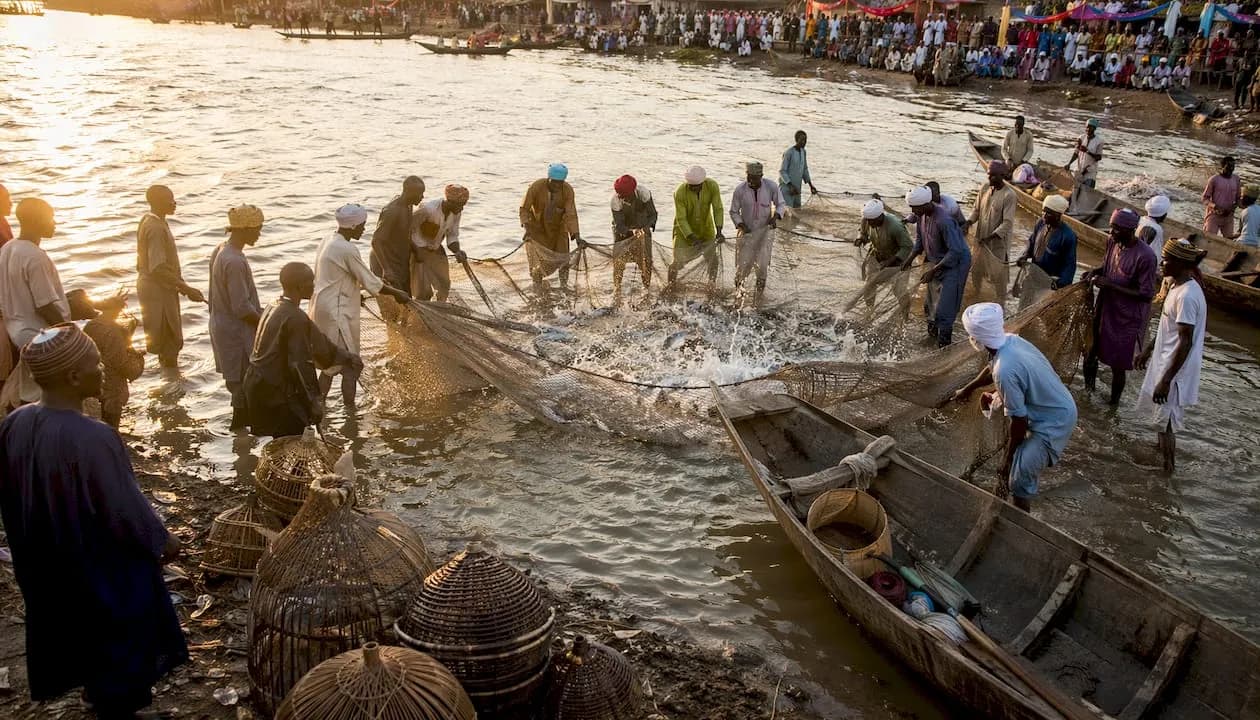
Netting ranges from the cast nets thrown by a single fisher in the rivers of Bangladesh to the massive seine nets deployed by entire fishing villages in West Africa. The Ghanaian canoe fishing tradition involves coordinated net hauling accompanied by call-and-response songs that keep the team pulling in unison.
Kite fishing, practiced in parts of Oceania and coastal Southeast Asia, uses a kite to carry a line and bait across the water surface, keeping the hook skipping along in a way that mimics live prey. It’s a technique that requires reading wind direction and speed as much as fish behavior, and it remains in active use in Papua New Guinea and the Solomon Islands.
Pro Tip: If you’re planning to experience any of these methods firsthand, check out the Justfishinggroup fishing trips catalog, which covers destinations across the Maldives, Oman, Kenya, and beyond where traditional and modern techniques intersect.
How community and tribal fishing traditions shape social and spiritual life
Fishing has never been a solitary act in most of the world’s cultures. The act of going to the water carries social weight, spiritual obligation, and community identity that goes far beyond the fish itself.
The Argungu Fishing Festival in Nigeria stands as one of the most dramatic examples. Recognized by UNESCO in 2016 as an Intangible Cultural Heritage, the festival takes place annually on the Matan Fada River in Kebbi State, where thousands of fishermen enter the water simultaneously, using only hand nets and calabash gourds. The event dates back to the 1930s and originally marked the end of hostilities between the Kebbi and Sokoto kingdoms. Today it draws competitors and spectators from across West Africa. What UNESCO recognized wasn’t the spectacle but the craft knowledge embedded in the practice: fishermen read river ecology, perform protective rituals, and apply ancestral skills that function as a living system of sustainable harvesting.
In Bangladesh, small-scale coastal fishers observe rituals that blend Hindu, Muslim, and animist elements before every significant fishing trip. These practices serve psychological and social functions: they manage the fear inherent in marine fishing, reinforce community solidarity, and mark the fisher’s relationship with nature as one of surrender rather than conquest. The rituals aren’t superstition. They are a structured way of acknowledging risk and binding the community together around shared vulnerability.
In Kilwa Kisiwani, Tanzania, fishing communities use maritime work songs called nyimbo za makasia to coordinate hauling, rowing, and net-setting. These songs carry ecological knowledge in their lyrics, referencing fish behavior, seasonal patterns, and safe navigation routes. The songs transmit information across generations in a form that is memorable, communal, and resistant to loss. When the songs disappear, so does the knowledge they carry.
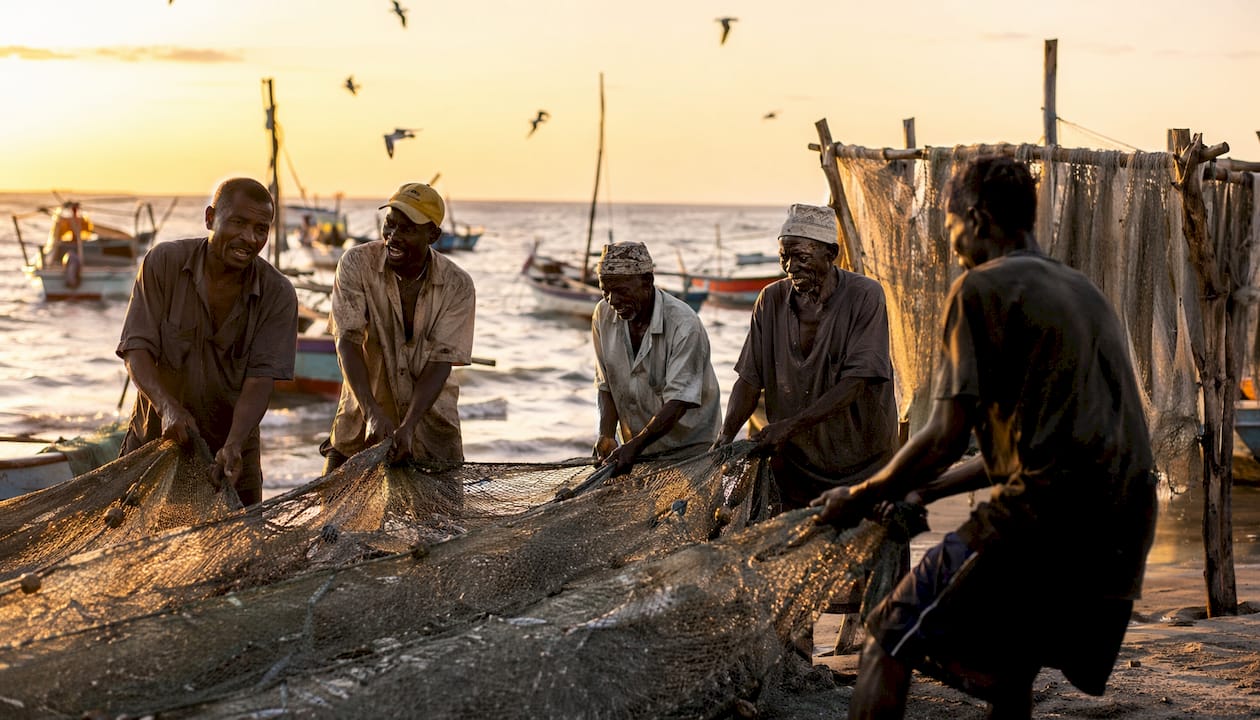
Many traditional fishing communities also use ritual authority to regulate fishing effort, setting seasonal limits and sacred zones through ceremony rather than written law. The result is often a de facto conservation system that has maintained fish populations for centuries. Among the Truká people along Brazil’s São Francisco River, fishing is both a subsistence practice and a cultural identifier, with specific species, seasons, and methods tied to community identity and traditional governance.
Sustainable fishing and the legal frameworks shaping traditional practices today
The relationship between traditional fishing and modern conservation law is complicated. In many cases, ancestral practices were already sustainable. In others, population growth and commercial pressure have pushed even traditional methods beyond what local ecosystems can absorb.

The Marine Stewardship Council defines sustainable fishing around three core principles: maintaining healthy fish stocks that can reproduce, minimizing ecosystem impact, and operating under effective management that complies with relevant laws. A significant portion of global fish stocks are currently overfished, a figure that puts pressure on every fishing community, traditional or industrial.
| Pillar | What it requires | Why it matters for traditional fisheries |
|---|---|---|
| Healthy stocks | Fish populations must be able to reproduce | Many traditional communities already observe seasonal bans that serve this function |
| Ecosystem impact | Minimize bycatch and habitat damage | Artisanal methods like hand nets and traps typically have lower bycatch than trawling |
| Effective management | Comply with laws and adapt to change | Ritual-based management systems need formal recognition to gain legal protection |
The FAO Code of Conduct for Responsible Fisheries, adopted unanimously in 1995, explicitly protects the rights of small-scale and artisanal fishers, including their preferential access to traditional fishing grounds. The Code calls for a shift from production-volume thinking to a benefits-oriented approach that weighs social and economic outcomes for fishing communities alongside ecological health. That framing aligns closely with how most traditional fishing cultures have always operated.
NOAA’s Seafood Import Monitoring Program addresses illegal, unreported, and unregulated fishing in the global supply chain, which directly affects traditional fishing communities. When illegal commercial operators undercut regulated markets, the economic pressure falls hardest on small-scale fishers who lack the capital to compete. NOAA’s program requires documentation of catch origin for high-risk species imported into the United States, creating market incentives for legal, traceable fishing.
Practical ways traditional fishing communities and modern conservation frameworks can work together:
- Formalize traditional seasonal bans as legally recognized closed seasons, giving ritual restrictions the force of regulation
- Map sacred fishing zones and submit them for protection under marine protected area frameworks
- Pursue MSC certification for artisanal fisheries that already meet sustainability criteria, opening access to premium markets
- Engage with FAO’s ecosystem approach to gain technical support for community-based rights systems
- Document traditional ecological knowledge so it can inform science-based stock assessments
The FAO’s ecosystem approach to fisheries explicitly calls for stakeholder participation and community-based rights systems, recognizing that top-down management alone cannot sustain fisheries where local knowledge and social structures are the primary management tools. For traditional fishing communities, that recognition opens a path toward legal protection without requiring the abandonment of ancestral practice.
For anglers who want gear that holds up across diverse fishing environments, Sack-Ups protective covers are worth knowing about, especially when traveling between destinations where conditions vary widely.
Explore global fishing culture with Justfishinggroup

Justfishinggroup connects fishing enthusiasts with destinations where traditional and modern fishing cultures are still very much alive. Whether you want to fish the deep waters off the Maldives, try boat fishing in Abu Dhabi, or explore the coastal fisheries of Kenya and the Seychelles, Justfishinggroup offers curated trips with local expertise built in. The platform also stocks gear from leading brands, so you can arrive prepared for whatever technique the local tradition demands.
Key Takeaways
Fishing traditions worldwide are inseparable from cultural identity, ecological knowledge, and community structure, and their survival depends on both cultural respect and modern conservation frameworks.
| Point | Details |
|---|---|
| Cultural depth of traditions | Fishing customs worldwide carry social, spiritual, and ecological knowledge that written records alone cannot preserve. |
| UNESCO recognition | The Argungu Fishing Festival in Nigeria received UNESCO Intangible Cultural Heritage status for its embedded ancestral knowledge. |
| Overfishing pressure | More than one-third of global fish stocks are overfished, threatening both ecosystems and the communities that depend on traditional fishing. |
| FAO legal protections | The FAO Code of Conduct for Responsible Fisheries explicitly protects artisanal fishers’ access to traditional fishing grounds. |
| Tradition as conservation | Ritual-based fishing limits and sacred zones often function as effective de facto conservation systems when formally recognized. |