

Essential angling travel tips for exotic fishing trips
TL;DR:
- Proper planning involves understanding unique permit and licensing requirements for each destination.
- Accurate gear packing and airline policies are crucial to avoid delays or losses during travel.
- Guided trips can offer better access and convenience, especially in remote or regulation-heavy locations.
Planning a fishing trip to an exotic destination sounds thrilling until you realize how many moving parts can derail it. Permit rules shift from country to country, airline baggage policies for rods are stricter than most people expect, and showing up unprepared can cost you real fishing days. Recreational anglers who’ve done it once know: the difference between a dream trip and a frustrating one comes down to preparation. This guide walks you through the four biggest planning areas, from permits and packing to choosing between guided and DIY adventures, so you can focus on what matters most when you get there.
Table of Contents
- Know permit and license rules before booking your trip
- Pack smart: air travel tips for fishing gear
- Guided vs. DIY fishing: choosing the best fit for your adventure
- Essential planning tips for exotic angling destinations
- The uncomfortable truth about recreational angling travel
- Planning your next angling adventure with Just Fishing
- Frequently asked questions
Key Takeaways
| Point | Details |
|---|---|
| Research permit rules | Always check fishing license requirements and costs for each destination to avoid legal issues. |
| Pack gear for air travel | Use protective rod cases and follow airline restrictions to keep your equipment safe and compliant. |
| Choose guided or DIY wisely | Evaluate your preferences and destination regulations to pick the best angling experience. |
| Prepare for local conditions | Account for seasonality, catch limits, and emergency contacts to optimize your trip. |
Know permit and license rules before booking your trip
Once you’ve decided on an exotic angling destination, understanding permit and license requirements is your first step. This is also where most travelers get tripped up, because there’s no universal rule.
Some countries make it simple. Fishing in Thailand requires no recreational fishing license for tourists, which makes it a low-barrier destination for first-time international anglers. Other countries are far more structured. Montenegro mandates daily or weekly permits for tourist anglers, with catch limits set at 5kg plus one additional fish per day. Ignore those rules and you’re looking at fines or a cut-short trip.
In the United States, the US visitor license guide shows that requirements are state-specific, meaning a license valid in Montana won’t cover you in Wyoming. Costs range from free in some regions to around $5 per day in others, but the variation is wide enough that you should always verify before you book.
| Destination | License required | Typical cost | Catch limits |
|---|---|---|---|
| Thailand | No | Free | Varies by water |
| Montenegro | Yes (daily/weekly) | ~€5/day | 5kg + 1 fish |
| United States | Yes (state-specific) | $5–$25/day | Species-dependent |
| Maldives | Varies by zone | Free to low cost | Conservation rules apply |
Here’s what to check before you book any international fishing trip:
- Permit type: Is it a daily, weekly, or annual license?
- Catch limits: Are there weight or number restrictions?
- Species rules: Are certain fish protected or catch-and-release only?
- Vendor access: Can you buy permits online, or do you need a local fly shop?
- Guided trip exemptions: Does booking a guide include your permit?
When you’re evaluating destinations, it helps to use clear criteria for fishing locations that account for regulatory complexity alongside fish species and seasonality.
Pro Tip: Screenshot your permit confirmation and save it offline. Cell service in remote fishing areas is often nonexistent, and a ranger won’t wait while you search for Wi-Fi.
Pack smart: air travel tips for fishing gear
After confirming licensing logistics, your next challenge is packing your fishing gear for safe, legal, and hassle-free travel. Airlines treat fishing equipment like oversized sports gear, and the rules vary more than you’d think.
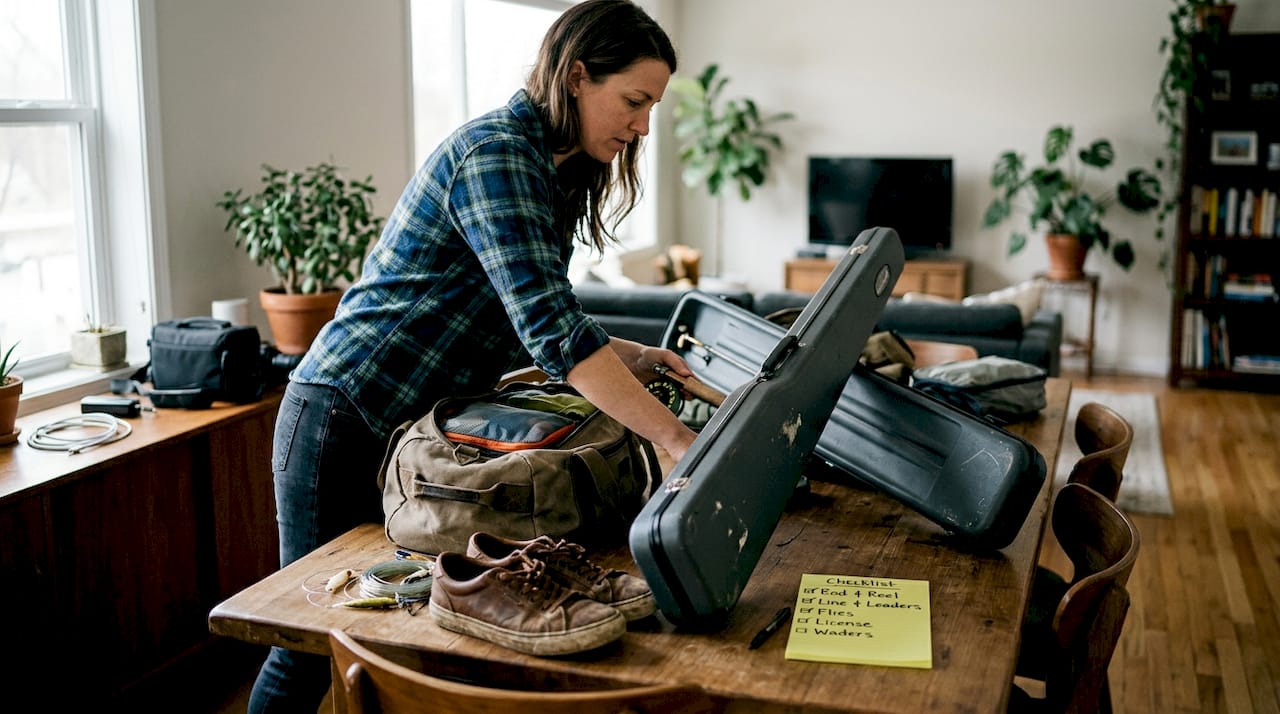
The core principle is straightforward: rods go in hard cases as checked baggage, and small hooks or flies can travel in carry-on luggage. Larger lures, treble hooks, and sharp terminal tackle must be in checked bags. Pack fishing gear strategically to avoid security delays and potential confiscation at the gate.
| Airline | Rod tube size limit | Checked fee | Carry-on hooks? |
|---|---|---|---|
| Delta | 115 linear inches | Standard baggage fee | Small flies: yes |
| Southwest | 62-inch rod tube | Counts as checked bag | Small flies: yes |
| Emirates | 115 linear inches | Standard baggage fee | Small flies: yes |
| General rule | Up to 115 linear inches | Varies | Small/single hooks only |
Linear inches means the total of length plus width plus height. A typical rod tube runs around 90 to 100 linear inches, which fits within most international airline limits. Southwest is the notable exception with a tighter 62-inch limit, so if you’re connecting through a Southwest flight, check your tube dimensions carefully.
Here’s a packing checklist that works for most international fishing trips:
- Hard rod case or tube: Protects against baggage handler damage
- Reel in a padded bag: Remove it from the rod to prevent stress on the seat
- Lures and jigs in a tackle box: Wrap sharp hooks in foam or hook covers
- Leader material and line: Coil and store in zip bags to avoid tangles
- Pliers and scissors: Always in checked baggage, never carry-on
For more detailed advice on preparing for fishing trips abroad, including destination-specific gear lists, the JustFishing blog covers a wide range of scenarios.
Pro Tip: Label the inside and outside of your rod case with your name, phone number, and destination. If it gets misrouted, airlines can reunite it with you faster when contact info is immediately visible.
Guided vs. DIY fishing: choosing the best fit for your adventure
With gear packed and legalities handled, consider the type of fishing adventure that fits your style and destination. This decision shapes everything from your daily schedule to your total trip cost.
Guided trips offer local expertise, pre-arranged access to prime spots, and the convenience of having gear, bait, and logistics handled for you. In some locations, guided access is the only option. Certain US tailwater fisheries, for example, use jet boat systems like Land of Giants to reach remote stretches that DIY anglers simply can’t access on their own. If you’re fishing an unfamiliar destination for the first time, a guide dramatically shortens the learning curve.
DIY fishing gives you flexibility and can cut costs significantly, especially if you’re an experienced angler who enjoys the research and self-reliance side of the sport. It works best in destinations with well-documented public access, clear regulations, and reliable fly shops or tackle stores nearby.
| Factor | Guided trip | DIY trip |
|---|---|---|
| Cost | Higher upfront | Lower, but gear costs add up |
| Local knowledge | Built in | Self-researched |
| Remote access | Often included | May be restricted |
| Flexibility | Fixed schedule | Full control |
| Best for | First-timers, remote spots | Experienced anglers, known waters |
Before you decide, ask yourself these questions:
- Have I fished this destination or region before?
- Do I know the local regulations well enough to stay legal?
- Is the best fishing in areas that require guided access?
- How large is my group, and does a guide make logistics easier?
- What’s my budget, and how much of it can go toward guide fees?
If you want to explore guided fishing trips across destinations like the Maldives, Seychelles, or Oman, JustFishing offers curated options with local guides who know the water. For anglers who prefer to go their own way, browsing premium DIY fishing gear before you leave ensures you’re equipped for whatever conditions you encounter.
Pro Tip: Even on a DIY trip, consider hiring a local guide for just one day. You’ll learn more in eight hours with a local expert than in three days on your own.
Essential planning tips for exotic angling destinations
To maximize results from your investment and adventure, these final planning tips round out your checklist for a smooth angling trip.
Seasonality is one of the most overlooked factors in international fishing planning. Every destination has peak windows where target species are most active, most accessible, and most catchable. Booking outside those windows because flights are cheaper is a common mistake that leads to underwhelming results.
Destination-specific gear requirements also matter more than most anglers expect. Saltwater flats fishing in the Maldives calls for very different tackle than freshwater trout fishing in Morocco’s Atlas Mountains. Research the target species, typical water conditions, and recommended line weights before you finalize your gear list.
Travel insurance for adventure sports is non-negotiable. Standard travel policies often exclude fishing-related injuries or gear loss. Look specifically for policies that cover outdoor recreational activities and equipment replacement.
Here’s a final planning checklist to run through before every international fishing trip:
- Seasonality check: Confirm peak fishing months for your target species
- Gear requirements: Match your tackle to local conditions and species
- Permit status: Confirm you have the right license for the specific water you’re fishing
- Emergency contacts: Save local fly shops, guides, and emergency numbers offline
- Catch and release rules: Know which species are protected before you cast
- Travel insurance: Verify it covers adventure sports and gear
- Conservation rules: Some destinations like Montenegro mandate daily permits and strict catch limits, while others in Asia require none at all
For destination-specific planning resources, the JustFishing international travel guides cover regulations, seasonality, and gear recommendations across multiple regions.
The uncomfortable truth about recreational angling travel
Stepping back from logistical checklists, here’s a perspective that most standard guides overlook: the biggest trip failures aren’t caused by bad weather or slow fish. They’re caused by overconfidence in generic advice.
Most travelers underestimate how much permit and licensing hassle varies by destination. Reading one forum post about a country’s fishing rules and assuming it applies everywhere is a mistake we see repeatedly. Some destinations emphasize no-license ease while others enforce strict daily limits with real consequences for violations.
Gear mistakes are the second most common trip-killer. Showing up with the wrong rod weight, the wrong line, or a tackle selection built for your home waters instead of the destination’s conditions costs you fishing days you can’t get back.
The most valuable thing you can do is invest in locally informed preparation. That means talking to guides who fish those specific waters, reading recent trip reports from the past season, and checking regulations directly with local authorities rather than relying on outdated blog posts. Browse hard-won fishing travel lessons from anglers who’ve already made the mistakes so you don’t have to.
Regional nuances, weather patterns, local customs around fishing access, and conservation attitudes all shape your experience in ways that no generic checklist can fully capture.
Planning your next angling adventure with Just Fishing
Ready to put these travel tips into practice for your next fishing getaway? Here’s how Just Fishing can help.
JustFishing Group connects recreational anglers with curated deep sea fishing trips across some of the world’s most exciting destinations, including the Maldives, Seychelles, Oman, Kenya, and more. Every trip comes with local expertise built in, so permit logistics, gear recommendations, and access to prime fishing spots are handled before you arrive. You can also shop a full range of premium fishing gear including rods, reels, lures, jigs, and terminal tackle, all selected for performance in international waters. Whether you’re booking a guided adventure or gearing up for a solo expedition, JustFishing has the resources to make your trip count.
Frequently asked questions
Do I need a fishing license for every country I visit?
No, each country has unique rules. Requirements vary widely, so always verify local regulations before your trip rather than assuming your home country rules apply.
How can I safely pack fishing rods for air travel?
Use a hard rod case or tube and check it as baggage. Most airlines allow rods within 115 linear inches for checked cases, though Southwest uses a stricter 62-inch limit.
Are guided fishing trips worth the extra cost?
In remote or regulation-heavy destinations, yes. Guided remote access often reaches waters that DIY anglers simply cannot reach on their own, making the investment worthwhile.
What should I check before booking a fishing trip abroad?
Review permit rules, packing requirements, local catch limits, and peak fishing seasons. Permit rules vary from no license required in Thailand to strict daily permits in Montenegro.