
Address: M5, Al Naumi Tower , Al Mina Road, Al Zahya Area, Abu Dhabi City, UAE
Email: support@justfishinggroup.com
Store Hours: 10:00 - 18:00, Mon - Sat
Legal
© 2025 JustFishing. All Rights Reserved.



Address: M5, Al Naumi Tower , Al Mina Road, Al Zahya Area, Abu Dhabi City, UAE
Email: support@justfishinggroup.com
Legal
© 2025 JustFishing. All Rights Reserved.
Difference between freshwater and saltwater hooks
December 18, 2025, 1133
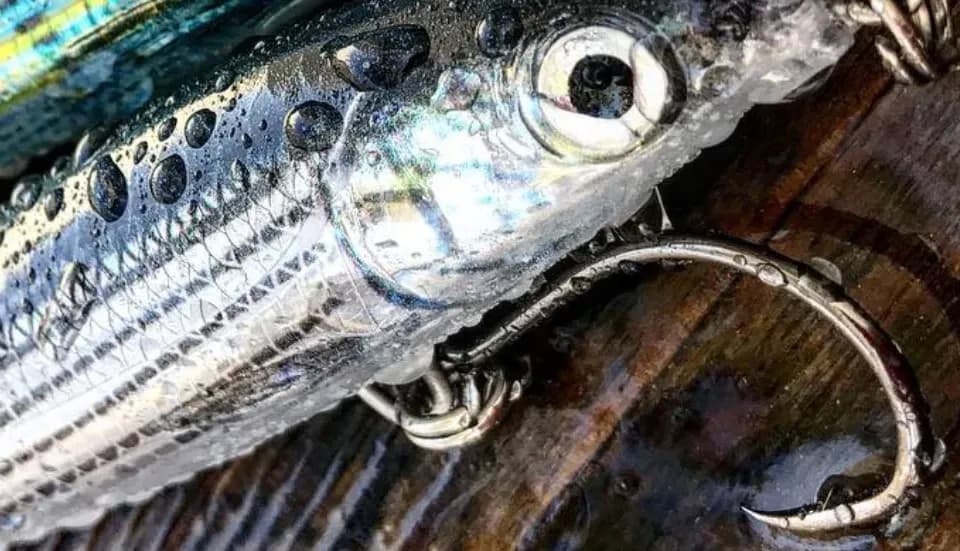
The initial step to successful fishing is to select the appropriate fishing equipment, and one of the most important is to know the difference between freshwater and saltwater hooks. Hooks used in saltwater systems need to be heavier and more corrosion resistant to handle heavy Gulf fish, whereas hooks in freshwater systems may be lightweight and sensitive.
This guide divides the differences between hooks, lures, and rods so you can choose the appropriate equipment to use on any adventure.
No doubt there is a definite difference between freshwater and saltwater hooks. Hooks used in the sea are crafted of corrosion resistant heavier steel to cope with powerful sea fish, whereas freshwater hooks are lighter and smaller and directed towards finesse as opposed to brute force.
The simplified fishing hook sizes chart is given below to distinguish the difference between freshwater and saltwater hooks:
Hooks are like lures; they vary depending on the environment. Freshwater lures are also lighter and resemble tiny animals such as minnows, insects, or crayfish. They are made to suit serene to medium water and fish like the bass or trout.
Saltwater lures are stronger, heavier, and constructed using hardware that is rust resistant to meet severe conditions and powerful ocean fish. They usually imitate bigger, higher speed prey.
Practically, saltwater lures may be fished in freshwater but will not be resistant to corrosion, and freshwater lures may be fished in saltwater but will be too large or too heavy.
Hooks used in fishing rivers and lakes should be smaller in size to suit smaller fish and prey. Freshwater gear is sensitive and natural action oriented.
A little hook such as the Hayabusa Jack Eye Makimaki can be used in freshwater as well as in a saltwater series; you just have to resize it. This assists in drawing the difference between freshwater and saltwater hooks in modifying some of the models in the environments.
Strength and resistance to corrosion are the most important factors in saltwater, which is a major component of the difference between freshwater and saltwater hooks. To work with heavy currents and tough ocean fish you will usually have to use much bigger and heavier hooks.
All in all, saltwater systems emphasize stability, making it plainly clear the difference between freshwater and saltwater hooks and why saltwater requires more durable alternatives such as the Hayabusa Jack Eye Kunekune Hook.
It isn't only about the difference between freshwater and saltwater hooks, it is also about your fishing rod. To deal with large and fast-moving fish, saltwater rods are constructed to be tough and durable with guides that are corrosion-proof, blanks that are heavier with carbon or fiberglass, and reel seats that are reinforced.
Freshwater rods are sensitive in nature, with materials being made of lighter graphites or composites, with smaller guides and thinner reel seats so as to detect small bites in fishing in UAE lakes and rivers.
Putting your rod with the right fish hooks and other fishing tools is a way of ensuring maximum output and distinguishing the difference between freshwater and saltwater hooks in all your gear.
CB One SSR Rods are saltwater rods that are resistant to corrosion and have reinforced blanks, which make these rods ideal to use with strong fish hooks and other fishing tools when fishing in UAE.

The issue of reliability is important when selecting hooks and tackle. JustFishingGroup focuses on both freshwater and saltwater fishing tools and offers the appropriate fish hooks in mangrove, lake, or open sea.
JustFishingGroup provides highly qualified fishing equipment and brings out the difference between freshwater and saltwater hooks, such that you can forget about your fishing and concentrate on the fishing experience.
It is important to know the difference between freshwater and saltwater hooks. Freshwater needs lighter and smaller hooks and lures, and saltwater needs stronger and corrosion-resistant ones. To catch more fish and to avoid the equipment breakdown, it would be wiser to match the right hook, the lure, and the rod with the type of water and the fishing hook sizes chart.
Rate this blog
Categories
Popular Tags


