Address: M5, Al Naumi Tower , Al Mina Road, Al Zahya Area, Abu Dhabi City, UAE
Email: support@justfishinggroup.com
Store Hours: 10:00 - 18:00, Mon - Sat
Legal
© 2025 JustFishing. All Rights Reserved.


Address: M5, Al Naumi Tower , Al Mina Road, Al Zahya Area, Abu Dhabi City, UAE
Email: support@justfishinggroup.com
Legal
© 2025 JustFishing. All Rights Reserved.
Destination Fishing Report: Your Complete Trip Planning Guide
July 15, 2026, 214
TL;DR:
- A destination fishing report offers region-specific updates on water conditions, fish activity, and bait choices to aid trip planning.
- Understanding fish behavior patterns and environmental factors allows anglers to replicate success beyond just specific catch locations.
- Effective planning involves quick, focused checks at 48 hours, 24 hours, and departure, emphasizing adaptability over over-research.
A destination fishing report is a curated, location-specific update covering current water conditions, active fish species, effective bait choices, and local weather patterns to help anglers plan smarter trips. The industry term for this format is a “fishing conditions report,” though “destination fishing report” captures the travel-focused intent most anglers bring to their research. Understanding what is in a destination fishing report before you book a trip is the difference between a productive day on the water and a frustrating one. Justfishinggroup publishes destination-focused fishing insights across regions including the Maldives, UAE, Kenya, Seychelles, and Morocco, giving anglers a reliable starting point for trip research.
A destination fishing report is a curated, up-to-date update covering specific water and environmental conditions in a targeted region, including water temperature, local weather, active fish species, and proven bait or lure presentations. The goal is to reduce angler guesswork before a trip. Reports pull together data that would otherwise take hours to gather from scattered sources.

Most reports cover six core data categories. Water temperature tells you whether fish are in their preferred thermal zone. Tidal stage and flow rate indicate where fish will position themselves relative to structure. Wind speed and direction affect surface conditions and boat access. Species activity notes which fish are actively feeding. Bait and lure recommendations reflect what has worked in the past 48–72 hours. Access point updates flag any closures, hazards, or permit requirements.
Weekly fishing reports from platforms covering 40+ U.S. destinations publish every Thursday morning, incorporating angler-submitted intel alongside professional observations. That community-sourced layer adds real-time accuracy that no single guide can replicate. The Thursday cadence also gives weekend anglers a full day to adjust their plans before heading out.
| Data Category | What It Tells You |
|---|---|
| Water temperature | Whether target species are in their feeding range |
| Tidal stage and flow | Where fish hold relative to structure and current |
| Wind and weather | Surface conditions, boat safety, and access viability |
| Species activity | Which fish are actively biting and where |
| Bait and lure picks | What presentations produced catches in the last 48–72 hours |
| Access and permits | Launch site conditions, closures, and license requirements |
Pro Tip: Cross-reference at least two report sources before finalizing your bait selection. One report reflects one angler’s experience. Two reports showing the same pattern confirm a real trend.
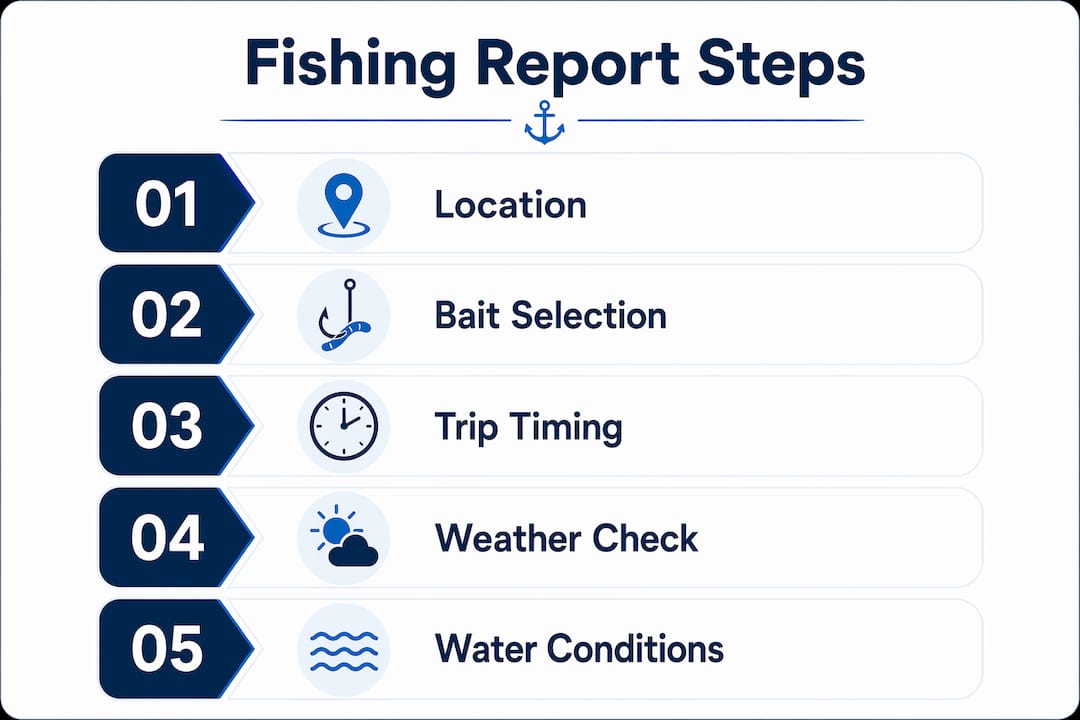
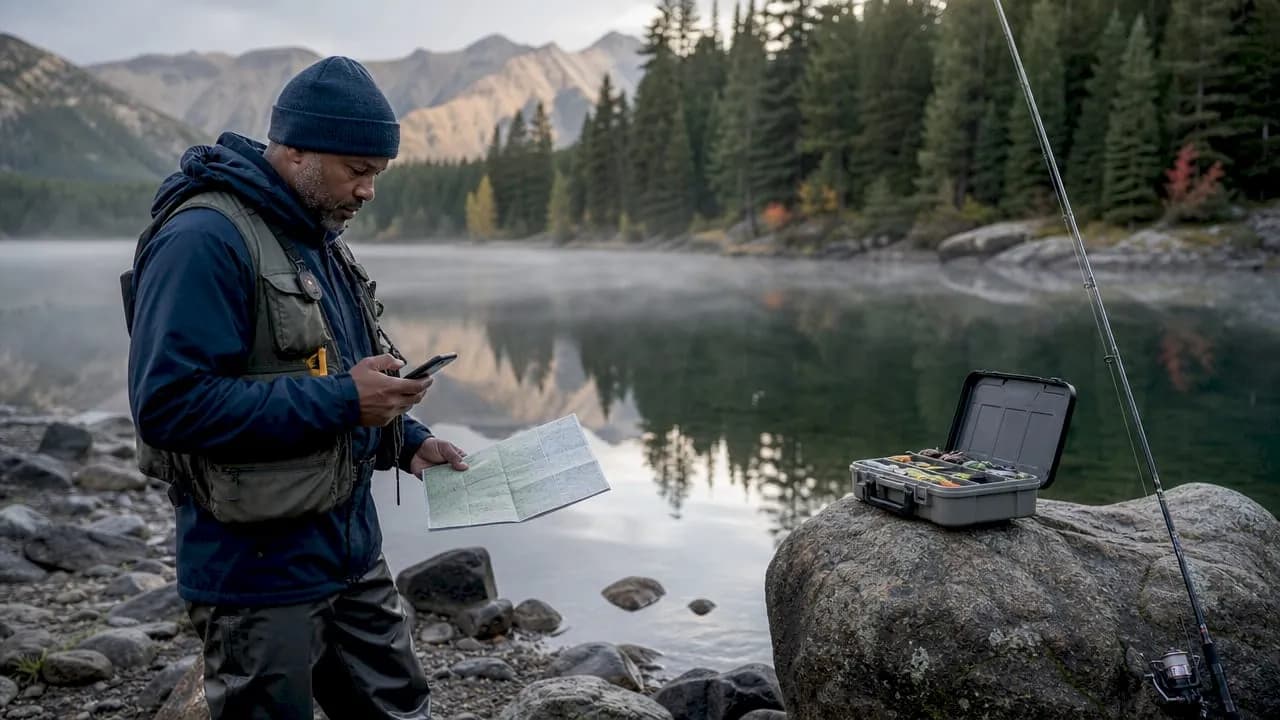
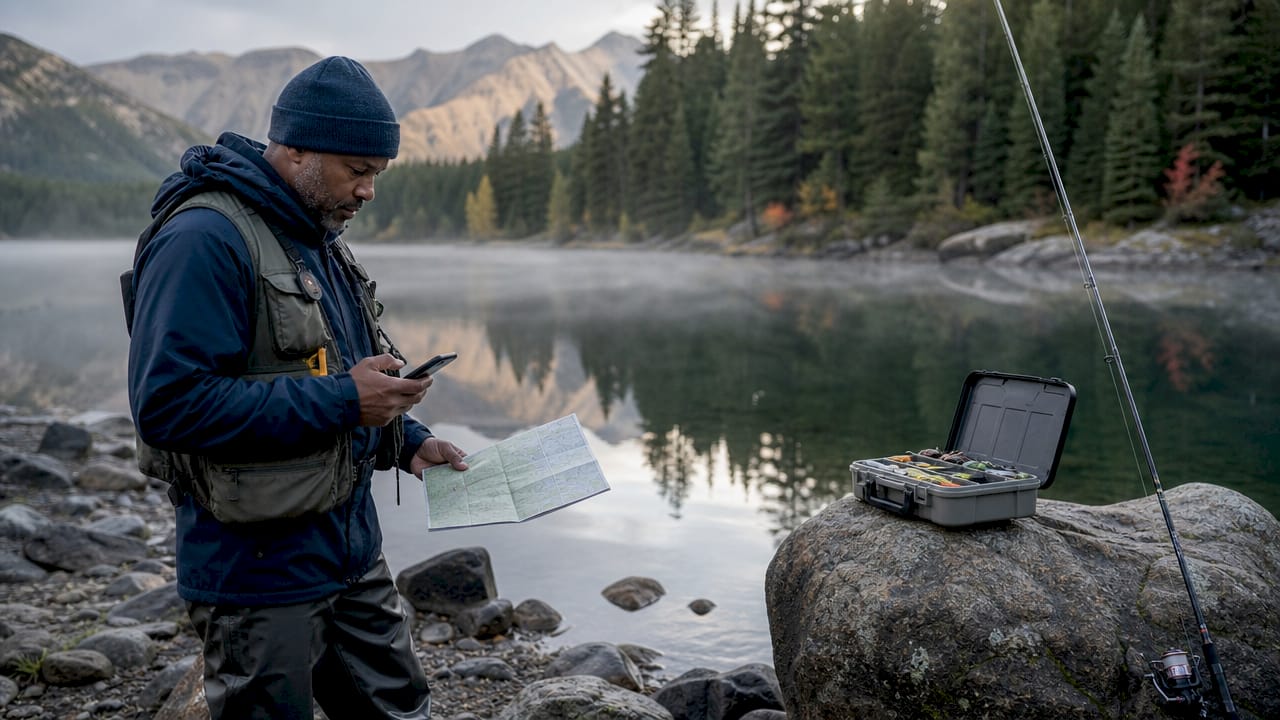
Effective trip planning requires minimal but focused preparation: verifying weather trends, confirming access points, checking license requirements, and finalizing bait choices based on recent reports. Experts recommend completing this review in 15–30 minutes before departure. Spending more time than that often leads to overplanning, not better fishing.
The most reliable planning cadence follows three review windows.
This three-step cadence works because fishing destination weather can shift fast. A front that looks manageable at 48 hours can close an inlet by morning. Building backup plans at each stage means you never lose fishing time to a surprise.
The minimalist planning approach focuses on three core decisions: location, bait or lure, and trip duration. That structure reduces cognitive load and keeps confidence high before you launch. Anglers who over-research often arrive at the water second-guessing themselves rather than fishing.
Translating a report into on-water strategy means matching the report’s conditions to your specific access point. If the report says redfish are feeding on the incoming tide near grass flats, find the grass flat closest to your launch. Apply the bait recommendation from the report and adjust depth based on what you observe. The report gives you the starting point. Your eyes on the water give you the adjustment.
Pro Tip: Set a hard stop on your pre-trip research. Decide on your plan, write it down, and close the browser. Analysis paralysis is real, and fish don’t care how many tabs you had open.
Many anglers fail by focusing on where fish were caught rather than why, leading to disappointment when conditions shift. A report that says “redfish caught near the north dock at 7 AM” is useful once. A report that explains “redfish were stacked on the north dock because the incoming tide pushed baitfish against the pilings” is useful every time you find a similar setup anywhere.
Pattern-based thinking turns a single report into a repeatable tactic. The four factors that most consistently explain fish location are tidal stage, water clarity, water temperature, and prey availability. When a report documents all four alongside the catch, you can replicate that success at a different location with similar conditions.
Seasoned anglers rely on the reasoning behind report data, such as tide stages, water clarity, and bait presence, rather than just what was caught. Reports detailing conditions and underlying patterns offer far greater predictive power than simple catch logs.
The Florida Keys tarpon migration from march to may is a perfect example of pattern-based planning in action. Tarpon follow a predictable route driven by water temperature and baitfish movement. Anglers who understand that pattern can position themselves correctly even when a specific report is a week old. The pattern holds. The exact location shifts slightly. Knowing why the fish are there lets you find them anyway.
Seasonal timing is the single biggest variable in whether a destination fishing report translates to actual catches. Florida Keys’ peak fishing season spans november to april, with the tarpon migration from march to may offering the rare chance at a “Grand Slam,” catching bonefish, permit, and tarpon on the same day. Anglers who arrive in june expecting the same conditions will find a very different fishery.
Regional environmental factors compound seasonal timing. Water temperature in the Maldives stays warm year-round, which means GT and tuna are accessible across more months than a temperate fishery. The UAE sees its best offshore action in the cooler months from october through april, when pelagic species move closer to shore. Kenya’s Watamu coast peaks for blue marlin from august to october, driven by the southeast monsoon pushing baitfish inshore.
Reports from these regions carry different accuracy windows. A report from a stable tropical fishery like the Maldives holds its value for longer than a report from a tidal estuary in the mid-Atlantic, where conditions can change within hours. Knowing the volatility of your target region helps you decide how fresh a report needs to be before you trust it.
| Region | Peak Season | Primary Species | Report Freshness Needed |
|---|---|---|---|
| Florida Keys, USA | November to April | Tarpon, bonefish, permit | 48–72 hours |
| Maldives | Year-round (best Oct–April) | GT, yellowfin tuna, sailfish | 3–5 days |
| UAE (Abu Dhabi) | October to April | Kingfish, queenfish, barracuda | 48–72 hours |
| Kenya (Watamu) | August to October | Blue marlin, sailfish | 3–5 days |
| Seychelles | April to October | GT, bonefish, permit | 3–5 days |
Localized data always outperforms general seasonal guides. A regional fishing destination guide tells you when to go. A current destination fishing report tells you whether conditions right now match what the season promises. Use both together for the best results.
A destination fishing report delivers the most value when anglers read the behavioral patterns behind the data, not just the catch locations.
| Point | Details |
|---|---|
| Core report components | Check water temperature, tidal stage, species activity, and bait picks before every trip. |
| Three-window planning cadence | Review reports at 48 hours, 24 hours, and morning of departure to stay ahead of weather shifts. |
| Pattern over location | Focus on why fish were caught, not just where, to replicate success in new conditions. |
| Seasonal timing matters | Match your trip dates to regional peak windows for the highest catch potential. |
| Minimalist decision framework | Lock in location, bait, and trip duration. Avoid overplanning beyond those three variables. |
I’ve read hundreds of fishing reports across a dozen countries, and the biggest mistake I see anglers make is treating a report like a treasure map. They read “GT caught at the north reef at dawn” and show up expecting the same fish in the same spot. When it doesn’t happen, they blame the report.
The report was right. The angler’s interpretation was wrong.
A good destination fishing report gives you a starting hypothesis, not a confirmed address. The conditions that produced that catch existed at a specific moment. Your job is to understand what created those conditions and find where those same conditions exist when you arrive. That’s the skill that separates anglers who consistently catch fish from those who rely on luck.
I’ve also seen anglers skip reports entirely because they trust their local knowledge. That’s a different kind of mistake. Local knowledge tells you where fish have been. A current report tells you where they are now. The best anglers I know combine both. They use the report to challenge their assumptions and confirm or adjust their plan.
If you fish destinations through Justfishinggroup, the trip briefings and destination fishing insights available on the platform give you exactly this kind of layered intelligence. Use them as your first read, then layer in your own observations once you’re on the water.
One last thing: contribute back. If you had a great session, submit your conditions and catch details to whatever reporting platform you use. The community-sourced reports are the most accurate ones. You benefit from other anglers’ reports. They benefit from yours.
— Alaa
Justfishinggroup covers fishing destinations across the Maldives, UAE, Kenya, Seychelles, Egypt, Socotra, Oman, and Morocco, with trip briefings that function as destination fishing reports for each location.
The platform pairs those destination insights with a full gear selection aligned to what reports recommend. Whether you need a sinking stick bait for GT sessions or a tournament-grade lure for pelagic species, the gear catalog reflects real-world report recommendations. Browse the full fishing trips catalog to match your target season and species, or visit the online gear store to build out your kit before departure.
A destination fishing report is a curated, location-specific update covering water temperature, tidal conditions, active fish species, and effective bait or lure choices for a targeted fishing area. Its purpose is to reduce guesswork and help anglers plan productive trips.
Many professional fishing report platforms publish weekly updates on Thursdays, covering 40+ destinations with angler-submitted and professionally verified data. High-traffic destinations may see more frequent updates during peak season.
Tidal stage and water temperature are the two most predictive data points in any fishing report. They directly control where fish position themselves and whether they are actively feeding.
Apply the minimalist three-decision framework: choose your location, select your bait or lure, and set your trip duration. Review the report at 48 hours and 24 hours out, then stop researching and go fish.
Reports reflect conditions at the time they were written. Fish move as tides, temperatures, and bait availability shift. Anglers who focus on the behavioral patterns behind a report, rather than the exact catch location, adapt faster when conditions change.
Rate this blog
Categories
Popular Tags