


Cultural fishing experiences: traditions, travel & connection
TL;DR:
- Cultural fishing immerses travelers in traditional techniques, storytelling, and community involvement.
- These experiences prioritize sustainability, cultural exchange, and shared meals over quantity of catch.
- They support indigenous communities by preserving practices and fostering eco-conscious tourism.
Not all fishing trips are created equal. While plenty of travelers book a boat, cast a line, and call it a day, a cultural fishing experience is something entirely different. It’s a hands-on journey into how a community lives, eats, and finds meaning through the water. These trips blend traditional fishing methods with storytelling, ritual, and community in ways that stay with you long after you’ve returned home. This guide breaks down exactly what these experiences involve, what you’ll learn, and how to find one that’s genuine.
Table of Contents
- What defines a cultural fishing experience?
- Traditional techniques: Tools, methods, and learning from locals
- Cultural rituals, stories, and the meaning behind the catch
- Benefits: What you gain from a cultural fishing experience
- What most travelers miss about cultural fishing experiences
- Ready to find your own cultural fishing adventure?
- Frequently asked questions
Key Takeaways
| Point | Details |
|---|---|
| More than just fishing | Cultural fishing experiences blend heritage, tradition, and community for a deeper travel memory. |
| Hands-on skill learning | You’ll use traditional techniques and tools taught by local experts. |
| Meaningful connections | Travelers forge real bonds with guides, communities, and each other. |
| Sustainability and preservation | These trips help support local economies and preserve unique fishing traditions. |
What defines a cultural fishing experience?
At its core, a cultural fishing experience is not defined by how many fish you catch. It’s defined by how you fish, who teaches you, and what that process means to the people doing it. These are immersive activities that weave traditional or indigenous fishing techniques together with cultural heritage, storytelling, and sustainable practices.
Think less “charter boat with strangers” and more “paddling a wooden canoe with a family who has fished this river for six generations.” The difference is enormous.
Here are the core elements that make a fishing experience genuinely cultural:
- Traditional techniques: You use tools and methods passed down for generations, not modern rods and fish finders.
- Local or indigenous guides: Your teacher isn’t a licensed tour operator. It’s someone whose grandmother taught them how to read the tides.
- Storytelling: Every technique, every spot, every season has a story attached to it.
- Community involvement: You’re welcomed into a living culture, not performing an activity for tourists.
- Sustainability: Indigenous fishing traditions are often built around taking only what’s needed and protecting the resource for future generations.
- Eating the catch: Cooking and sharing a meal from what you caught together is often the most powerful part.
“A cultural fishing experience isn’t a service you purchase. It’s an invitation into a way of life.”
Small group sizes keep things intimate. Most experiences cap at twelve people, often fewer, which means you’re actually connecting with your guides instead of being herded through a schedule. For deeper guided fishing tour insights, you’ll find that the best ones lean into ritual and place rather than performance and productivity.
Traditional techniques: Tools, methods, and learning from locals
The heart of any cultural fishing experience lies in the tools and techniques you’ll actually use. This is where things get genuinely exciting because you’re not just fishing differently. You’re thinking differently.
Traditional tools include hand-woven nets, carved wooden spears, bone and shell hooks, woven basket traps, weirs, and dugout canoes. Each has a specific purpose shaped by the local environment. A salmon weir used by First Nations communities in the Pacific Northwest works with the river’s natural current. Bamboo fish traps in Southeast Asia are engineered with the same intelligence as any modern device, just built from what the forest provides.
Here’s what hands-on participation typically looks like:
- Casting and pulling nets: You’ll learn the correct wrist motion, how to read the water’s surface, and when to pull.
- Building basic traps: Some guides teach you to assemble traditional weirs or basket traps on-site.
- Making bait from natural materials: From insects to local plants, guides know what works where and why.
- Reading water and tides: This is navigational wisdom you simply cannot find in a textbook.
- Paddling traditional watercraft: Canoes, outriggers, and wooden boats require balance and coordination that modern vessels don’t.
Comparison: Modern vs. traditional fishing
| Feature | Modern fishing | Traditional fishing |
|---|---|---|
| Tools | Carbon fiber rods, sonar | Nets, spears, bone hooks |
| Philosophy | Maximize catch | Take only what’s needed |
| Group size | Often large charters | Small, family-sized groups |
| Sustainability | Variable | Built into the practice |
| Knowledge source | Technology | Generational teaching |
Many anglers who try traditional longtail rods or browse local fishing gear brands discover a new appreciation for how equipment shapes technique. Traditional fishing makes that relationship between tool and method undeniable.
Pro Tip: Resist the urge to “help” or speed things up. The pace of a traditional fishing lesson is intentional. You’ll absorb far more by following the guide’s rhythm than by rushing ahead.
Cultural rituals, stories, and the meaning behind the catch
Traditional tools are just the start. What gives a cultural fishing experience its soul is everything that surrounds the act of fishing itself: the prayers offered before casting, the songs sung during a salmon run, the careful way a guide handles a fish before releasing it.
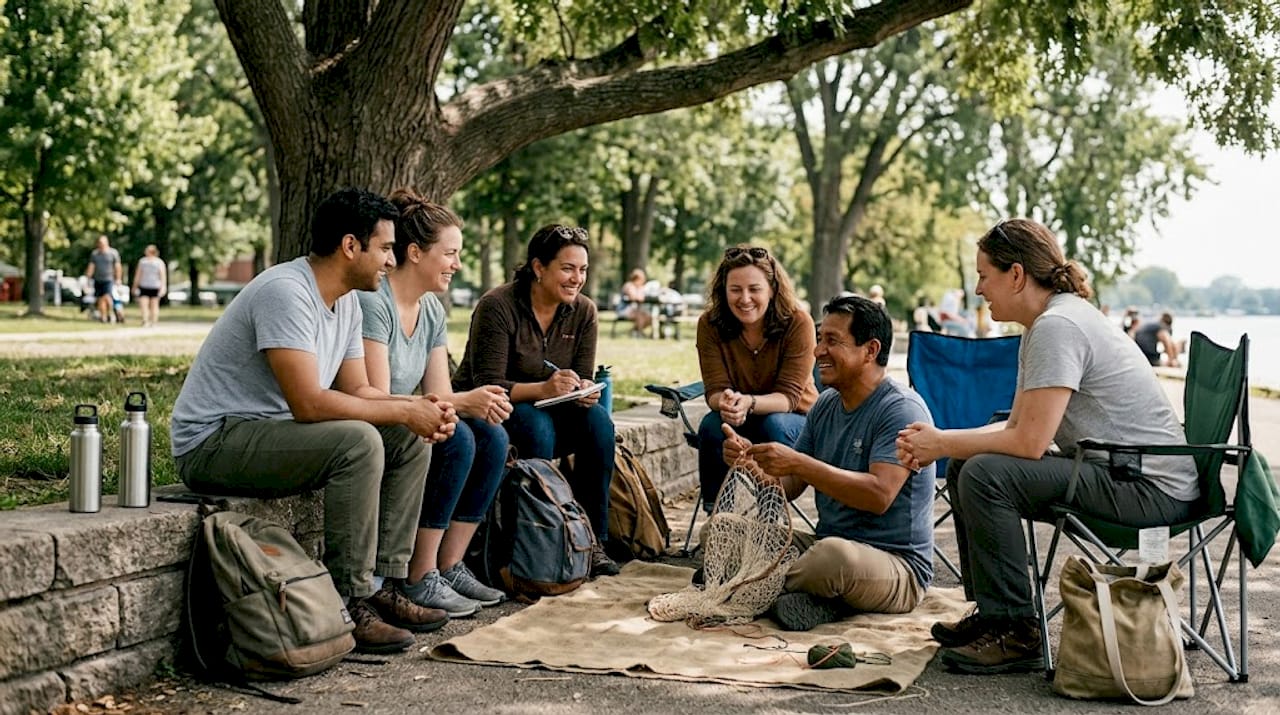
In many indigenous cultures, fishing is not a hobby. It’s a ceremony. Native American communities along the Columbia River hold salmon ceremonies that acknowledge the fish as a gift, not a resource to be extracted. Inuit ice fishers use hand-carved chisels to break through frozen water the same way their ancestors did, reciting knowledge passed verbally across generations of subsistence fishing.
Storytelling is woven into every step. Guides don’t just explain technique. They tell you why a particular method developed, which season demanded it, and what happened the year the fish didn’t come. These stories carry ecological knowledge that science is only now beginning to document formally.
Here’s what makes these moments particularly powerful:
- Small group format: With a maximum of twelve participants, guides can actually engage personally with each person.
- Shared meals: Cooking and eating what you caught, often around an open fire, creates a bond that outlasts the trip.
- Family participation: Many cultural fishing tours involve the guide’s own family, giving you a window into daily life rather than a polished performance.
- Ritual plant use: Some traditions involve specific plants for bait, smoking fish, or ceremonies. Each one comes with a story.
- Ice fishing with Inuit methods: Watching someone chip a perfect hole through thick ice using only a bone chisel and intuition is humbling in the best possible way.
These tours consistently earn 4.5 to 5 star ratings from travelers, and that’s rarely about the fishing itself. It’s about how the experience shifts your perspective on food, nature, and community.
Benefits: What you gain from a cultural fishing experience
So why choose a cultural fishing experience over a standard guided trip? The rewards go well beyond a good catch photo.
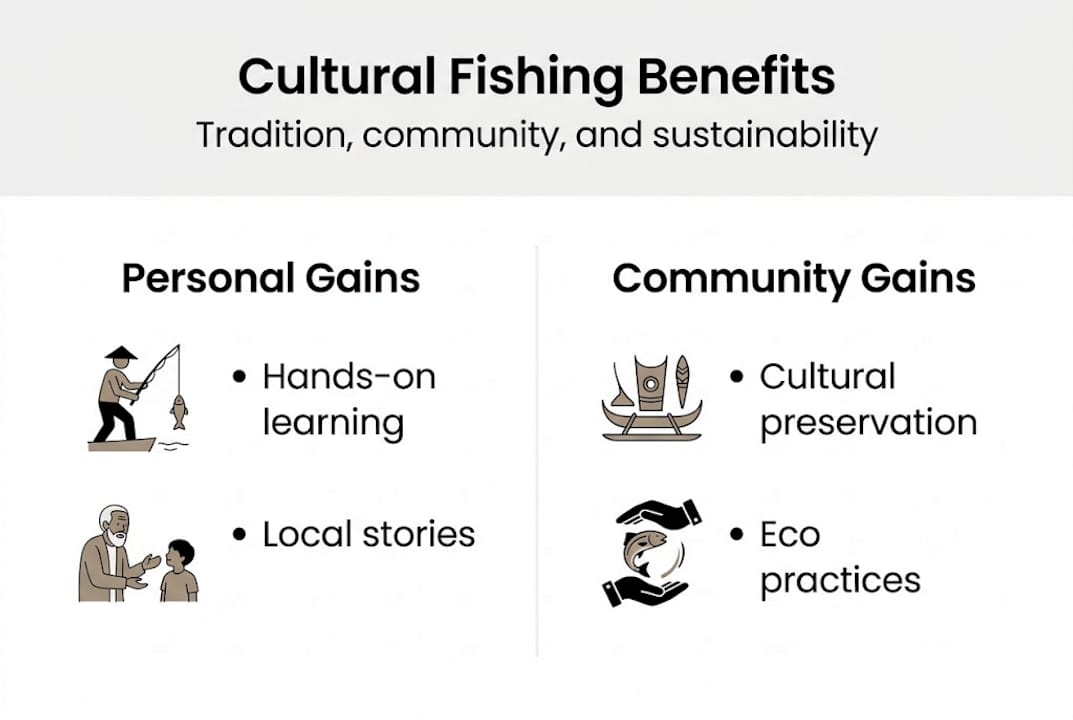
Indigenous-led tourism directly preserves traditional knowledge that modernization often threatens. When you book through a community-run operation, your tourism dollar supports the continuation of practices that have sustained ecosystems and cultures for centuries. That’s a meaningful exchange.
Tour satisfaction data consistently shows these experiences rated at 4.5 to 5 stars, reflecting how deeply they resonate with travelers across different backgrounds and expectations.
Benefits at a glance
| Category | Outcome |
|---|---|
| Personal | New skills, cultural fluency, lasting memories |
| Social | Bonds with guides, families, and fellow travelers |
| Economic | Direct support for host communities and local economies |
| Environmental | Awareness of sustainable practices and ecosystem value |
- You leave with practical skills: how to read tidal patterns, tie traditional knots, or identify local bait species.
- You gain cultural fluency that no museum or documentary can replicate.
- You form connections with people whose lives are genuinely shaped by the water.
- You become a more conscious traveler and angler.
The environmental impact is especially significant. Traditional fishing methods are inherently low-impact. Spending time learning them creates a visceral understanding of why conservation matters. You’re not being lectured. You’re living it. Book cultural fishing trips through operators who work directly with host communities to ensure your experience creates genuine value on both sides.
Pro Tip: Ask your guide what the biggest threat to their traditional fishing practice is. The answer will be the most important thing you learn on the entire trip.
What most travelers miss about cultural fishing experiences
Here’s something we’ve noticed: most travelers who book these trips are focused on the fishing part. They want to try the nets, maybe catch something impressive, and take a few compelling photos. That’s understandable. But the ones who come home truly changed are the ones who shifted their focus to the people.
The fish almost becomes secondary. What lingers is the laughter when you fumble a net, the quiet instruction from a guide who has infinite patience, and the taste of a meal cooked over coals thirty minutes after you helped pull it from the water.
We also think authenticity deserves more attention when choosing an experience. Not every “cultural fishing tour” is created with the same integrity. Some are performances dressed as traditions. Choosing operators who are genuinely community-led, rather than tourism companies borrowing cultural aesthetics, makes an enormous difference. Read personal fishing stories from real travelers to understand what genuine immersion looks like versus what’s staged for effect.
The uncomfortable truth is that the most memorable moments from these trips are usually the humbling ones, not the triumphant catches.
Ready to find your own cultural fishing adventure?
If exploring traditional techniques and real cultural connections sounds like your kind of travel, you’re in the right place. At JustFishing Group, we specialize in connecting anglers with fishing trips that go beyond the ordinary, from the Maldives and Oman to Kenya, Seychelles, and beyond.
Whether you’re looking to explore fishing trips in culturally rich destinations or need gear suited for traditional-style angling, our platform has both. From curated trip listings to expert fishing resources, plan your next adventure with a team that takes authenticity as seriously as you do. Your next unforgettable experience starts here.
Frequently asked questions
Do I need previous fishing experience to join a cultural fishing tour?
No, most cultural fishing tours welcome beginners and focus on learning through participation regardless of your skill level. Guides who teach generational techniques are experienced at working with all ability levels.
Are cultural fishing experiences suitable for families with kids?
Yes, these experiences often emphasize group bonding, storytelling, and hands-on activities suitable for all ages. The small group format and shared meals make them especially rewarding for families.
What is usually included in a cultural fishing trip?
Typically, you get guided instruction, traditional gear, meals featuring your catch, and cultural narratives or ceremonies. Most indigenous-led experiences include all of this as part of the core offering.
How do cultural fishing trips support local communities?
They create economic opportunities by preserving traditional practices and directing tourism revenue to host communities rather than outside operators.