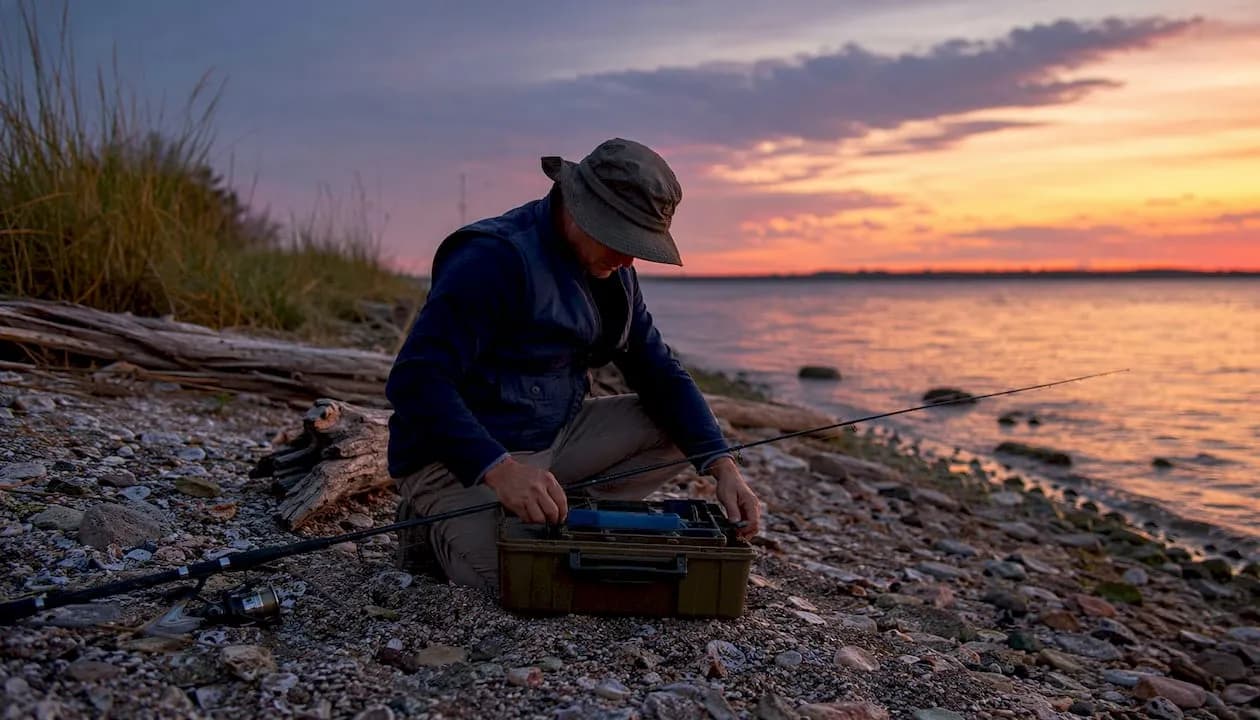
The best times to fish are not random. They follow predictable windows tied to the sun’s and moon’s positions, tidal movements, and atmospheric pressure shifts that directly influence fish feeding behavior. In practical terms, that means early morning (dawn to two hours after sunrise), dusk (one hour before sunset), and the major solunar periods are your highest-percentage windows on any given day. Layer in a moving tide and a falling barometer, and you have the conditions serious anglers plan entire trips around.
Here is a quick-reference breakdown of the top daily and seasonal fishing windows:
- Dawn to 2 hours post-sunrise: Water is cool, light is low, and predators are actively feeding near the surface
- Major solunar periods: Roughly 2-hour windows when the moon is directly overhead or underfoot — peak activity
- Minor solunar periods: About 1-hour windows at moonrise and moonset — moderately elevated activity
- Dusk (1 hour before to 30 minutes after sunset): Second daily feeding surge, especially for bass, trout, and redfish
- Spring (55–65°F water): Pre-spawn feeding frenzy — arguably the single best season for most freshwater species
- Fall (cooling water, 58–68°F): Fish feed aggressively to build reserves before winter
- New and full moon days: Trophy windows with maximum tidal range and gravitational influence
Pro Tip: Plan your arrival at the water 30–45 minutes before a major solunar period. Fish begin moving and feeding before the formal window opens, and the anglers who are already in position catch the first — and often best — bites.
Table of Contents
- How solunar bite times work and how to read a solunar calendar
- How tides, moon phases, and barometric pressure shape your catch
- How seasons and water temperature change when fish feed
- How daily weather conditions affect fish behavior
- Aligning solunar periods with weather and tides for peak success
- How regional differences change the best time to fish
- How specific fish species determine the best time to cast
- Ready to fish the world’s best windows?
- Key Takeaways
How solunar bite times work and how to read a solunar calendar
Solunar theory traces back to May 1926, when outdoorsman John Alden Knight analyzed 33 factors influencing fish and wildlife activity. He narrowed them to three: the sun, the moon, and the tide. Knight published the first solunar table in 1936, and the framework has guided serious anglers ever since.
The core idea is straightforward. Fish activity peaks when the moon is directly overhead (moon up) or directly underfoot (moon down), creating what are called major periods. When the moon is rising or setting, you get minor periods of moderately elevated activity. According to solunar research, major periods last approximately 2 hours and represent peak fish activity, while minor periods run about 1 hour with moderately high activity. The strongest overall solunar activity occurs during new and full moons, when the gravitational pull of the sun and moon align. Quarter moons produce the weakest solunar effect.
How to read a solunar calendar for your location:
- Pull up a solunar chart or app (FuncFish, Almanac.com, and similar tools generate location-specific tables)
- Identify today’s major and minor period times — these are listed in local time for your coordinates
- Note the moon phase: new or full moon days carry the highest activity ratings
- Cross-reference with your local sunrise and sunset times — when a major period overlaps with dawn or dusk, that window becomes exceptional
- Mark the window 30–45 minutes before each major period as your prime arrival time
- Check the solunar rating (often shown as a percentage or star rating) — anything above 75% is worth planning around
| Period Type | Trigger | Typical Duration | Activity Level |
|---|---|---|---|
| Major | Moon directly overhead | ~2 hours | Peak |
| Major | Moon directly underfoot | ~2 hours | Peak |
| Minor | Moonrise | ~1 hour | Moderately high |
| Minor | Moonset | ~1 hour | Moderately high |
| New/Full Moon | Sun-moon gravitational alignment | All-day elevated | Highest monthly |
| Quarter Moon | Weakest gravitational pull | Standard periods | Lowest monthly |
One detail most casual anglers miss: the strongest solunar activity begins 30–45 minutes before the formal major period opens. Fish start migrating and feeding as the gravitational influence builds, not the moment the clock hits the listed time. Get there early or you are fishing the tail end of the best action.
When a major solunar period coincides with sunrise or sunset, treat it as a non-negotiable fishing window. That overlap concentrates feeding activity in a way that rarely disappoints.
How tides, moon phases, and barometric pressure shape your catch
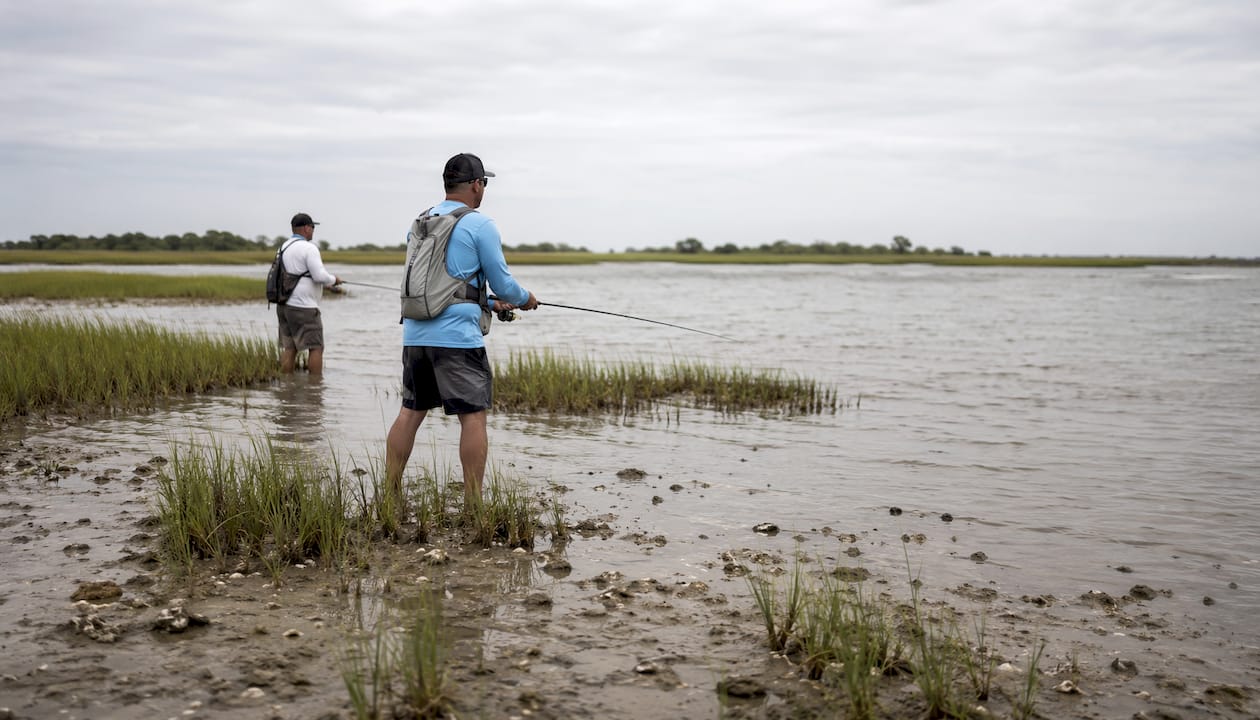
Tides are not just a saltwater concern. Even in estuaries, coastal rivers, and tidal flats, the movement of water dictates where fish hold and when they feed. The general rule: moving water is productive water. An incoming tide pushes baitfish and crustaceans onto flats and into structure, drawing predators with it. An outgoing tide concentrates fish at channel edges and drain points as water funnels out. Slack tide — the brief pause between tidal directions — typically kills the bite.
The days surrounding new and full moons produce the greatest tidal range due to maximum gravitational influence, creating what experienced anglers call trophy windows. Plan multi-day fishing trips around these dates and you will consistently find more active fish than on random calendar days.
Barometric pressure conditions and their effect on fishing:
- Falling pressure (gradual drop over several hours): Triggers feeding frenzies as fish sense an approaching storm — often the best bite of the week
- Steady, slightly falling pressure: Most consistent fishing; fish are active and predictable
- Rapidly falling pressure (storm imminent): Short feeding burst, then activity shuts down as conditions deteriorate
- Rising pressure after a storm: Fish are sluggish; expect a slow bite for 12–24 hours
- High, stable pressure: Suppresses feeding, especially in clear water; fish go deep or tight to structure
- Sudden pressure spike: One of the worst conditions — fish lock up almost immediately
Barometric pressure trends matter far more than the absolute reading. A barometer sitting at 29.9 inHg and falling is more productive than one at 29.6 inHg and rising. Watch the direction and rate of change, not the number itself.
Pro Tip: When a major solunar period aligns with an incoming tide and a gradual pressure drop, you have hit the trifecta. Research shows fishing activity can increase significantly above normal during these overlapping conditions. Mark those windows in your calendar and protect them.
Moon phases also affect night fishing quality. Full moon nights flood shallow water with light, pushing fish deeper or making them spookier in clear conditions. New moon nights are darker, which concentrates nocturnal feeders in shallower water and near structure — often the better choice for night fishing in summer.
How seasons and water temperature change when fish feed
Water temperature is the single most reliable predictor of fish metabolism, and metabolism controls everything from how aggressively a fish chases a lure to whether it feeds at all. Seasonal fishing success depends directly on matching your tactics to the temperature-driven metabolic state of your target species.
Temperature thresholds that matter:
- Below 48°F: Fish metabolism slows dramatically. They feed infrequently and won’t chase fast-moving presentations. Finesse tactics, slow retrieves, and bottom-hugging lures are your best options
- 55–65°F (pre-spawn): The most active feeding window of the year for most freshwater species. Fish are aggressive and feeding heavily ahead of spawning
- 65–72°F (spawn zone): Feeding behavior shifts — some species go off the bite during actual spawning, but pre- and post-spawn windows on either side are exceptional
- Above 78°F: Fish push to deeper, cooler water or feed only at dawn and dusk when surface temperatures drop
| Season | Water Temp Range | Best Daily Windows | Key Tactics |
|---|---|---|---|
| Spring | 50–68°F | Morning and midday | Aggressive presentations, pre-spawn patterns |
| Summer | 72–85°F | Dawn, dusk, night | Topwater at low light, deep structure midday |
| Fall | 55–68°F | Morning and afternoon | Fast retrieves, match the baitfish |
| Winter | 35–50°F | Midday (warmest hours) | Slow, finesse presentations near bottom |
Fall deserves special attention. As water cools from summer highs, fish feed aggressively to build energy reserves before winter. Understanding the fall bass feeding pattern — where fish follow shad migrations into creeks and coves — is one of the most productive seasonal strategies in freshwater fishing. The bite window expands compared to summer, and midday fishing becomes viable again.
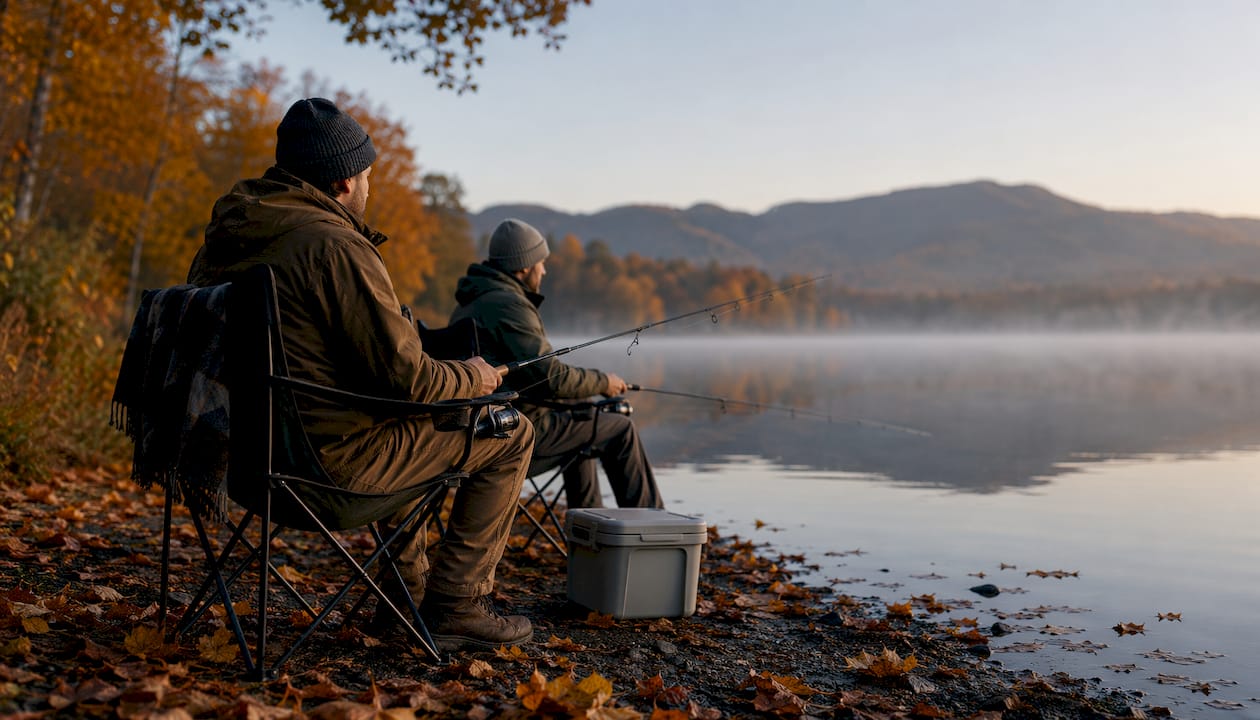
Seasonal success also depends on matching lure energy to fish metabolism. A fast-burning topwater bait in 45°F water is a wasted cast. A slow-rolled finesse lure worked along the bottom in the same conditions can produce fish that would otherwise ignore everything. Integrating temperature awareness with your solunar and tidal data gives you a complete picture of what the fish are doing and why.
How daily weather conditions affect fish behavior
Weather observation is the layer most anglers underuse. Solunar tables and tide charts tell you when fish should be active; weather tells you whether they actually will be. The two work together, and ignoring one makes the other less reliable.
Weather factors to monitor and their typical effects:
- West wind: Generally favorable — warmer air, stable conditions, fish tend to feed normally
- North or east wind: Often associated with cold fronts and pressure rises; fish go tight to cover and become less aggressive
- Overcast skies: Reduce light penetration, which draws fish shallower and extends the feeding window beyond the typical dawn/dusk peaks
- Bright, sunny midday: Pushes fish deep or into shade; surface and mid-column presentations lose effectiveness
- Light rain: Often triggers feeding, especially in warm months — insects and baitfish become active near the surface
- Heavy rain and wind: Reduces visibility and disrupts feeding patterns; bite typically drops off
| Weather Condition | Expected Fish Activity | Best Approach |
|---|---|---|
| Overcast, light wind | High | Fish shallower, broader presentations |
| Sunny, calm | Moderate (early/late only) | Target shade, deep structure midday |
| Approaching storm (falling pressure) | Very high (brief window) | Fish aggressively before the front hits |
| Post-storm (rising pressure) | Low | Slow down, finesse tactics |
| Light rain, warm temps | High | Surface and mid-column presentations |
| Cold front passage | Very low | Wait 24–48 hours for recovery |
Wind direction and cloud cover influence fish feeding behavior in ways that compound with pressure changes. A west breeze on an overcast day with a slowly falling barometer is one of the most productive setups you can find. A clear, calm, high-pressure day after a cold front is the opposite. Real-time weather apps and a simple barometer on your boat give you the data to make that call before you launch.
Aligning solunar periods with weather and tides for peak success
The anglers who consistently catch fish are not luckier than everyone else. They understand the trifecta concept: a major solunar period overlapping with a moving tide and a falling barometer. When all three align, fishing activity can increase by as much as 40–60% above normal, according to solunar research. This significant boost is why expert anglers prioritize these overlapping conditions for their trips.
- Arrive at your spot 30–45 minutes before the major solunar period — fish start moving before the formal window opens
- Prioritize incoming tides over outgoing when targeting shallow-water species; outgoing tides concentrate fish at channel exits
- Watch the barometer for gradual drops over 3–6 hours rather than sudden swings
- Match lure speed and profile to the current water temperature and metabolic state of your target species
- Use the 90/10 rule: 90% of fish occupy 10% of the water, typically where baitfish concentrate near structure. Find the bait, find the fish
- Keep a fishing log noting solunar ratings, barometric readings, tide stage, water temperature, and catch results — patterns emerge quickly over a season
Pro Tip: In midsummer, night fishing between 9 PM and 4 AM often outperforms daytime sessions. Cooler water, nocturnal feeding behavior, and minimal boat traffic combine to produce exceptional bass fishing when the midday heat has shut everything down.
The 90/10 rule deserves more attention than it gets. On any given body of water, fish are not spread evenly. They cluster where baitfish are, typically near structure, temperature breaks, and current seams. Identifying those spots and timing your arrival to coincide with a major solunar period and a moving tide is the closest thing to a guaranteed bite that fishing offers.
Freshwater and saltwater species respond to these factors differently in degree, not in kind. Bass, walleye, and trout all show heightened solunar sensitivity. Redfish, snook, and tarpon are heavily tide-driven. Offshore pelagics like tuna and mahi respond more to baitfish movements and temperature breaks than to tidal cycles. Know your species and weight the factors accordingly.
How regional differences change the best time to fish
Geography reshapes every rule above. The same solunar period that produces a feeding frenzy in Florida may coincide with a tide that is barely perceptible in a landlocked Midwestern reservoir. Regional context is what turns general principles into specific plans.
Coastal and tidal regions (Gulf Coast, Atlantic Seaboard, Pacific Coast): Tidal timing dominates. In places like the Florida Keys or Chesapeake Bay, the two hours around a tide change often matter more than the solunar rating. Redfish, striped bass, and flounder are textbook examples of species that feed on the clock of the tide, not the moon.
Great Lakes and large inland reservoirs: Solunar periods and barometric pressure carry more weight here because tidal influence is negligible. Wind-driven currents and thermal stratification become the regional substitutes for tidal movement. In summer, thermoclines push fish to specific depth bands, and the best fishing often happens where those bands intersect with structure.
Mountain streams and tailwaters: Water temperature and flow rates controlled by dam releases override most other factors. In tailwater fisheries below dams, trout feed when cold, oxygenated water flows — which may have nothing to do with the moon. Local knowledge and real-time flow data from the USGS National Water Information System are more useful than any solunar chart in these environments.
Tropical and subtropical destinations (Caribbean, Maldives, East Africa): Seasonal variation is compressed. Water temperatures stay warm year-round, so the seasonal temperature thresholds that govern temperate fishing are less relevant. Tides, moon phases, and baitfish migrations become the primary timing drivers. Justfishinggroup’s guided fishing trips across destinations like the Maldives, Kenya, and the Seychelles are built around exactly these regional patterns, putting anglers on the water during peak tidal and lunar windows.
Pacific Northwest: Salmon runs create their own calendar that overrides most other timing considerations. Chinook, coho, and sockeye runs are driven by river temperature, flow, and barometric pressure. During peak run timing, fish are present regardless of solunar ratings — the question is presentation, not timing.
How specific fish species determine the best time to cast
Species behavior is the final filter. Every timing principle above applies differently depending on what you are targeting, and knowing your species’ habits lets you prioritize the right factors.
Largemouth and smallmouth bass are among the most solunar-responsive freshwater species. They feed heavily during major periods, especially when those windows coincide with low light. Dawn and dusk are reliable daily windows, and the pre-spawn period in spring is their most aggressive feeding phase of the year. In summer, night fishing between 9 PM and 4 AM consistently outperforms midday sessions.
Trout (rainbow, brown, brook) are temperature-sensitive above almost everything else. They feed most actively in water between 52°F and 64°F. In summer, that often means early morning in mountain streams before air temperatures climb. Brown trout are notably nocturnal and feed heavily after dark, particularly during the fall spawning season.
Walleye are light-sensitive predators that feed most aggressively in low-light conditions. Dawn, dusk, and overcast days are their prime windows. They are also strongly solunar-responsive, and major periods during new and full moons produce the most consistent walleye action.
Redfish and striped bass are tide-driven. Incoming tides on shallow flats and outgoing tides at channel mouths are their feeding triggers. Solunar periods matter, but a moving tide matters more for these species. New and full moon tides push the most water and produce the biggest feeding windows.
Offshore pelagics (tuna, mahi-mahi, wahoo) respond primarily to baitfish concentrations, water temperature breaks, and current edges. Solunar periods can concentrate surface activity, but locating the right water — a temperature break, a color change, a current seam — is more important than timing for these species. Justfishinggroup’s deep-sea fishing gear is selected with exactly these offshore conditions in mind.
Carp and catfish are bottom feeders that respond strongly to barometric pressure. Falling pressure before a storm triggers some of the most intense catfish feeding of the year. Carp feed most actively in warm, stable conditions with water temperatures between 65°F and 75°F, typically in the morning hours before midday heat sets in.
Ready to fish the world’s best windows?
Knowing when to fish is only half the equation. Having the right gear and the right destination for the conditions completes it. Justfishinggroup brings together premium fishing gear, global trip bookings, and destination-specific expertise across the Maldives, UAE, Kenya, Seychelles, Egypt, and beyond. Whether you are planning a trip around a new moon trophy window or gearing up for a pre-spawn spring session, Justfishinggroup has the equipment and the guided experiences to put you on fish during peak windows.
Key Takeaways
The highest-probability fishing windows combine a major solunar period, a moving tide, and a falling barometer — three conditions that, when they overlap, can boost fish activity by up to 40–60% above normal.
| Point | Details |
|---|---|
| Major solunar periods | 2-hour windows when the moon is overhead or underfoot represent peak daily fish activity. |
| Arrive early | Position yourself 30–45 minutes before a major period — fish begin feeding before the formal window opens. |
| Trifecta conditions | Major solunar period + moving tide + falling barometric pressure = highest-probability fishing window. |
| Seasonal temperature | Below 48°F slows fish metabolism; 65–72°F is the spawn zone; above 78°F pushes fish to dawn, dusk, or depth. |
| Species-specific timing | Tide stage drives redfish and stripers; solunar periods drive bass and walleye; temperature breaks drive offshore pelagics. |